The 1,000-Word Dash

Tuesday, May 8th, 2007

Timothy Noah looks at speed reading in The 1,000-Word Dash:

Studies show that people who read at or above the college level all read at about the same speed when they read for pleasure.

Within the contentious world of reading theory, there is unanimity on this point. When you factor out the amount of time spent thinking through complex and unfamiliar concepts — a rarity when people read for pleasure — reading is an appallingly mechanical process. You look at a word or several words. This is called a “fixation,” and it takes about .25 seconds on average. You move your eye to the next word or group of words. This is called a “saccade,” and it takes up to about .1 seconds on average. After this is repeated once or twice, you pause to comprehend the phrase you just looked at. That takes roughly 0.3 to 0.5 seconds on average. Add all these fixations and saccades and comprehension pauses together and you end up with about 95 percent of all college-level readers reading between 200 and 400 words per minute, according to Keith Rayner, a psycholinguist at the University of Massachusetts Amherst. The majority of these college-level readers reads about 300 words per minute.

How quickly can you listen?

Books on tape also pose a time problem. Carver found that college-level readers optimally take in and understand spoken words at the same word rate that they take in written words — typically about 300 words per minute. The catch is that not even auctioneers can speak at a rate much beyond 250 words per minute. (To produce a 300-words-per-minute sample, Carter had to use a “time-compressed speech” device that compacts words and deletes fractions of dead air between words.) The 250-word count of an auctioneer is much faster than the 175 words per minute the typical book-on-tape actor manages.

In Faster Pussycat! Read! Read!, Daniel Akst notes that the secret to reading faster is … reading faster — which isn’t always easy.

A Healthy Mix of Rest and Motion

Tuesday, May 8th, 2007


A recent New York Times fitness article, A Healthy Mix of Rest and Motion, is evidence that interval training is finally becoming mainstream.

In other news, schools are rapidly adopting Dance Dance Revolution for physical eduction classes:

While traditional video games are often criticized for contributing to the expanding waistlines of the nation’s children, at least several hundred schools in at least 10 states are now using Dance Dance Revolution, or D.D.R., as a regular part of their physical education curriculum.

Based on current plans, more than 1,500 schools are expected to be using the game by the end of the decade. Born nine years ago in the arcades of Japan, D.D.R. has become a small craze among a generation of young Americans who appear less enamored of traditional team sports than their parents were and more amenable to the personal pursuits enabled by modern technology.

Incorporating D.D.R. into gym class is part of a general shift in physical education, with school districts de-emphasizing traditional sports in favor of less competitive activities.

“Traditionally, physical education was about team sports and was very skills oriented,” said Chad Fenwick, who oversees physical education for the Los Angeles Unified School District, where about 40 schools now use Dance Dance Revolution. “What you’re seeing is a move toward activities where you don’t need to be so great at catching and throwing and things like that, so we can appeal to a wider range of kids.”

A basic D.D.R. system, including a television and game console, can be had for less than $500, but most schools that use the game choose to spend from $70 to $800 each for more robust mats, rather than rip apart the relatively flimsy versions meant for home use.

In a study last year, researchers from the Mayo Clinic in Rochester, Minn., found that children playing Dance Dance Revolution expended significantly more energy than children watching television and playing traditional video games.

King Herod’s tomb possibly found

Tuesday, May 8th, 2007

King Herod’s tomb possibly found:

This undated photo made available by the Israeli Government Press Office, Tuesday, May 8, 2007,The hilltop compound of Herodium is seen near the west Bank town of Hebron. An Israeli archaeologist has found the tomb of King Herod, the legendary builder of ancient Jerusalem and the Holy Land, at a hilltop compound south of the city, the Hebrew University announced.

The 1,000-Word Dash

Tuesday, May 8th, 2007

Timothy Noah looks at speed reading in The 1,000-Word Dash:

Studies show that people who read at or above the college level all read at about the same speed when they read for pleasure.

Within the contentious world of reading theory, there is unanimity on this point. When you factor out the amount of time spent thinking through complex and unfamiliar concepts — a rarity when people read for pleasure — reading is an appallingly mechanical process. You look at a word or several words. This is called a “fixation,” and it takes about .25 seconds on average. You move your eye to the next word or group of words. This is called a “saccade,” and it takes up to about .1 seconds on average. After this is repeated once or twice, you pause to comprehend the phrase you just looked at. That takes roughly 0.3 to 0.5 seconds on average. Add all these fixations and saccades and comprehension pauses together and you end up with about 95 percent of all college-level readers reading between 200 and 400 words per minute, according to Keith Rayner, a psycholinguist at the University of Massachusetts Amherst. The majority of these college-level readers reads about 300 words per minute.

How quickly can you listen?

Books on tape also pose a time problem. Carver found that college-level readers optimally take in and understand spoken words at the same word rate that they take in written words — typically about 300 words per minute. The catch is that not even auctioneers can speak at a rate much beyond 250 words per minute. (To produce a 300-words-per-minute sample, Carter had to use a “time-compressed speech” device that compacts words and deletes fractions of dead air between words.) The 250-word count of an auctioneer is much faster than the 175 words per minute the typical book-on-tape actor manages.

In Faster Pussycat! Read! Read!, Daniel Akst notes that the secret to reading faster is … reading faster — which isn’t always easy.
The Hacker’s Guide to Investors

Tuesday, May 8th, 2007

Paul Graham presents The Hacker’s Guide to Investors:

  1. The investors are what make a startup hub
  2. Angel investors are the most critical.
  3. Angels don’t like publicity.
  4. Most investors, especially VCs, are not like founders.
  5. Most investors are momentum investors.
  6. Most investors are looking for big hits.
  7. VCs want to invest large amounts.
  8. Valuations are fiction.
  9. Investors look for founders like the current stars.
  10. The contribution of investors tends to be underestimated.
  11. VCs are afraid of looking bad.
  12. Being turned down by investors doesn’t mean much.
  13. Investors are emotional.
  14. The negotiation never stops till the closing.
  15. Investors like to co-invest.
  16. Investors collude.
  17. Large-scale investors care about their portfolio, not any individual company.
  18. Investors have different risk profiles from founders.
  19. Investors vary greatly.
  20. Investors don’t realize how much it costs to raise money from them.
  21. Investors don’t like to say no.
  22. You need investors.
  23. Investors like it when you don’t need them.

He explains his fifth point:

Because most investors are dealmakers rather than technology people, they generally don’t understand what you’re doing. I knew as a founder that most VCs didn’t get technology. I also knew some made a lot of money. And yet it never occurred to me till recently to put those two ideas together and ask “How can VCs make money by investing in stuff they don’t understand?”

The answer is that they’re like momentum investors. You can (or could once) make a lot of money by noticing sudden changes in stock prices. When a stock jumps upward, you buy, and when it suddenly drops, you sell. In effect you’re insider trading, without knowing what you know. You just know someone knows something, and that’s making the stock move.

This is how most venture investors operate. They don’t try to look at something and predict whether it will take off. They win by noticing that something is taking off a little sooner than everyone else. That generates almost as good returns as actually being able to pick winners. They may have to pay a little more than they would if they got in at the very beginning, but only a little.

This is similar to the point Robert Shiller makes about the Internet bubble of a few years ago:

Some sociologists talk about collective consciousness. We humans evolved to be very closely linked, and our minds focus on the same ideas. Those [ideas] get reinforced because we hear them all the time.

Back in the late 1990s, you kept hearing that you had to stake your claim on the Internet or you’d miss out on the future. No one cared about the present. Then something happened around March 2000. There was an acceleration of public talk about doubts. You could no longer declare at a cocktail party that Internet stocks were going up. Such statements had become embarrassing — and just like that, word of mouth changed.

Embarrassment is a powerful emotion.

An Alternative Theory of Unions

Tuesday, May 8th, 2007

Paul Graham offers An Alternative Theory of Unions:

Oddly enough, it was working with startups that made me realize where the high-paying union job came from. In a rapidly growing market, you don’t worry too much about efficiency. It’s more important to grow fast. If there’s some mundane problem getting in your way, and there’s a simple solution that’s somewhat expensive, just take it and get on with more important things. EBay didn’t win by paying less for servers than their competitors.

Difficult though it may be to imagine now, manufacturing was a growth industry in the mid twentieth century. This was an era when small firms making everything from cars to candy were getting consolidated into a new kind of corporation with national reach and huge economies of scale. You had to grow fast or die. Workers were for these companies what servers are for an Internet startup. A reliable supply was more important than low cost.

If you looked in the head of a 1950s auto executive, the attitude must have been: sure, give ‘em whatever they ask for, so long as the new model isn’t delayed.

In other words, those workers were not paid what their work was worth. Circumstances being what they were, companies would have been stupid to insist on paying them so little.

If you want a less controversial example of this phenomenon, ask anyone who worked as a consultant building web sites during the Internet Bubble. In the late nineties you could get paid huge sums of money for building the most trivial things. And yet does anyone who was there have any expectation those days will ever return? I doubt it. Surely everyone realizes that was just a temporary aberration.

The era of labor unions seems to have been the same kind of aberration, just spread over a longer period, and mixed together with a lot of ideology that prevents people from viewing it with as cold an eye as they would something like consulting during the Bubble.

The Hacker’s Guide to Investors

Monday, May 7th, 2007

Paul Graham presents The Hacker’s Guide to Investors:

  1. The investors are what make a startup hub
  2. Angel investors are the most critical.
  3. Angels don’t like publicity.
  4. Most investors, especially VCs, are not like founders.
  5. Most investors are momentum investors.
  6. Most investors are looking for big hits.
  7. VCs want to invest large amounts.
  8. Valuations are fiction.
  9. Investors look for founders like the current stars.
  10. The contribution of investors tends to be underestimated.
  11. VCs are afraid of looking bad.
  12. Being turned down by investors doesn’t mean much.
  13. Investors are emotional.
  14. The negotiation never stops till the closing.
  15. Investors like to co-invest.
  16. Investors collude.
  17. Large-scale investors care about their portfolio, not any individual company.
  18. Investors have different risk profiles from founders.
  19. Investors vary greatly.
  20. Investors don’t realize how much it costs to raise money from them.
  21. Investors don’t like to say no.
  22. You need investors.
  23. Investors like it when you don’t need them.

He explains his fifth point:

Because most investors are dealmakers rather than technology people, they generally don’t understand what you’re doing. I knew as a founder that most VCs didn’t get technology. I also knew some made a lot of money. And yet it never occurred to me till recently to put those two ideas together and ask “How can VCs make money by investing in stuff they don’t understand?”

The answer is that they’re like momentum investors. You can (or could once) make a lot of money by noticing sudden changes in stock prices. When a stock jumps upward, you buy, and when it suddenly drops, you sell. In effect you’re insider trading, without knowing what you know. You just know someone knows something, and that’s making the stock move.

This is how most venture investors operate. They don’t try to look at something and predict whether it will take off. They win by noticing that something is taking off a little sooner than everyone else. That generates almost as good returns as actually being able to pick winners. They may have to pay a little more than they would if they got in at the very beginning, but only a little.

This is similar to the point Robert Shiller makes about the Internet bubble of a few years ago:

Some sociologists talk about collective consciousness. We humans evolved to be very closely linked, and our minds focus on the same ideas. Those [ideas] get reinforced because we hear them all the time.

Back in the late 1990s, you kept hearing that you had to stake your claim on the Internet or you’d miss out on the future. No one cared about the present. Then something happened around March 2000. There was an acceleration of public talk about doubts. You could no longer declare at a cocktail party that Internet stocks were going up. Such statements had become embarrassing — and just like that, word of mouth changed.

Embarrassment is a powerful emotion.

An Alternative Theory of Unions

Monday, May 7th, 2007

Paul Graham offers An Alternative Theory of Unions:

Oddly enough, it was working with startups that made me realize where the high-paying union job came from. In a rapidly growing market, you don’t worry too much about efficiency. It’s more important to grow fast. If there’s some mundane problem getting in your way, and there’s a simple solution that’s somewhat expensive, just take it and get on with more important things. EBay didn’t win by paying less for servers than their competitors.

Difficult though it may be to imagine now, manufacturing was a growth industry in the mid twentieth century. This was an era when small firms making everything from cars to candy were getting consolidated into a new kind of corporation with national reach and huge economies of scale. You had to grow fast or die. Workers were for these companies what servers are for an Internet startup. A reliable supply was more important than low cost.

If you looked in the head of a 1950s auto executive, the attitude must have been: sure, give ‘em whatever they ask for, so long as the new model isn’t delayed.

In other words, those workers were not paid what their work was worth. Circumstances being what they were, companies would have been stupid to insist on paying them so little.

If you want a less controversial example of this phenomenon, ask anyone who worked as a consultant building web sites during the Internet Bubble. In the late nineties you could get paid huge sums of money for building the most trivial things. And yet does anyone who was there have any expectation those days will ever return? I doubt it. Surely everyone realizes that was just a temporary aberration.

The era of labor unions seems to have been the same kind of aberration, just spread over a longer period, and mixed together with a lot of ideology that prevents people from viewing it with as cold an eye as they would something like consulting during the Bubble.

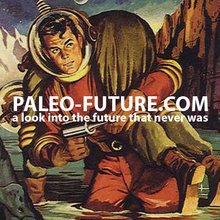
Paleo-Future

Sunday, May 6th, 2007

I love the whole notion of the Paleo-Future — or what used to seem futuristic.

Margarita: More than a girl’s name

Saturday, May 5th, 2007

In honor of cinco de mayo, I share this bit of margarita history:

The earliest citation for a Margarita Cocktail is the December 1953 issue of Esquire magazine:
Drink of the Month

She’s from Mexico, Senores, and her name is the Margarita Cocktail — and she is lovely to look at, exciting and provocative.

1 ounce tequila
Dash of Triple Sec
Juice of 1/2 lime or lemon

Pour over crushed ice, stir. Rub the rim of a stem glass with rind of lemon or lime, spin in salt — pour, and sip.

The modern recipe — or one of the common recipes — calls for tequila, cointreau, and fresh lime juice in a 3:2:1 ratio.

Salud!

Purple frog delights scientists

Saturday, May 5th, 2007

A recently discovered purple frog delights scientists — not because it’s odd looking and oddly colored, but because it explains frog evolution:

Scientists have given it the name Nasikabatrachus sahyadrensis, from the Sanskrit word for nose (nasika); batrachus, meaning frog; and Sahyadri, the name for its mountain home.
[...]
“It is an important discovery because it tells us something about the early evolution of advanced frogs that we would not know otherwise because there are no fossil records from this lineage,” says Franky Bossuyt, of Free University of Brussels, Belgium.

Bossuyt and colleague S D Biju, of the Tropical Botanic Garden and Research Institute in Kerala, say N. sahyandrensis is related to a family of frogs in the Seychelles called Sooglossidae.

DNA analysis suggests the common ancestor of the animals lived 130 million years ago, when the planet’s landmasses were joined together into a giant supercontinent called Gondwana.

Ratatouille

Saturday, May 5th, 2007

I knew I was going to see Ratatouille (Rat-a-too-ee) — in theaters June 29 — but after seeing the 9-minute preview I’m definitely going.

Purple frog delights scientists

Saturday, May 5th, 2007

A recently discovered purple frog delights scientists — not because it’s odd looking and oddly colored, but because it explains frog evolution:

Scientists have given it the name Nasikabatrachus sahyadrensis, from the Sanskrit word for nose (nasika); batrachus, meaning frog; and Sahyadri, the name for its mountain home.
[...]
“It is an important discovery because it tells us something about the early evolution of advanced frogs that we would not know otherwise because there are no fossil records from this lineage,” says Franky Bossuyt, of Free University of Brussels, Belgium.

Bossuyt and colleague S D Biju, of the Tropical Botanic Garden and Research Institute in Kerala, say N. sahyandrensis is related to a family of frogs in the Seychelles called Sooglossidae.

DNA analysis suggests the common ancestor of the animals lived 130 million years ago, when the planet’s landmasses were joined together into a giant supercontinent called Gondwana.

Ratatouille

Saturday, May 5th, 2007

I knew I was going to see Ratatouille (Rat-a-too-ee) — in theaters June 29 — but after seeing the 9-minute preview I’m definitely going.

The Billion-Dollar Sand Trap

Thursday, May 3rd, 2007

Alex Krupp calls cell-phone software The Billion-Dollar Sand Trap for a few reasons:

  • The underlying technology is broken
  • The business case is a proven recipe for failure
  • The social aspects are more awkward than a middle school dance