Thursday, July 31, 2008

Seriously Unwelcome Surprises

Michael Schrage notes that the real value of a model or simulation stems from its power to generate useful surprise:
Louis Pasteur once remarked that "chance favors the prepared mind." It holds equally true that chance favors the prepared prototype: models and simulations can and should be media to create and capture surprise and serendipity. Yet surprises are not always welcome.
Indeed, surprises are not always welcome:
Clark Abt of Abt Associates, a pioneer in applying simulation games to public policy, recalls running a simulation for the Agency for International Development (AID) involving sustainable economic development in a developing country. "The simulation was biased in favor of saving the forests, while still allowing for a growing population and increasing the standard of living," Abt recalls. The overt goal was, in his words, "to learn how to save the environment in a politically responsible way while having healthy economic development." But practically every run of every simulation led to the relatively rapid destruction of the econologically cherished but commercially irresistible forests. "By the end of the day, the forests were all gone," Abt remembers. "The AID types were really pissed off."

So what did AID do in the ugly face of this consistent and politically incorrect outcome?
I think you already know what they did:
The agency shut down the exercise.
Abt makes a few amusing points about models and simulations:
  • "You know you have something when the model has a life of its own."
  • Abt compares models to women's skirts: "They should be long enough to cover the subject but short enough to be interesting."

Labels: ,

GraphJam

GraphJam calls itself "pop culture for people in cubicles." I enjoyed Wired's sampler of their work:

Labels: ,

Turboencabulator

I only recently learned about the turboencabulator by way of this Rockwell Retro Encabulator promotional piece:


The turboencabulator has a long history:
In 1946 one of the earliest references to the turbo-encabulator appeared in Time Magazine on, April 15, 1946 by Bernard Salwen, a New York lawyer working in Washington, DC. Part of Salwen's job was to review technical manuscripts. He was amused by the jargon and wrote the classic description of a non-existent turboencabulator.

In 1955 the turboencabulator was supposedly described by a "J.H. Quick" in "The Institution of Electrical Engineers, Students Quarterly Journal" 25 (London), p184 in 1955. (Other sources give vol 15 no. 58 p. 22, December 1944.)

In 1962 a turboencabulator datasheet was created by engineers at General Electric's Instrument Dept, in West Lynn, Mass. quoting much of the above sources and inserted into the General Electric Handbook. Perhaps to make the hoax more believable, the turboencabulator data sheet had the same format as the other pages in the GE Handbook. And the engineers added "Shure Stat" in "Technical Features" (which was peculiar only to the Instrument Dept.) and included the first known graphic representation of a 'manufactured' turboencabulator using parts made at the instrument Dept.


Labels:

Website traders get rich quick

Website traders get rich quick by following a well-established off-line model — buy, fix up, and flip:
Dave Hermansen did not own a bird or a cage when he bought bird-cage.com, an online store, for $US1800 three years ago. He simply saw a website that was "very, very poorly done", and begged the owners to sell it to him. He then redesigned the site, added advertising and drove up traffic. Last December, he sold it for $US173,000.
[...]
While there is no data on how many people flip websites, the number of sites sold on eBay has doubled over the past three months, the company says. At SitePoints marketplace, a similar forum where users can auction off websites, sales have quadrupled in the past year, says site founder Matt Mickiewicz.

The changing economics of the web have made it easier to find and exploit niche communities on the internet. Building niche websites and small-scale online stores has become cheap and easy. Free software, advertising systems such as Google's, and "drop shipping" services that allow website owners to handle products through a third-party supplier, have lowered the cost of doing business.

Labels: ,

Wednesday, July 30, 2008

Is green U.S. mass transit a big myth?

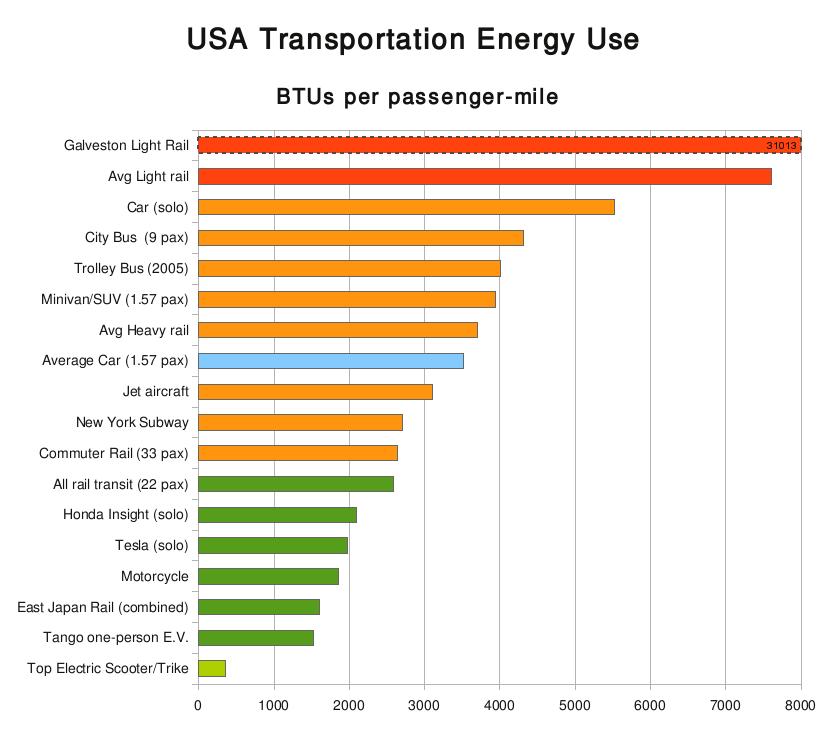
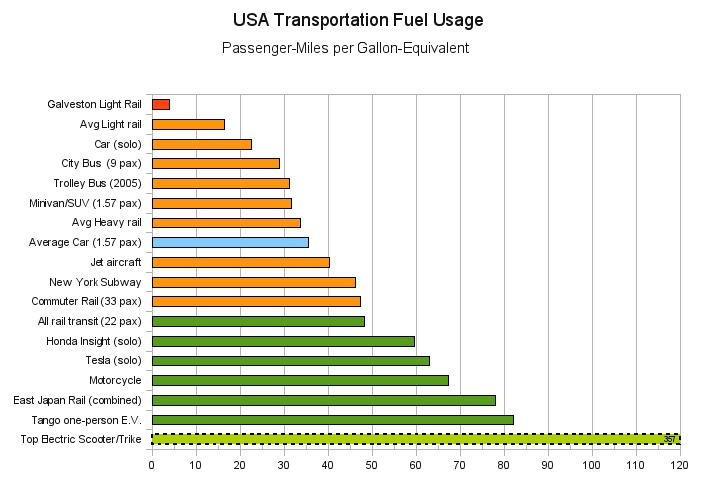
Is green U.S. mass transit a big myth? Yes, Brad Templeton discovers, after pulling numbers from the U.S. government bureau of transportation statistics and the Dept. of Energy Transportation Energy Data Book (especially table 2-12).

USA Transportation Energy Use
BTUs per passenger-mile


How can this be?
A full bus or trainload of people is more efficient than private cars, sometimes quite a bit more so. But transit systems never consist of nothing but full vehicles. They run most of their day with light loads. The above calculations came from figures citing the average city bus holding 9 passengers, and the average train (light or heavy) holds 22. If that seems low, remember that every packed train at rush hour tends to mean a near empty train returning down the track.

Transit vehicles also tend to stop and start a lot, which eats a lot of energy, even with regenerative braking. And most transit vehicles are just plain heavy, and not very aerodynamic. Indeed, you'll see tables in the DoE reports that show that over the past 30 years, private cars have gotten 30% more efficient, while buses have gotten 60% less efficient and trains about 25% worse. The market and government regulations have driven efforts to make cars more efficient, while transit vehicles have actually worsened.

In order to get people to ride transit, you must offer frequent service, all day long. They want to know they have the freedom to leave at different times. But that means emptier vehicles outside of rush hour. You've all seen those huge empty vehicles go by, you just haven't thought of how anti-green they were. It would be better if off-hours transit was done by much smaller vehicles, but that implies too much capital cost -- no transit agency will buy enough equipment for peak times and then buy a second set of equipment for light demand periods.

Transit planning is also driven by different economies. Often transit infrastructure (including vehicles) is paid for by state or federal money, while drivers (but also fuel) are paid from local city budgets. This seems to push local city transit agencies to get bigger vehicles and fewer drivers where they can, since drivers tend to be hired full-time and can't be kept idling in low-demand periods.
In Templeton's opinion, you should still take transit, because the marginal energy cost of one more transit passenger is much less than the energy cost of one more car, even if the average cost is no lower.

In fact, because transit systems have high fixed costs and low variable costs, they need high ridership to make sense, which has led to massive subsidies to reduce prices:
Transit fares are highly subsidized. It's not uncommon for a $1.50 transit ticket to offer a ride that costs the agency 3-4 times as much to provide. (In U.S. big cities, on average subsidies pay for 44% of rail cost and 69% of bus cost. Suburban buses can see almost 90%.) Cars are also subsidized of course, via roads (which also provide subsidy to buses, trucks and street cars, of course) and via free parking and forced parking construction requirements. To the extent that roads are funded by gasoline taxes — which varies from place to place — this is not a subsidy so much as a user fee.
Anyway, Templeton also provides his numbers in MPG-equivalents.


Labels: , , ,

Serious Accidents and Teamwork

In Serious Play, Michael Schrage describes how a life-or-death management issue was uncovered by accident, when regulators went to test the safety of pilots working longer shifts in the newly deregulated air-travel market of the 1980s:
The researchers tested two groups of test crews: those who flew the scenario after a minimum of two days off, as if it were the first leg of a three-day trip (preduty) and those who flew the scenario as the last segment of a three-day trip (postduty). The scenario was characterized by poor weather that forced a missed approach to a landing. The missed approach was further complicated by a hydraulic-system failure that created a high-speed, high-workload situation. The two pilots had to select an alternate landing site and manually extend the plane's gears and flaps while flying an approach at higher-than-normal speed.

As expected, the postduty crews had had less presimulation sleep and reported singificantly more fatigue. But, to the researcher' astonishment, "fatigued crews were rated as performing significatnly better and made fewer serious operational errors than the rested, preduty crews."

As NASA's researchers commented, "in hindsight, the finding shouldn't have been a surprise at all. By the very nature of the scheduling, most crews in the postduty condition had just completed three days of operation as a team. By contrast, those in the preduty condition normally did not have the beneft of recent experience with their other crew members."

When the researchers reanalyzed their data, fatigue was found to be a far less statistically significant safety factor than whether the crews had recently flown together. The simulation fidings indicate that crew schedules resulting in frequent mixing of pilot teams can have significant operational implications. The NASA researchers noted that no fewer than three of the wors 1980s-era accidents — a stall under icy conditions, an aborted takeoff that landed the plane in the water, and a runway collison in dense fog — all involved crews paired for the first time.

Labels:

Al Gore Places Infant Son In Rocket To Escape Dying Planet

Al Gore Places Infant Son In Rocket To Escape Dying Planet:
Former vice president Al Gore — who for the past three decades has unsuccessfully attempted to warn humanity of the coming destruction of our planet, only to be mocked and derided by the very people he has tried to save — launched his infant son into space Monday in the faint hope that his only child would reach the safety of another world.

"I tried to warn them, but the Elders of this planet would not listen," said Gore, who in 2000 was nearly banished to a featureless realm of nonexistence for promoting his unpopular message. "They called me foolish and laughed at my predictions. Yet even now, the Midwest is flooded, the ice caps are melting, and the cities are rocked with tremors, just as I foretold. Fools! Why didn't they heed me before it was too late?"

Al Gore — or, as he is known in his own language, Gore-Al — placed his son, Kal-Al, gently in the one-passenger rocket ship, his brow furrowed by the great weight he carried in preserving the sole survivor of humanity's hubristic folly.
You can thank The Onion for that one.

Labels: ,

OPEC 2.0

In OPEC 2.0, Tim Wu makes an eye-opening comparison:
Americans today spend almost as much on bandwidth — the capacity to move information — as we do on energy. A family of four likely spends several hundred dollars a month on cellphones, cable television and Internet connections, which is about what we spend on gas and heating oil.

Labels:

More-Efficient OLED Lighting

Researchers at the University of Michigan and Princeton University have developed more-efficient OLED lighting:
Energy efficiency and flexible lighting applications have long been the promise of organic light emitting diodes (OLEDs). The technology hasn't lived up to its promise, however, because in typical OLEDs, only 20 percent of the light generated is released from the device. That means that most light is trapped inside the bulb, making it highly inefficient.
The new technology boosts illumination by 60 percent by using micro-lenses to guide the trapped light out of the device:
In OLEDs, white light is generated by using electricity to send an electron into nanometer-thick layers of organic materials that behave like semiconductor materials. Typically, the light in the substrate is internally reflected and runs parallel and not perpendicular. That's the crux of the problem because the light can't escape in the vertical direction without some coaxing. In Forrest's devices, the grids refract the trapped light, sending it to the five micrometers dome-shaped micro lenses. The light is sent off in a vertical orientation that helps release the trapped rays.

Forrest and his coworkers report that the technology emits about 70 lumens from a watt of power. In comparison, incandescent lightbulbs emit 15 lumens per watt. Fluorescent lights put out roughly 90 lumens of light per watt but have liabilities: they produce harsh light, lack longevity, and use environment-damaging substances like mercury.

Labels:

Starbucks has deployed a new type of employee

Starbucks has deployed a new type of employee at its 58th-St. store in New York, and Joel Spolsky is displeased:
This employee wore a radio headset. Her main job was to go down the line of people waiting to order and ask them what they wanted in advance of their arriving at the cash register.
What's the problem?
There [at the register], they would be asked to repeat their order before paying and finally joining the line of customers waiting for their drinks to appear.
I have to agree; that sounds truly annoying. Someone at Starbucks Gossip explained the "benefit" of this system:
I learned from the website that the woman I had seen in the headset taking orders was officially called an expediter — but the job title is something of a red herring, according to the collective wisdom of the Starbucks staff members chatting on the site.

Expediters are not really there to see to it that a customer's order is filled more quickly, they believe. Rather, expediters exist solely to prevent people in line from giving up and wandering off, maybe to go to the Dunkin' Donuts around the corner. Once a customer places an order, the logic goes, he or she feels an ethical obligation to wait for it to be filled, no matter how long the process takes. Expediters are there to lock in that order as soon as possible.

Labels:

The Biggest Issue

In his recent op-ed piece, The Biggest Issue, David Brooks asserts that the U.S. became the leading economic power of the 20th century because of its "ferocious belief" that people have the power to transform their own lives, which led to an "unparalleled commitment" to education, hard work and economic freedom:
Between 1870 and 1950, the average American’s level of education rose by 0.8 years per decade. In 1890, the average adult had completed about 8 years of schooling. By 1900, the average American had 8.8 years. By 1910, it was 9.6 years, and by 1960, it was nearly 14 years. [...] Educational levels were rising across the industrialized world, but the U.S. had at least a 35-year advantage on most of Europe. In 1950, no European country enrolled 30 percent of its older teens in full-time secondary school. In the U.S., 70 percent of older teens were in school.
Brooks calls this a "happy era" and laments that it ended around 1970, but he seems to assume that all education is good education, and that any additional education must lead inexorably to economic progress — or at least to capturing a bigger piece of the pie:
Goldin and Katz describe a race between technology and education. The pace of technological change has been surprisingly steady. In periods when educational progress outpaces this change, inequality narrows. The market is flooded with skilled workers, so their wages rise modestly. In periods, like the current one, when educational progress lags behind technological change, inequality widens. The relatively few skilled workers command higher prices, while the many unskilled ones have little bargaining power.
This implies to me that a handful of remarkable technologists move us all forward, but more-educated workers capture more of the surplus than unskilled workers.

Anyway, I've commented on James Heckman's Schools, Skills, and Synapses (PDF) before. Brooks emphasizes a few of Heckman's points:
Heckman points out that big gaps in educational attainment are present at age 5. Some children are bathed in an atmosphere that promotes human capital development and, increasingly, more are not. By 5, it is possible to predict, with depressing accuracy, who will complete high school and college and who won’t.

I.Q. matters, but Heckman points to equally important traits that start and then build from those early years: motivation levels, emotional stability, self-control and sociability.
I'm not sure how Brooks can read Heckman's work and emphasize the "depressing accuracy" of educational predictions and still draw the policy conclusions he draws:
It’s not globalization or immigration or computers per se that widen inequality. It’s the skills gap. Boosting educational attainment at the bottom is more promising than trying to reorganize the global economy.
How do we "boost educational attainment at the bottom" when educational attainment is "depressingly" easy to predict by age 5?

Labels: , ,

More-Efficient Thermoelectrics

Thermoelectrics — semiconductors that converts heat into electricity — haven't been widely used because they are expensive and inefficient, but researchers have recently developed much more efficient thermoelectrics by adding trace amounts of thallium to lead telluride:
The added thallium doubled the material's ability to convert heat into electricity by increasing the voltage that it produces. Heremans says that the improved efficiency could translate into a 10 percent increase in the fuel economy of cars if the devices are used to replace alternators in automobiles by generating electricity from the heat in exhaust.
[...]
Conventional lead telluride thermoelectrics convert about 6 percent of the energy in heat into electricity. Once it's incorporated into a thermoelectric generator, the more efficient thallium-enhanced material could increase this to 10 percent, once losses, such as those from making electrical connections, are taken into account.
One drawback is that thallium is extremely toxic.

Anyway, thermoelectrics could increase the fuel economy of cars, because cars waste a lot of energy as heat — almost all of it, in fact.


Currently cars use an alternator to transform mechanical energy into electricity — to recharge the battery, etc. — but thermoelectrics could transform some of that wasted heat instead.

(Hat tip à mon père.)

Labels:

Mamma Mia! is dangerous, perhaps evil, and certainly hypocritical in the extreme

Conservative science-fiction author Orson Scott Card says that Mamma Mia! is excellent art and entertainment — but it is also dangerous, perhaps evil, and certainly hypocritical in the extreme:
As entertainment, as art, there is so much to love.

As a social artifact, this movie is so loathsome it almost gives me a rash. Here's why:

I can live with all the politically correct cant: You don't need to find your father to find yourself! I'm glad I raised my daughter alone, it was better that way. We don't need no piece of paper from the city hall! (Oh, wait, that was Joni Mitchell — but the sentiment is there, all right.) Isn't it cute that Colin Firth's character turns out to be gay?

I can live with it because I've been numbed. But what I can't live with is the vile hypocrisy of it. Because, while the dialogue keeps delivering punchy little slogans for the elitist anti-marriage crowd (and all the pro-marriage sentiments are uttered by a naif who, at the end, changes her mind), this movie absolutely depends, for all its emotional interest and impact, on the audience's innate longing for love and marriage, monogamy and fidelity, babies and nuclear families with a mom and a dad.

In other words, they're having their cake and eating it, too. This movie has no point, it does not work, without the audience's commitment to the traditional (and, one might even say, culturally necessary) moral worldview.

And yet the movie pretends to be post-marriage and post-family.

The problem is that while coasting on tradition, Mamma Mia! is normalizing the civilizational deathwish of our current cultural elite. As a social artifact, it isn't worth scraping off of the bottom of my shoe.

I had a wonderful time watching it.

Labels: ,

Tuesday, July 29, 2008

Zucchiniware

It has been a while since I mentioned Michael Schrage's Serious Play, but I thought I'd share the story of Zucchiniware:
One of the dullest low-level tasks in creating software at Microsoft is managing "the daily build," which is, in practice, a daily prototype of the product in process. The person performing the daily build collects all the code from the programmers on the product team and puts it on a single computer to see if it all works together. For years, this task was performed by an entry-level person and regarded as mind-numbing grunt work. One manager changed that in a way that made the process more efficient and more effective. Instead of delegating the task to a grunt, the manager gave the daily-build responsibilities to the people writing the code. Each day the programmers would give their code to one "buildmeister," who put it all together. If the code wasn't compatible, the person whose software "broke the build" became buildmeister as punishment until someone else's code broke the build. In the summer of 1996, the buildmeister was also given an enormous zucchini — "the zucchini of questionable freshness," — sometimes with Groucho Marx glasses and a fake nose, to keep until the next buildmeister was named.

Delegating the task of buildmesiter to the team changed Microsoft's daily prototyping process for the better. More developers got to see how their work fit together, or didn't. No one wanted to be buildmeister, so an extra incentive to hand in quality code was created. What's more, the unpleasant task of build management was equitably shared by everyone in the group. Accountability, responsibility, and quality were thus aligned.

The realignment had other important repercussions. The smartest and savviest high-level software developers hated being buildmeisters and wanted to spend as little time on the task as possible. But instead of weaseling out, they wrote tools to automate the task of buildmeister. The result? Microsoft developrs now manage the build with a fraction of the friction and in a fraction of the time they did in the mid-1990s.

Labels: , ,

Army Wants 'First-Person Thinker' Video Game

David Axe notes that "video games are all the rage in the U.S. Army," but "almost all of them are street-level, tactical games for young grunts." Major Kyle Burley, a staffer at the Army War College, wants to see something to help make better generals, something he calls a first-person thinker:
Today Burley uses a moderated, text-based game that simulates top command during an imaginary Second Korean War. Essentially, the game is just a series of chat rooms where colonels hash out potential command decisions, and a moderator decides whether they’re good decisions or not. What Burley wants is an "immersive" game with a live 3D environment and avatars for the players. "Ideally, we would have a virtual, online, Web-access roleplaying environment which allows students to be an avatar [that] probably looks much like the student, and they're given a skin like in Second Life that is equivalent to their position, and they go into different moderated rooms and talk to fellow roleplayers that are in that scenario."
I think Burley is missing the point. There's nothing first-person about being a general; a general gives orders. His job is to get information, usually by talking to people, and make decisions, which has nothing to do with 3D movement.

Labels: , ,

Monday, July 28, 2008

Leopard savaging a crocodile caught on camera

Crocodiles have been known to catch and eat leopards from time to time, but now a leopard has been caught on camera "savaging" a crocodile — which is a pretty big risk to take for not much meat:


(Hat tip to Tyler Cowen.)

Labels:

Tall ships make a comeback as oil price hits exports

Tall ships make a comeback as oil price hits exports:
A British schooner docked in Penzance yesterday carrying 30,000 bottles of wine on a voyage that enthusiasts believe will herald a return to wind power in merchant shipping.

The first commercial cargo of French wine to be transported by sail in the modern era is due in Dublin this week after a six-day journey, which is being touted as a green and ultimately cheap alternative to fuel propulsion.

The 108-year-old, wooden, triple-masted Kathleen & May has been chartered by the Compagnie de Transport Maritime à la Voile (CTMV), a shipping company established in France to specialise in merchant sailing. “This is beyond anybody's dreams,” said Steve Clarke, the owner of the Kathleen & May, which was built in 1900 in Ferguson and Baird's yard at Connah's Quay near Chester.

“When I bought this boat in 1966 it was going to be cut up with chainsaws. Nobody ever imagined it would ever sail again.” He said that amid high fuel costs and concern over carbon emissions, commercial sailing ships could have a future. “I think they might have hit on something.”
Amusingly, the Kathleen & May site is still offering "an exceptionally rare opportunity to purchase an important part of Britain’s maritime heritage":
Built in 1900, the Kathleen & May is the only wooden triple-masted sailing schooner still in existence. One of only 60 famous tall ships on the UK’s National Register of Historic Vessels, neighbours include the Cutty Sark and HMS Victory. Beautiful and graceful, this tall ship has been completely and sympathetically renovated to its original 1900 specification.

Labels: ,

Why we never need to build another polluting power plant

Joseph Romm argues that we never need to build another power plant, because we can just use our current energy supply more efficiently — but power companies have no incentive to push conservation:
The more electricity a utility sells, the more money it makes. If it's able to boost electricity demand enough, the utility is allowed to build a new power plant with a guaranteed profit. The only way a typical utility can lose money is if demand drops.
California, of course, has pushed conservation:
In the past three decades, electricity consumption per capita grew 60 percent in the rest of the nation, while it stayed flat in high-tech, fast-growing California. If all Americans had the same per capita electricity demand as Californians currently do, we would cut electricity consumption 40 percent. If the entire nation had California's much cleaner electric grid, we would cut total U.S. global-warming pollution by more than a quarter without raising American electric bills. And if all of America adopted the same energy-efficiency policies that California is now putting in place, the country would never have to build another polluting power plant.
How did California do it?
Many of the strategies are obvious: better insulation, energy-efficient lighting, heating and cooling. But some of the strategies were unexpected. The state found that the average residential air duct leaked 20 to 30 percent of the heated and cooled air it carried. It then required leakage rates below 6 percent, and every seventh new house is inspected. The state found that in outdoor lighting for parking lots and streets, about 15 percent of the light was directed up, illuminating nothing but the sky. The state required new outdoor lighting to cut that to below 6 percent. Flat roofs on commercial buildings must be white, which reflects the sunlight and keeps the buildings cooler, reducing air-conditioning energy demands. The state subsidized high-efficiency LED traffic lights for cities that lacked the money, ultimately converting the entire state.

Significantly, California adopted regulations so that utility company profits are not tied to how much electricity they sell. This is called "decoupling." It also allowed utilities to take a share of any energy savings they help consumers and businesses achieve. The bottom line is that California utilities can make money when their customers save money. That puts energy-efficiency investments on the same competitive playing field as generation from new power plants.

The cost of efficiency programs has averaged 2 to 3 cents per avoided kilowatt hour, which is about one-fifth the cost of electricity generated from new nuclear, coal and natural gas-fired plants. And, of course, energy efficiency does not require new power lines and does not generate greenhouse-gas emissions or long-lived radioactive waste.
Saving energy is a surprisingly easy way to save a lot of money, as Dow Chemical's Louisiana division found out when it held an employee contest for energy-saving ideas:
The first year of the contest had 27 winners requiring a total capital investment of $1.7 million with an average annual return on investment of 173 percent. Many at Dow felt that there couldn't be others with such high returns. The skeptics were wrong. The 1983 contest had 32 winners requiring a total capital investment of $2.2 million and a 340 percent return — a savings of $7.5 million in the first year and every year after that. Even as fuel prices declined in the mid-1980s, the savings kept growing. The average return to the 1989 contest was the highest ever, an astounding 470 percent in 1989 — a payback of 11 weeks that saved the company $37 million a year.

You might think that after 10 years, and nearly 700 projects, the 2,000 Dow employees would be tapped out of ideas. Yet the contest in 1991, 1992 and 1993 each had in excess of 120 winners with an average return on investment of 300 percent. Total savings to Dow from just those projects exceeded $75 million a year.
Ironically, the Department of Energy needed a similar competition to reduce its own energy waste:
As they were at Dow, many DOE employees were skeptical such opportunities existed. Yet the first two contest rounds identified and funded 18 projects that cost $4.6 million and provided the department $10 million in savings every year, while avoiding more than 100 tons of low-level radioactive pollution and other kinds of waste. The DOE's regional operating officers ended up funding 260 projects costing $20 million that have been estimated to achieve annual savings of $90 million a year.
Naturally Romm thinks the answer lies in more and better federal regulations. I suspect higher energy prices will get companies looking to reduce energy waste.

Labels: ,

Saturday, July 26, 2008

Writing what I should have written so many years ago

Kevin Myers continues his politically incorrect writing by writing what [he] should have written so many years ago:
The people of Ireland remained in ignorance of the reality of Africa because of cowardly journalists like me. When I went to Ethiopia just over 20 years ago, I saw many things I never reported — such as the menacing effect of gangs of young men with Kalashnikovs everywhere, while women did all the work. In the very middle of starvation and death, men spent their time drinking the local hooch in the boonabate shebeens. Alongside the boonabates were shanty-brothels, to which drinkers would casually repair, to briefly relieve themselves in the scarred orifice of some wretched prostitute (whom God preserve and protect). I saw all this and did not report it, nor the anger of the Irish aid workers at the sexual incontinence and fecklessness of Ethiopian men. Why? Because I wanted to write much-acclaimed, tear-jerkingly purple prose about wide-eyed, fly-infested children — not cold, unpopular and even "racist" accusations about African male culpability.
(Hat tip to Michael Blowhard.)

Labels:

TapouT Holds the Ring in a Scrappy Game

MMA has gone mainstream, as evidenced by its MSM coverage.

For me, the highlight of BusinessWeek's recent piece is the picture of Charles "Mask" Lewis, looking like a clown, saying, "We're respected."

Yes, yes, that's exactly what I was thinking — respected.

Labels: ,

Sid and Marty Krofft are still pulling the strings

Puppeteers Sid and Marty Krofft are still pulling the strings:
Universal Pictures has just finished principal photography on a $100-million adaptation of "Land of the Lost," the mid-1970s Krofft show about a family stranded in a jungle teeming with dinosaurs and hissing reptile-men called Sleestak.
Seriously, a $100-million adaptation of Land of the Lost? It gets wackier:
The remake is a comedy starring Will Ferrell, and Universal has circled it as its big popcorn movie for summer 2009.

Labels:

Radiation-Seeking Fungus

In Chernobyl, wildlife is thriving. In fact, in the old reactor, a new radiation-seeking fungus is thriving:
In 1999, a robot sent to map the inside of the reactor returned with samples of a particularly black fungi, indicating an abundance of the biological pigment melanin, which also colours your skin.

Though melanin is typically associated with 'protective' properties – absorbing and safely transforming different electromagnetic wavelengths, such as DNA-damaging ultraviolet light – the researchers had an inkling that a more extraordinary phenomenon was allowing the fungi to prosper; something still involving the combination of melanin and radiation, but beyond the bounds of radioactive protection.

After all, even without melanin, many fungi are intrinsically radiation-resistant.

Their hunch was bolstered by findings of melanised fungi, happily congregating in the cooling pools of functional nuclear reactors, and by studies of dark, 'radiation-seeking' fungi, purposefully growing towards radioactive particles in soil, particularly around Chernobyl.

The team looked to the example of photosynthesis as a model, said Casadevall. If plants can use the green pigment, chlorophyll, to absorb energy from the Sun and produce a usable form of chemical energy, they reasoned, fungi might be able to use their melanin pigment and radiation energy in a similar way. They even devised the snazzy moniker, 'radiosynthesis', for the process.

To test their idea, the group analysed three different types of fungi, including Cladosporium sphaerospermum, the species abundant in and around Chernobyl. Using ionising radiation from the radioactive isotope, caesium-137, they exposed the fungi to radiation doses similar to those inside the damaged reactor, and about 500 times greater than the Earth's normal background level.

Melanin-containing fungi exposed to the radiation – even when nutrient-starved on purpose – grew significantly larger and up to 2.5 times faster than fungi without melanin and those not exposed to radiation.

Labels: ,

Friday, July 25, 2008

The strange case of the superheroes, the geeks and the studios

The strange case of the superheroes, the geeks and the studios explains that Comic-con is put on by a non-profit entity:
I posited to the folks that put together Comic-con that not only might they be making a wack-load more money if they went into business — or at least had a for-profit arm — but that they might even be better at fulfilling their stated mission. Why let the studios make all this money off their backs? Some obvious profit-maximizing efforts for Comic-con would include raising ticket prices or moving the whole event — which sells out and bursts the seams of San Diego's convention center — to a bigger venue like Las Vegas. Variety recently noted that the event's $75 four-day passes were being scalped for as much as $300.

Here's a quick financial profile, based on Comic-con's most recent publicly-available financial statement, for the fiscal year ended August 2006: The company earned roughly $1 million on revenues of nearly $6 million, and had some $5 million in retained earnings. Only four full-time employees make more than $50,000, and the highest paid made $76,000 that year. One of the four, marketing chief David Glanzer, told me eagerly that the convention "isn't about the money, it's about the content. We're a group of fans trying to put on a show."

Labels: ,

Tesla's wild ride

Tesla's wild ride got particularly wild when PayPal co-founder Elon Musk offered to fund the fledgling electric-car company:
Musk saw the franchise-dealership arrangements that U.S. car companies had tangled themselves up in as an increasingly expensive, margin-killing model. He wanted to own and operate Tesla dealerships rather than franchise them. He wanted final say over all decisions — which he would get by naming himself chairman. And finally, Musk demanded that they close the deal in two weeks. His wife was expecting twins, and he needed everything buttoned up by then. Though Musk had a reputation for outsized thinking and an ego to match, Eberhard wasn't in a position to be picky. As he puts it, "You take money from the people who offer it to you."

Tesla now had funding, a business plan, and even a chassis. The first prototype of Tesla's car, dubbed the Roadster, would be based on a $45,000 fiberglass-skinned sports car that Lotus sold, called the Elise. Lotus made fast, light cars and also had the virtue of being the only sports car manufacturer that would give Tesla management the time of day. While Eberhard was thrilled to have a viable plan to build the Roadster, Musk had even bigger ideas. "Eberhard's initial stimulus for starting Tesla was to build the EV he wanted to buy," says Wright. "Musk had a much grander vision: He wanted to be the next General Motors."
[...]
As the car progressed, staffers began to realize that a green light from Eberhard was not sufficient. "The question always had to be asked," says Tarpenning, "'What will Elon think of that?'"

As time went on, Musk became more and more comfortable pulling rank. Jessica Switzer, who ran marketing at Tesla until the car's official launch in 2006, recalls persuading Eberhard to spend $30,000 on focus groups to test the car's logo, look, and feel. A few weeks later Musk killed the project without explanation. With Eberhard's approval, Switzer hired people from a PR firm in Detroit to drum up publicity in the automotive press before the car's launch. Musk promptly fired them. She later learned that Musk didn't want to spend money on marketing before the car was finished and figured his own involvement and the car itself would drum up more than enough PR.

When it came to design, Musk's vision — building the Next Great American Car Company — soon came into conflict with Eberhard's goal of getting a cool electric sports car to market quickly and relatively cheaply. The Lotus Elise chassis on which the Roadster was based had a high doorsill, a feature that makes entering the car tricky if you are not careful. Getting out is even harder. It took several attempts for Musk's wife to get out of an early Roadster prototype while wearing a dress. So Musk ordered the engineers to lower the doorsill two inches, thereby losing much of the cost savings that come from using a crash-tested off-the-rack chassis. "Have you tried getting out of an Elise?" asks Musk. "It's like you have to be a contortionist."

And rather than use the fiberglass body panels from the Elise that Eberhard had suggested, Musk insisted on carbon fiber, a lighter, stronger, and "cooler" material, in his opinion. He then went on to redesign the headlights and the door latches. After riding for a weekend in an early Roadster model and taking a beating in the standard Lotus seats, he insisted that custom seats be developed. Every change meant additional cost and time. "I always argued that we would sell exactly as many cars whether the door latches were push-button or electronic, whether the body panels were carbon fiber or fiberglass," Eberhard says. "All the nicer, cooler, faster stuff increased risk."

But Musk got his way, in large part because he was putting more and more of his own money into Tesla. He led Tesla's $12 million second round of financing in the fall of 2005, and also convinced some of his high-powered friends, including Google founders Sergey Brin and Larry Page and eBay employee No. 2, Jeff Skoll, to invest in later rounds. To date, he has personally put in $55 million of the $145 million Tesla has raised.

Musk, who is precise in his sentences, laughs easily, and if fired up will literally leap from his chair to punctuate a comment, admits he poked his nose into everything. "I was very insistent on things during the design phase, and it is true those things cost money," he says, "but you can't sell a $100,000 car that looks like crap." Unfortunately, while the exterior of the Tesla was designed and redesigned to meet Musk's exacting specifications, there was one very big problem: Two months before the car was set to debut in the summer of 2006, it still didn't have a production-ready transmission.
I remember being perplexed by Tesla's transmission problem, because electric vehicles generally have very simple transmissions with just one gear:
Electric motors have the advantage of being lightning fast from a standing start. But to get to the top speed that Tesla had promised (125 mph), they needed either a more powerful drive train or a second gear that could send the car speeding beyond 100 mph.

Problem was, Tesla's engineering team didn't yet have the experience to build a more powerful drive train, and no one had come up with a two-speed transmission that could go from 13,000 rpm to 7,000 rpm and survive for more than a few thousand miles before it wore out. Eberhard was inclined to stay on schedule, get cars on the road by sticking with one gear, and offer a Roadster that topped out at 110 mph.

Instead Musk launched the search for a supplier that could deliver a two-speed transmission. "Why did DeLorean fail?" Musk asks. "Because it was a shitty sports car. It may have looked cool, but it had the acceleration of a Honda Civic. That's what our car would have been with the motor we had and the power electronics we had connected to a single speed."
The whole point of an electric sports car is not top speed.

Labels: ,

Thursday, July 24, 2008

Homeland Security Cost-Benefit Analysis

Bruce Schneier looks at John Mueller's homeland security cost-benefit analysis, titled The Quixotic Quest for Invulnerability: Assessing the Costs, Benefits, and Probabilities of Protecting the Homeland:
The premises:
  1. The number of potential terrorist targets is essentially infinite.
  2. The probability that any individual target will be attacked is essentially zero.
  3. If one potential target happens to enjoy a degree of protection, the agile terrorist usually can readily move on to another one.
  4. Most targets are "vulnerable" in that it is not very difficult to damage them, but invulnerable in that they can be rebuilt in fairly short order and at tolerable expense.
  5. It is essentially impossible to make a very wide variety of potential terrorist targets invulnerable except by completely closing them down.
The policy implications:
  1. Any protective policy should be compared to a "null case": do nothing, and use the money saved to rebuild and to compensate any victims.
  2. Abandon any effort to imagine a terrorist target list.
  3. Consider negative effects of protection measures: not only direct cost, but inconvenience, enhancement of fear, negative economic impacts, reduction of liberties.
  4. Consider the opportunity costs, the tradeoffs, of protection measures.
Here's the abstract:
This paper attempts to set out some general parameters for coming to grips with a central homeland security concern: the effort to make potential targets invulnerable, or at least notably less vulnerable, to terrorist attack. It argues that protection makes sense only when protection is feasible for an entire class of potential targets and when the destruction of something in that target set would have quite large physical, economic, psychological, and/or political consequences. There are a very large number of potential targets where protection is essentially a waste of resources and a much more limited one where it may be effective.

Labels: ,

The closer you are to the ball, the higher your score

The closer you are to the ball, the higher your score on the Wonderlic IQ test. Ben Fry decided to illustrate this:
Wonderlic himself says that basically, the scores decrease as you move further away from the ball, which is interesting but unsurprising. It’s sort of obvious that a quarterback needs to be on the smarter side, but I was curious to see what this actually looked like. Using this table as a guide, I then grabbed this diagram from Wikipedia showing a typical formation in a football game. I cleaned up the design of the diagram a bit and replaced the positions with their scores....To make the diagram a bit clearer, I scaled each position based on its score....With the proportion, I no longer need the numbers, so I’ve switched back to using the initials for each position’s title:


I'm odd enough that this was one of my first questions:
Don’t tell Tufte that I’ve used the radius, not the proportional area, of the circle as the value for each ellipse! A cardinal sin that I’m using in this case to improve proportion and clarify a point.
(Hat tip to Alex Tabarrok.)

Labels: ,

Royal Marine who jumped on grenade awarded George Cross

A Royal Marine who jumped on a grenade was awarded the George Cross — which is like the Victoria Cross, but is awarded for bravery while not in the face of the enemy:
"It was a case of either having four of us as fatalities or badly wounded — or one," he said after the incident last February in Helmand province

L/Cpl Croucher, 24, was part of a company of 40 Commando sent to investigate a suspected Taliban bomb-making factory near the town of Sangin when he set off the trip-wire booby-trap that unleashed the deadly grenade.

"I thought, 'I've set this bloody thing off and I'm going to do whatever it takes to protect the others,'" he said.

The Marine then shouted "Grenade. Take cover" to three men close to the bomb.

"I knew a grenade like this has a killing circumference of about five metres," he said. "I'd been through this scenario in my mind and realised there was nowhere to take cover — there's no point running off because you're going to catch shrapnel.

"The lads behind me would have caught a lot too."

The serviceman, from Birmingham, "fully expected" to lose a limb but was willing to make the sacrifice "if I could keep my torso and head intact".

He dived onto the floor, rolled over and used his backpack — containing a 66mm rocket, a large lithium battery and medical kit — to cover the lethal shrapnel fragments from the coming blast.

When the bang went off he was thrown through the air and suffered just a nose bleed.

"It took 30 seconds before I realised I was definitely not dead," he said.

The astonished Marines looked on as L/Cpl Croucher's body armour and backpack shielded everyone from the blast which caused a few cuts and bruises.

L/Cpl Croucher was examined by a medic who recommended he should be evacuated but the Marine, who has completed three tours of Iraq, was determined to stay to fight the Taliban and within an hour had shot an insurgent approaching their position.

Labels:

On Board Energy Storage

Rod Adams explains how on-board energy storage is the reason why automobile engineers chose fossil fuel so many years ago — and why we still use fossil fuel today:
When you look at the products of the reaction in a balanced equation — where all of the input elements are accounted for in the outputs — you will discover that the products weigh about 4.5–5 times as much as the hydrogen and carbon input.

The rest of the weight comes from oxygen. Here is the chemical equation often used to describe gasoline combustion (gasoline is actually a complex combination of various hydrocarbons each with different numbers of carbon and hydrogen atoms, but C8H18 is representative of them all.)

C8H18 + 12.5 O2 → 8 CO2 + 9 H2O

By mass, only 114 units out of 514 units are in the gasoline, while the rest is in the oxygen. This is important for vehicles because oxygen does not need to be carried — it can be sucked in as needed. There is also no technical requirement — in the absence of new regulations — to capture and store the waste products and carry them around.

The people who developed the internal combustion engines were seeking a way to eliminate the weight of the water, piping and pressure vessels that limited the portability of steam engines. They figured out that they could use the hot products from combustion to directly move pistons and turbines as long as the input fuel did not have too many contaminants that could damage the engine parts. Coal and wood contain a lot of contaminants and both of those solid materials cannot be moved with pumps.

Batteries have to contain all of the chemicals on both sides of their energy releasing equation. The very best batteries available today can store about 0.4 MJ/kg (0.05 kw-hr/lb) including the cases and safety systems. In contrast, gasoline carries about 46 MJ/kg (5.7 kw-hrs/lb).

Even with a 20% efficient IC engine, a gasoline tank stores 20 times as much energy as a battery of equal weight. As the vehicle is moving it gets rid of some of that weight. Battery powered vehicles must carry the full weight of their energy source.

The energy density difference also plays a key role in the time that it takes to put more energy back on the vehicle once a fuel load is consumed. A two minute fill-up of a 12 gallon tank puts the equivalent of 87 kilowatt-hours into the vehicle, again, taking into account the 20% thermal efficiency.

87 kilowatt-hours in 2 minutes works out to 2.6 MegaWatts. Even with a 220 volt connection, that would require about 11,800 amperes of current. Just imagine the size of the electric cables for that current.

Labels:

Soy foods 'reduce sperm numbers'

Soy foods 'reduce sperm numbers' — or lesser men eat soy:
The Harvard School of Public Health study looked at the diets of 99 men who had attended a fertility clinic with their partners and provided a semen sample.

The men were divided into four groups depending on how much soy they ate, and when the sperm concentration of men eating the most soy was compared with those eating the least, there was a significant difference.

The "normal" sperm concentration for a man is between 80 and 120 million per millilitre, and the average of men who ate on average a portion of soy-based food every other day was 41 million fewer.

Dr Jorge Chavarro, who led the study, said that chemicals called isoflavones in the soy might be affecting sperm production.

These chemicals can have similar effects to the human hormone oestrogen.

Dr Chavarro noticed that overweight or obese men seemed even more prone to this effect, which may reflect the fact that higher levels of body fat can also lead to increased oestrogen production in men.

Labels: ,

Wednesday, July 23, 2008

Barely Alive, Seafloor Microbes Might Resemble Exo-Organisms

Barely Alive, Seafloor Microbes Might Resemble Exo-Organisms:
Deep below the sea floor live massive colonies of primitive microbes.

Almost like one-celled zombies, these microbes use so little energy that it might be more accurate to call them undead rather than alive.

Yet scientists think that the species might provide a model for life on other planets. Even on this planet, such microbes might account for a whopping 10 percent of the Earth's biomass.

"In essence, these microbes are almost, practically dead by our normal standards," said Christopher House, a geosciences professor at Penn State University, and the lead author of the paper, in a release. "They metabolize a little, but not much."

The cold, lightless and energy-poor conditions under the seafloor provide a promising research analog for the harsh conditions in subsurface Martian soil or near hydrothermal vents on Europa, Jupiter's second moon.

"We do not expect the microbes in other places to be these microbes exactly," said House. "But, they could be living at a similar slow rate."

Subseafloor microbes, according to a metagenomic analysis to be published Thursday in Proceedings of the National Academy of Sciences , are genetically distinct from life on Earth's surface and oceans. The Archaea the Penn State researchers found might look like bacteria, but they don't eat or work like them. While E. coli might double its numbers in 30 minutes, Archaea could take hundreds or even thousands of years to accomplish the same amount of growth.

The researchers conducted their work off the coast of South America in a region known as the Peru Margin. They sampled genetic material from the biomes at varying depths. Below 160 feet, the researcher said Archaea account for 90 percent of the life present, and represent the most unique environment thus far revealed by metagenomic analysis.

The Archaea represent a thus-far untapped genetic repository for scientists looking for novel genes for changing metabolism, withstanding cold or synthesizing chemicals.

Labels:

Drug for deadly prostate cancer

Researchers have developed a new drug for deadly prostate cancer:
It had been assumed that the cancer was driven by sex hormones such as testosterone produced in the testicles.

Current treatments work by stopping the testicles from producing testosterone.

However, experts have now discovered that the cancer can feed on sex hormones from all sources, including supplies of the hormone produced by the tumour itself.

Abiraterone works by blocking production of the hormones throughout the body.

The latest study, published in the Journal of Clinical Oncology, is based on just 21 patients with advanced, aggressive prostate cancer treated with the drug — but data has been collected on a total of 250 worldwide.

It found significant tumour shrinkage, and a drop in tell-tale levels of a key protein produced by the cancer called prostate specific antigen in the majority of patients.

Many of the patients have reported a significant improvement in the quality of their lives.

Some were able to stop taking morphine for the relief of pain caused by the spread of the disease to their bones.

Labels:

California adopts innovative solar loan law

California adopts innovative solar loan law:
The law, sponsored by Assemblyman Lloyd Levine (D- Van Nuys), allows cities and counties to make low-interest loans to homeowners and businesses to install solar panels, high-efficiency air conditioners and other improvements to save energy. Participants can pay back the loans as part of their property taxes. If they move, the improvements and loan balance are transferred to the next owner.

The financing scheme, if adopted by cities, is likely to give a statewide boost to the installation of solar panels to generate electricity. Solar power systems can cost between $15,000 and $30,000 — more than many homeowners can afford, although state rebates cover much of the cost. But with the loans, and the guarantee that the investment will not be lost when people sell their homes, the risk is dramatically reduced.
This might work for "green" technologies that actually make financial sense, like geothermal heat pumps, but which require big up-front investment — especially because consumers don't yet know they make financial sense.

Labels: , ,

The Mystery of “b := (b = false)”

Stuart Reges explains The Mystery of “b := (b = false)” — and a few other "powerhouse questions" on the computer science advanced placement exam:
Most multiple-choice questions on the exam had few significant correlations with other parts of the exam. But a small set of five questions had a nontrivial correlation with many parts of the test. One question in particular demonstrated such correlations. It asked about the effect of the assignment statement “b := (b = false)” for a boolean variable b. One interpretation of this data is that these questions are testing general programming aptitude.
[...]
Computer Science educators have for years complained that introductory courses seem to be divided between a group of students who “get it” and a group of students who do not. Donald Knuth has written about this phenomenon:
“Educators of computer science have repeatedly observed that only about 2 out of every 100 students enrolling in introductory programming classes really resonate with the subject and seem to be natural-born computer scientists…I conclude that roughly 2% of all people ‘think algorithmically,’ in the sense that they can reason rapidly about algorithmic processes.”
[...]
It was an unpublished study conducted by Gerrit DeYoung in which he found that a measure of quantitative reasoning was not a predictor of success in a course for CS majors but was a reasonable predictor of success in a course for nonmajors. Knuth’s tentative conclusion was that there is some kind of CS aptitude that is not measured by standard tests of quantitative reasoning and that students who lacked that ability were instead relying on general quantitative aptitude.
[...]
What exactly do the powerhouse questions look like? Let’s explore question 23 in depth because it had the most nontrivial correlations. The exact text of the question is reproduced below:
23. If b is a Boolean variable, then the statement b := (b = false) has what effect?
(A) It causes a compile-time error message.
(B) It causes a run-time error message.
(C) It causes b to have value false regardless of its value just before the statement was executed.
(D) It always changes the value of b.
(E) It changes the value of b if and only if b had value true just before the statement was executed.
Only 5.4% of the students skipped the question. Of those who answered, 60% got it right. And getting this question right turned out to be a predictor of success on most of the rest of the exam, including solving complex problems like reversing a linked list.

To answer this question correctly, a student has to be able to read the code and simulate its execution. They also have to be able to identify the correct answer among the given choices.
[...]
So what do the powerhouse questions have in common? They all involve reading and understanding code. They all test whether students have a proper mental model of program execution. And they involve some of the most central concepts from the first year programming course: logic, recursion and two-dimensional arrays.

The author had the opportunity to present these results to a group of Stanford faculty, including the late Bob Floyd. Floyd, who had taught introductory programming many times, commented that the greatest single predictor he had noticed for success was whether students had a mental model of program execution, whether they could “play computer” in their head. He commented that these questions seemed to be very good at measuring that ability.
[...]
Knuth provides an intriguing intuition about this in talking about the difference between mathematical reasoning and algorithmic thinking:
“The other missing concept that seems to separate mathematicians from computer scientists is related to the ‘assignment operation’ :=, which changes values of quantities. More precisely, I would say that the missing concept is the dynamic notion of the state of a process. ‘How did I get here? What is true now? What should happen next if I’m going to get to the end?’ Changing states of affairs, or snapshots of a computation, seem to be intimately related to algorithms and algorithmic thinking.”
Question 23 is about assignment for a boolean variable that requires thinking about its value before the assignment statement and what value it will have afterwards.

Labels: ,

Tuesday, July 22, 2008

Photographing thugs 'is assault', police tell householder snapping proof of anti-social behaviour

If this is true, the UK is self-destructing even faster than I realized. Photographing thugs 'is assault', police tell householder snapping proof of anti-social behaviour:
David Green, 64, and his neighbours had been plagued by the youths from a nearby comprehensive school for months, and was advised by their headmaster to identify them so action could be taken.

But when Mr Green left his £1million London flat to take photographs of the gang, who were aged around 17, he said one threatened to kill him while another called the police on his mobile.

And he claimed that a Police Community Support Officer sent to the scene promptly issued a warning that taking pictures of youths without permission was illegal, and could lead to a charge of assault.

Labels:

Start-Up May Aid Telecoms' Reach

A new start-up may aid telecoms' reach into developing nations with its low-energy base stations:
Some two billion new subscribers are projected to start using mobile phones in the next five years, and 80% of them live in developing-world markets, according to analyst estimates. Yet wiring villages without reliable electricity, and where residents have little money to spend, requires a technological rethink.

To power mobile networks in remote areas today, telecommunications operators pair base stations — the tower-top radio transmitters that form the backbone of mobile networks — with diesel-powered generators and batteries. These are impractical and expensive: Fuel accounts for 65% of the cost of operating a typical base station.

VNL, which has headquarters in New Delhi and Stockholm, has spent the past four years developing a simplified base station that is powered by solar panels and requires just a fraction of the electricity of typical base stations.
[...]
VNL's base station will cost $3,500 and require 100 watts to run, about the same as a light bulb. By contrast, the GSM stations most widely used today can cost anywhere from $40,000 to $100,000. The most energy-efficient models require around 600 watts; others may need several thousand watts.

"We started with a clean sheet of paper, and told ourselves that we needed to design technology perfectly suited for the rural environment," says VNL Chief Executive Anil Raj, a former executive at Ericsson.

The tower is designed to make it easy for people with little professional training to install. The equipment comes with a pictorial instruction manual similar to those for Ikea's do-it-yourself furniture. It has just one button, used to turn it on. Once the pole is erected, the base station beeps intermittently until the radio antenna is rotated manually to face the direction of the mobile network. When the antenna is perfectly aligned, the sound steadies.

Labels: ,

Toy rocket inspires variable-speed bullets

Toy rocket inspires variable-speed bullets:
Lund and Company Invention, a toy design studio based near Chicago, makes toy rockets that are powered by burning hydrogen obtained by electrolysing water. Now the company is being funded by the US army to adapt the technology to fire bullets instead.

The US Army are interested in arming soldiers with weapons that can be switched between lethal and non-lethal modes. They asked Company Invention to make a rifle that can fire bullets at various speeds.

The new weapon, called the Variable Velocity Weapon System or VWS, lets the soldier to use the same rifle for crowd control and combat, by altering the muzzle velocity. It could be loaded with "rubber bullets" designed only to deliver blunt impacts on a person, full-speed lethal rounds or projectiles somewhere between the two.

Bruce Lund, the company's CEO, says the gun works by mixing a liquid or gaseous fuel with air in a combustion chamber behind the bullet. This determines the explosive capability of the propellant and consequently the velocity of the bullet as it leaves the gun. "Projectile velocity varies from non-lethal at 10 metres, to lethal at 100 metres or more, as desired," says Lund.

The company says that the weapon produces less heat and light than traditional guns. It can also be made lighter and could have a high power setting for long-range sniping.

Police already fire non-lethal projectiles from standard shotguns. These are known as "beanbag" rounds, bags of lead shot which will knock down a suspect at ranges of up to 10 metres. They are termed "non-lethal", but can cause bruising or even broken ribs.

Labels: ,

Monday, July 21, 2008

Some Athletes’ Genes Help Outwit Doping Test

In a Swedish study, 55 men were given testosterone injections and then given the standard drug test. Most of the men tested positive, but 17 did not.

Some Athletes’ Genes Help Outwit Doping Test:
Those 17 men can build muscles with testosterone, they respond normally to the hormone, but they are missing both copies of a gene used to convert the testosterone into a form that disso