One Man, One Vote, One Time

Tuesday, June 23rd, 2015

Ian Smith flew for the RAF in WWII and then returned to Rhodesia and eventually become Prime Minister at an interesting time in African history:

Countries were becoming “independent.”

The post-independence period in all the sub-Saharan countries followed a strangely predictable pattern. Smith called it the “one man, one vote, one time” pattern. In addition to the rise of (generally Communist) dictators for life, the independence movements were also characterized by the rape and slaughter of any remaining white Africans (although it’s supposedly important to protect minorities, protecting whites in Africa is apparently affirmatively bad), massive reductions in economic output and the general decay or outright disappearance of any semblance of civilization. Nevertheless, the Americans and the British (and, of course, the Russians – purely coincidentally, I’m sure) continued to push for independence.

“Freedom” came to Ghana (1957), Nigeria (1960), Congo (1960), Uganda, Tanzania, Kenya, Zanzibar (later part of Tanzania), with largely predictable results.

The writing was on the wall for Rhodesia by the early ’60s. They met to draft a new Constitution in hopes the British would grant them independence. Obviously, given the success of other independence movements, the ruling elite (mostly white) were reluctant to follow the fully-democratic route. In drafting the constitution, the leaders met with and obtained approval from over 600 tribal chiefs.

The history of the various constitutions and negotiations is too long (and frankly too depressing) to repeat. Read it, if you can stomach it.

The British perpetually pushed for full elections. The Rhodesians would have elections and consultations with tribal leaders. Always, the elections were considered unrepresentative by the British. Mugabe would convince his supporters to boycott, for example, and the British would be up in arms. Always, the constitutions stated explicitly that the political system was dedicated to “unimpeded progress to majority rule.” It was never enough. Full elections were nearly impossible anyway, in a country that had never taken a census, in which most citizens had no birth certificates, and most citizens were illiterate.

The British essentially outsourced their foreign policy in Africa to the OAU. That organization became a collective of third-rate communist dictators. A fun group to bargain with.

The international community exerted increasing pressure on Rhodesia. The UN labelled Smith a threat to world peace – apparently not wishing to plunge his country into chaos and destruction is a threat to world peace. The UN blockaded the country, even though they simultaneously didn’t recognize its independence. The UN thereby (according to its own logic) blockaded part of the United Kingdom.

Early on, the blockade was largely ineffective. In fact, it gave a boost to agricultural production (at this point Rhodesia actually started exporting food) and industry. However, the blockade put Rhodesia at the mercy of South Africa and Portugal (via it’s colonies, particularly Mozambique).

In a few years, the Portuguese government was overthrown. Portugal soon abandoned its colonies and “free” Mozambique declared war on Rhodesia (ah, freedom).

At this point, Rhodesia was entirely reliant on South Africa for things like access to the sea and bullets. Smith viewed apartheid as “unprincipled and totally indefensible” and an entirely untenable long-term solution.

At this point, South Africa basically threw Rhodesia under the bus, in hopes that doing so would appease the international community. If white South Africans weren’t getting it so badly, you’d almost think they deserved what they were getting for their treatment of Rhodesia.

One can’t help but wonder if South Africa and the international community had their own reasons to focus first on Rhodesia. Was the acceptance of ultimate black rule and the fact that blacks and whites had many equal rights too threatening to South Africa? Was the fact that Rhodesia was so successful too threatening to the international community? For whatever reason, Rhodesia had to be dealt with.

(Smith blames the Communists. Indeed, de-colonization resulted in communist governments in most of Africa. If you read this blog regularly, you may not be surprised that US and British foreign policies were entirely dedicated to gaining additional African territory for communists. Smith, however, was unable to believe that the US and Britain were promoting communist interests. If communists were trying to take over all of Africa (and ultimately the resource rich South Africa), taking Rhodesia first would be a necessary step. This, like much of post-war US and British foreign policy is probably just a coincidence though. It’s worth noting that when Smith visited the US or Britain and spoke to politicians, the politicians were always shocked by Smith’s arguments. Apparently the State Department and Foreign Office were passing communist propaganda on Rhodesia through to politicians. Another coincidence, I’m sure.)

As the situation became more dire, whites started leaving Rhodesia in larger numbers (economic output began declining accordingly). Smith stayed.

A group of black leaders emerged. Generally the leaders were generally tribal leaders (full democracy in these countries at these times just meant putting the largest tribe in control of the country). Leaders at the time include Nkomo, Sithole, Mugabe, and Muzorewa. The latter was the first Prime Minister after Smith, but wasn’t ruthless enough (and hostile enough to whites, one suspects) to keep Mugabe out.

Fully free elections (to the surprise of the British apparently, but not anyone who was actually paying attention) turned out to be competitions to see who could terrorize the largest number of citizens. The prize, under this enlightened method for choosing a leader, would obviously eventually be Mugabe’s.

Smith stayed in Rhodesia until he was stripped of his citizenship, at which point he left for South Africa. He died in 2007. The Zimbabwean “government” seized his land in 2012.

Confederate Flag

Sunday, June 21st, 2015

Confederate National FlagSon of the South explains the origin and evolution of the Confederate Flag:

With the formation of the Confederate States of America in early 1861, one of the first orders of business was to create a flag for the new nation. The Committee on the Flag and Seal was formed, and given this task. There were basically two schools of thought in creating the flag. One was to create something that looked very similar to the existing United States flag. The second school of thought was to create a flag very different than the existing United States flag. At the time, there was still feelings of allegiance to the original US flag, and popular opinion was lining up in support of a flag that was similar to the familiar United States flag.  Such a flag was created and proposed. This flag is pictured at [left].

The proposed flag resembled the United States flag, but replaced the “stripes” with 3 “bars”. The flag had 7 stars, one for each state that was part of the confederacy at the time. This flag was dubbed the “Stars and Bars”. The United States flag had been known as the “Stars and Stripes”. This flag had replaced the stripes with bars, so it was logical to call it the “Stars and Bars”. Note that today people often refer to the Confederate battle flag (pictured at the top of the page, on the left of the photograph) as the “Stars and Bars”. Strictly speaking, this is not a correct description of the Confederate battle flag.

Those who preferred a very different flag from that of the United States proposed several different flags, one of which resembled what would later become the Confederate battle flag.

In March of 1861, those who supported a flag similar to that of the United States prevailed, and the “Stars and Bars” became the official National flag of the Confederacy. The flag’s first official use was at the inauguration of Jefferson Davis on March 4, 1861.

As more states joined the Confederacy, more stars were added to the flag. Eventually the Stars and Bars had a total of 13 stars. The thirteen states represented were: South Carolina, Mississippi, Florida, Alabama, Georgia, Louisiana, Texas, Virginia, Arkansas, North Carolina, Tennessee, Missouri, and Kentucky. Note that Missouri and Kentucky never officially seceded, but were slave states, and did have some confederate state governments, although they were in exile for the most part.

With this matter resolved, the participants proceeded with the prosecution of the War. While there were several smaller skirmishes in early 1861, the first major battle of the year, and the war for that matter, was the Battle of Bull Run, which was fought on July 21, 1861. There were over 4,800 men killed or wounded on the two sides.

At the Battle of Bull Run, there were a number of Confederate regiments that used the Confederate national flag as their battle flag. While having a National flag that looks similar  to the old United States flag might have been comforting to the people of the newly formed Confederacy, it turned out to be a bad idea in battle. In battle, the purpose of a flag is to help identify who is who. Who is on your side, and who is on the other side. From this perspective, having two sides fight under flags that are similar in appearance is a very bad idea. It actually did cause some degree of confusion at the Battle of Bull Run.

The confusion caused by the similarity in the flags was of great concern to Confederate General P.G.T. Beauregard. He suggested that the Confederate national flag be changed to something completely different, to avoid confusion in battle in the future. This idea was rejected by the Confederate government. Beauregard then suggested that there should be two flags. One, the National flag, and the second one being a battle flag, with the battle flag being completely different from the United States flag.

Confederate Battle Flag

Beauregard was successful in having a separate battle flag created. The one chosen was actually similar to one of the flags that had earlier been proposed to be the National flag. The battle flag would be a blue X on a red field. As a battle flag, the flag would be square. The flag had 13 stars, for the thirteen states in the Confederacy. This flag was first used in battle in December 1861. Being a new flag, different from the United States flag, it gained widespread acceptance and allegiance among the Confederate soldiers, and population in general. The flag is referred to as the Confederate battle flag, and as the Battle Flag of the Army of Northern Virginia.

It should be noted, however, that there were many different confederate battle flags used at different times, and by different regiments in the war.

The National flag of the confederacy is almost forgotten today, and the battle flag of the Army of Northern Virginia has become the symbol most associated with the confederacy, and it remains a controversial, and divisive symbol to this day.

Not Likely to Start a Race War

Saturday, June 20th, 2015

The Charleston mass-murderer’s alleged manifesto is short — and not especially angry, although it does have its moments:

I was not raised in a racist home or environment. Living in the South, almost every White person has a small amount of racial awareness, simply beause of the numbers of negroes in this part of the country. But it is a superficial awareness. Growing up, in school, the White and black kids would make racial jokes toward each other, but all they were were jokes. Me and White friends would sometimes would watch things that would make us think that “blacks were the real racists” and other elementary thoughts like this, but there was no real understanding behind it.

The event that truly awakened me was the Trayvon Martin case. I kept hearing and seeing his name, and eventually I decided to look him up. I read the Wikipedia article and right away I was unable to understand what the big deal was. It was obvious that Zimmerman was in the right. But more importantly this prompted me to type in the words “black on White crime” into Google, and I have never been the same since that day. The first website I came to was the Council of Conservative Citizens. There were pages upon pages of these brutal black on White murders. I was in disbelief. At this moment I realized that something was very wrong. How could the news be blowing up the Trayvon Martin case while hundreds of these black on White murders got ignored?

From this point I researched deeper and found out what was happening in Europe. I saw that the same things were happening in England and France, and in all the other Western European countries. Again I found myself in disbelief. As an American we are taught to accept living in the melting pot, and black and other minorities have just as much right to be here as we do, since we are all immigrants. But Europe is the homeland of White people, and in many ways the situation is even worse there.

There’s more, if you’re curious.

Educational Romanticism & Economic Development

Friday, June 19th, 2015

What’s the best way to interpret Hausmann’s Education Myth?

Yes, “years of schooling” is a poor proxy for educational outcomes. But it captures very well the policy instrument that governments can actually control easily — building large boxes and herding children into them like cattle. That investment has obviously not caused a convergence in test scores between developed and developing countries.

There’s no evidence that education, how ever measured, promotes the sort of growth rates that result in eventual convergence with the rich countries. There’s plenty of evidence to suggest education has contributed to the positive but relatively low growth rates which have been insufficient for convergence. Economic growth research implicitly assumes that the rapid convergence of East Asia with the western countries is ‘normal’ and the slow growth of other non-western countries ‘abnormal’. But maybe the former is the anomaly.

NYPD Chief Bratton

Thursday, June 18th, 2015

From The Guardian, an article about a public official telling the truth:

“We have a significant population gap among African American males because so many of them have spent time in jail and, as such, we can’t hire them,” Bratton said in an interview with the Guardian.

So far, Steve Sailer says, William Bratton has remained strikingly invulnerable to social justice hate mobs over the decades:

This is probably because he has presided over crime declines as top cop in Boston, New York, and Los Angeles. Those are cities where important citizens live. They are not podunk burghs like Ferguson. So leftist Bill de Blasio hired him to run the NYPD again.

Bratton is both a slick politician and rather more of a straightshooter than we’re used to these days.

Sailer cites this blunt, wise 2006 interview:

Q. [Frum] So you know a little bit about our city? You know about our problems? A 27-per-cent increase in the number of homicides from 1995 to today. A Boxing Day slaying where a 15-year-old innocent bystander was gunned down during a gang shootout on a major shopping street. Can I tell you — it would be nice if you were our police chief.

A. [Bratton] Well, thank you. Tell me, the gang violence that you are experiencing, what is the racial or ethnic background of the gangs?

Q. That’s a refreshingly blunt question. Some say it may be as high as 80 per cent Jamaican. But no one knows for sure, because people here don’t like to talk about that.

A. You need to talk about it. It’s all part of the issue. If it’s Jamaican gangs that are committing the crimes, well then, go after the Jamaican gangs. And don’t be afraid to go after them because they’re black. That’s the last thing you need to be concerned with.

Q. Oh boy, I can see the complaints coming in already. You have to understand the climate here. The major local daily in Toronto, the Toronto Star, says it doesn’t believe in “gratuitously” labelling people by ethnic origin.

A. Well, that really helps identify who they are, doesn’t it? The next step will be to refuse to allow the police to identify people by their race or ethnic origin. That type of societal consciousness really goes to extremes.

Waking Up In Indian Country

Wednesday, June 17th, 2015

James LaFond describes a horrific crime in his Baltimore neighborhood that reminds him of Indian Country in the Old West:

Is that not precisely the kind of attack a community can expect from bands of parentless young would-be warriors set loose among the working communities of the city as the dependents of subsidized two-legged bitch-egg hatcheries with $90 per month housing vouchers?

Does the tragic end of that girl’s promising life not read like a lurid 19th Century ‘blood and thunder’ dime novel tale of an Indian raid?

When Liver-eating Johnson [before he became the Liver-eater] went hunting for the winter and left his pregnant wife, The Swan, alone, and she was butchered by young untried Crow warriors operating on what was essentially their home range, they were acting no differently than these black savages, who were also seeking to literally carve their own tribal identity from the body of an innocent person.

On a strategic level, just as young Crow scouts — who were unable and unwilling to take on the Liver-eater when he went on the vengeance trail — watched his movement, and even spied on him when he returned to her bones to leave the scalps of his Crow victims, so do the savages in your home range spy on you. The unemployed, government subsidized, innocent, unarmed black teens in your community know when the dangerous man comes and goes and who he leaves in his lair. They must be convinced that you are not only too dangerous to attack, but that you are too dangerous for them to attack those you care about when you are absent. I guarantee that your worshipped government that you pay tithe and homage to is even now taking money that it has stolen from you, and is using it to plant violent criminal teens in your community. You might wish to act accordingly.

Young men — even innocent unarmed black male youth — are inherently, biologically, tribal, and will seek their own violent tribal expression in the absence of a true tribal order complete with manhood rituals. Is it any surprise, that, in a womanly society run along female lines, where manhood is essentially outlawed, that boys will appeal to the god Death in their pathetic attempts to become men, and that these appeals — coming as they are from boys — will naturally come at the expense of the weak and innocent?

Postmodern Urban America is reaping the sour harvest that it’s greedy mothers and absent fathers has sown, and Death is grinning.

Fearful Symmetry

Tuesday, June 16th, 2015

Scott Alexander sees a fearful symmetry between the social justice narrative and the anti-social justice narrative:

The social justice narrative describes a political-economic elite dominated by white males persecuting anybody who doesn’t fit into their culture, like blacks, women, and gays. The anti-social-justice narrative describes an intellectual-cultural elite dominated by social justice activists persecuting anybody who doesn’t fit into their culture, like men, theists, and conservatives. Both are relatively plausible; Congress and millionaires are 80% – 90% white; journalists and the Ivy League are 80% – 90% leftist.

The narratives share a surprising number of other similarities. Both, for example, identify their enemy with the spirit of a discredited mid-twentieth century genocidal philosophy of government; fascists on the one side, communists on the other. Both believe they’re fighting a war for their very right to exist, despite the lack of any plausible path to reinstituting slavery or transitioning to a Stalinist dictatorship. Both operate through explosions of outrage at salient media examples of their out-group persecuting their in-group.

They have even converged on the same excuse for what their enemies call “politicizing” previously neutral territory – that what their enemies call “politicizing” is actually trying to restore balance to a field the other side has already successfully politicized.

[...]

I see minimal awareness from the social justice movement and the anti-social-justice movement that their narratives are similar, and certainly no deliberate intent to copy from one another. That makes me think of this as a case of convergent evolution.

[...]

Although it’s very easy enter this state of hypervigilance yourself no matter how safe you are, it’s very hard to understand why anyone else could possibly be pushed into it despite by-the-numbers safety. As a result, we constantly end up with two sides both shouting “You’re making me live in fear, and also you’re making the obviously false claim that you live in fear yourself! Stop it!” and no one getting anywhere. At worst, it degenerates into people saying “These people are falsely accusing me of persecuting them, and falsely claiming to be persecuted themselves, I’ll get back at them by mocking them relentlessly, doxxing them, and trying to make them miserable!” and then you get the kind of atmosphere you find in places like SRS and Gamergate and FreeThoughtBlogs.

Analysis of Skeletal Remains

Tuesday, June 16th, 2015

Race is not skin deep. In fact, you can often identify the race of a human skeleton, especially if you have access to the skull:

There are several features that can be used to determine the race of an individual. In terms of the skull, a great place to start is the maxillary bone. The left and right maxillary bones form the roof of the mouth, contain the upper 16 teeth in the adult (the upper 10 teeth in the child), and form the outline of the nasal cavity (the nasal cavity itself involves several other bones: ethmoid, inferior nasal conchae, lacrimal, nasal, sphenoid, and vomer).

The arch of the maxilla can be found in three basic shapes: hyperbolic, parabolic, and rounded. Each of the the following three races have their own shape: (1) African = hyperbolic, (2) European = parabolic, and (3) Asian = rounded.

The incisors, as well, differ in their basic shape. The incisors (click HERE to refresh your memory) fall into two basic categories, based on the shape of the lingual (tongue) surface of the tooth. These two categories are: (1) shovel-shaped, and (2) spatulate, or spatula-shaped. As there is more than one race with spatulate incisors, other indicators are necessary to positively identify race, although this single feature can be used to eliminate one of the possibilities. Each of the the following three races have their own shape: (1) African = spatulate , (2) European = spatulate , and (3) Asian = shovel-shaped.

In addition to determining gender, there are characteristics of the skull that can be used to determine the race of an individual. Many of these features are quite subtle, and require detailed examination of the skull. A couple of features, however, are more easily seen. For example, in people of African ancestry, the nasal opening is more flared. Another example is that of the zygomatic arch (or cheek bone), which is angled more forward in people of Asian ancestry, thus giving the person a slightly more flattened face.

Cranial features are not perfect indicators of ancestry:

Forensic anthropologists using multiple features claim at best 85% accuracy in their assessment of racial ancestry. When we know less about the context of a skull, we will be less and less accurate.

Here are some traits that vary between skulls with different race backgrounds. Most of them are on the face or palate.

  • Shape of the eye orbits, viewed from the front. Africans tend to a more rectangular shape, East Asians more circular, Europeans tend to have an “aviator glasses” shape.
  • Nasal sill: Europeans tend to have a pronounced angulation dividing the nasal floor from the anterior surface of the maxilla; Africans tend to lack a sharp angulation, Asians tend to be intermediate.
  • Nasal bridge: Africans tend to have an arching, “Quonset hut”‘ shape, Europeans tend to have high nasal bones with a peaked angle, Asians tend to have low nasal bones with a slight angulation.
  • Nasal aperture: Africans tend to have wide nasal apertures, Europeans narrow.
  • Subnasal prognathism: Africans tend to have maxillae that project more anteriorly (prognathic) below the nose, Europeans tend to be less projecting.
  • Zygomatic form: Asians tend to have anteriorly projecting cheekbones. The border of the frontal process (lateral to the orbit) faces forward. In Europeans and Africans, these face more laterally and the zygomatic recedes more posteriorly.

Children of Uneducated Parents Don’t Go to College

Monday, June 15th, 2015

Norwegians whose parents did not go to college are just as unlikely to go as Americans whose parents did not go to college — even though tuition’s basically free in Norway and far from free in the US:

And what happens is that — even though it’s essentially free — only 14 percent of children from the least-educated families in Norway go to college, compared to 58 percent of children from the most-educated families, according to an analysis by a Norwegian education researcher, Elisabeth Hovdhaugen.

That’s almost exactly the same proportion as in the United States, where the cost of college is borne largely by students and their families, and where the Organization for Economic Development and Cooperation reports that only 13 percent of children of parents without higher educations end up getting degrees themselves.

Inconceivable!

It’s a huge issue, considering that fully one-third of five- to 17-year-olds in the United States have parents who did not go to college, the College Board reports, at a time when policymakers are trying to increase the number of Americans with degrees. They’ll be needed to fill the 65 percent of jobs by 2020 that will require some sort of college or university training, according to the Georgetown University Center for Education in the Workforce.

The circularity here amuses me. Very, very few jobs require the skills taught in college. Many more require the kind of people who go to college. As more people go, more graduates are needed.

Some of these Norwegian “problems” are also amusing:

Also, because wages remain high for blue-collar occupations, she said, there’s less of a financial incentive for some Norwegians to bother with college, since they can get jobs more quickly, and earn almost as much money, working as plumbers or electricians. American advocates for higher education worry that a similar thing might be happening in the U.S., as people increasingly question the return on investment for degrees; a new federal report shows that the average annual earnings of 25- to 34-year-olds with bachelor’s degrees actually fell from $53,210 in 2000 to $46,900 in 2012, even as tuition continued to rise.

“A bachelor’s degree in the U.S. has been seen as one serious option for getting into the middle class, whereas in Norway everything is a ticket into the middle class, because everyone is in the middle class,” Rice said. “It’s now less clear that it really is a ticket into the middle class in the U.S.”

The causality here is a mystery:

American students’ scores on the SAT and other college entrance exams also correlate with the level of their parents’ educations; the better-educated a student’s parents, the higher he or she scores on the tests, according to the College Board, which administers the SAT.

Since education affects income, children whose parents didn’t go to college are also unlikely to be well off, said Margaret Cahalan, vice president for research at the Pell Institute for the Study of Opportunity in Higher Education. And families that are less well off are statistically more likely to face health problems, problems with the law and unplanned pregnancies, among other challenges.

Students from such backgrounds “are going to be on average facing more obstacles than a student who comes from a more advantaged background,” including nonfinancial ones, Cahalan said.

The credulity:

With a third of U.S. primary and secondary school students now coming from families without higher educations, the most important lesson is that cultural, and not just economic, considerations may keep many of them from going on to college.

Young people from backgrounds such as these, when considering whether or not to go to college, often “don’t even really know that they can go to the library and borrow books” instead of buying them, said Gomperts.

“How do you know that? You’re not born knowing such a thing. And who’s going to tell you? Stripping away the money piece shows how complicated this is.”

These poor things! No one has taught them about libraries in their first 13 years of public education!

I Made an Untraceable AR-15 ‘Ghost Gun’ in My Office — And It Was Easy

Monday, June 15th, 2015

Andy Greenberg decided to make an untraceable AR-15 ghost gun — that is, to finish off an 80-percent-finished AR lower, which isn’t legally a gun yet — three different ways:

I would build an untraceable AR-15 all three ways I’ve heard of: using the old-fashioned drill press method, a commercially available 3-D printer, and finally, Defense Distributed’s new gun-making machine.

In Baltimore Arrests are Down and Crime is Way Up

Sunday, June 14th, 2015

We are seeing a Ferguson effect in Baltimore, Alex Tabarrok notes — or, rather, a Freddie Gray effect:

Arrests in Baltimore have fallen by nearly 40% since Freddie Gray’s funeral and the start of the riots on April 27. In the approximately 3 months before the Gray funeral police made an average of 87.7 arrests per day, since that time they have made only 54.6 arrests a day on average (up to May 30, most recent data).

[...]

Not all arrests are good arrests, of course, but the strain is cutting policing across the board and the criminals are responding to incentives. Fewer police mean more crime. As arrests have fallen, homicides, shootings, robberies and auto thefts have all spiked upwards. Homicides, for example, have more than doubled from .53 a day on average before the unrest to 1.35 a day after (up to June 6, most recent data)–this is an unprecedented increase–and the highest homicide rate Baltimore has ever seen.

[...]

With luck the crime wave will subside quickly but the longer-term fear is that the increase in crime could push arrest and clearance rates down so far that the increase in crime becomes self-fulfilling. The higher crime rate itself generates the lower punishment that supports the higher crime rate (see my theory paper). In the presence of multiple equilibria it’s possible that a temporary shift could push Baltimore into a permanently higher high-crime equilibrium.

What do people think of democracy around the world?

Saturday, June 13th, 2015

Public opinion surveys show that people really like the idea of democracy. As Xavier Marquez puts it, asking about democracy is like asking about motherhood:

In most of these countries (including many countries most people would classify as “authoritarian”), more than 75% of the population says that having a democratic system is a “very good” or a “fairly good” idea, while only small minorities claim democracy is a “very bad” or a “fairly bad” idea. In the modal country, in other words, large majorities are “pro-democracy” in some abstract sense. Nevertheless, these same majorities are not always very discriminating about what they consider “good” political systems. In some countries, large numbers of people agree both with the idea that democracy is a good form of government, and that having the army rule, or having a strong leader “that does not bother with parliament and elections” is also a good thing.

[...]

The WVS also asks a number of questions about whether people consider various things “essential” to democracy, ranging from classic liberal ideas (free elections, equality under the law, civil rights) to economic and social outcomes (income equality, unemployment help, progressive taxation), to “antiliberal” ideas (“religious authorities interpret the laws,” “army takes over if the government is incompetent”). And though many people all over the world tend to agree that elections and other liberal freedoms are essential to democracy, there are clear differences in public opinion about what other things they also consider essential.

[...]

If I may speculate here, elections only seem to legitimate governments — ensuring some degree of institutional stability — when people already agree that they are fair. They do not have any magic “legitimating” powers if people do not already agree on their fairness; and whether people agree on the fairness of elections is only in part a function of their objective fairness. Deep conflicts in society may “spill over” to the fairness of elections.

Trans-Racial

Saturday, June 13th, 2015

Earlier this year, the Spokane Police Department began investigating hate mail that Rachel Dolezal claimed she found in the P.O. Box for the Spokane chapter of the NAACP, where she’s president:

Dolezal said there were pictures of lynchings and references to local cases concerning race in the envelope.

During the course of the investigation, the Spokane Police Department noticed that there were important marks missing from the package.

Although delivered to a post office box, there was no date stamp or bar code on the envelope, according to a police report.

[...]

These letters are not the first time Dolezal has reported being a victim of a crime. She said she has been the victim of burglary, death threats and in two cases, nooses left on her property in Spokane and Idaho.

But the real story is that Dolezal has been pretending to be black this whole time:

Ruthanne and Larry Dolezal said Thursday that they want people to know the truth, including that their daughter Rachel Dolezal is Caucasian. The Dolezals said their daughter is specifically German and Czech.

Rachel Dolezal

When Did Healthy Communities Become Illegal?

Friday, June 12th, 2015

When did healthy communities become illegal?, Charles Tuttle asks:

The scene is Upper Monarch Lake, ten thousand feet up in the mountains of the Sequoia National Park in California. If you got here, you climbed thousands of feet in elevation through the wilderness, carrying your tent, sleeping bag, and all your supplies on your back. There is not a single graffito or piece of trash to be seen. If you should happen to have neighbors in a nearby tent for the night, you will not worry a bit about whether they will steal your gear or harm you in the night, even though they are strangers. More likely, they’ll invite you to share some of their bourbon.

Why do backpackers feel safe sleeping outside in public at 10,000 feet but not in their own city parks? It is the steep barrier to entry that creates this microcosm of community that so naturally emerges: anyone who has made it here has the physical, material, social, and informational resources to pass this natural test of good character.

The same is true, to a lesser extent, of Burning Man – the travel and resource outlay required to get to the desert festival forms a barrier high enough to allow for the formation of a temporary community, one in which participants feel safer interacting with strangers than they might in their own hometowns.

Natural human intuition about character has served people well in forming and pruning communities for thousands of years. Specific legal interventions in the United States, however, have limited the ability of individuals to act on their local social intuition and traditions, substituting a legal notion of radical inclusion. Legislation removed barriers to entry that people had erected for their communities, acting in turn on four core areas of social cohesion. While communities at first adapted to the new restrictions and evolved around them, eventually they became so warped that they began to fail to perform their most basic functions: providing members with social belonging, usefulness to others, a sense of meaning, and safety.

The first of the big four areas of life to be threatened by legislation was business – especially the kind of business that might have been called an inn or public house in another time, that is, public accommodations and restaurants. The Civil Rights Act of 1964 made discrimination on the basis of race, color, religion, or national origin illegal for businesses of this kind. Federal and state laws have since expanded this anti-discrimination provision significantly; almost half of all states also prohibit discrimination against gay people by businesses, and Colorado recently forced a religious baker to either bake cakes for gay weddings, against his religious principles, or go out of business.

No longer does the restaurateur, publican, or even baker have the privilege to exclude anyone he chooses from his premises and service, for any reason or no reason. Some argue that the publican is better off; with more potential customers, his market is larger now. But is money the only imaginable motivation for owning a small business of this sort, the kind that underpins communities? A barrier to entry for customers at the pub has been removed. The only barrier that is still legal – as we will see in later sections – is money. Rather than having an exclusive pub with its clientele weeded by a kingly proprietor, the patrons must pay high prices as a substitute barrier to entry. Another solution is to arrange businesses so that customers need not interact with strangers, a small-scale version of modern city planning.

This is not a defense of the practice of racial discrimination. But outlawing bad discrimination has chilled the expression of good discrimination – of intuitive, personal discrimination, which sometimes but not always takes things like race or sexual orientation into account. (The race of neighbors at Upper Monarch Lake would scarcely make a difference.) Discrimination – the selection of some and exclusion of others for social interaction – had acquired the characteristic of a slur, but it is a necessary faculty for humans and groups. Peaceful people can hardly remain so if they can’t exclude destructive people. Discrimination, like speech, needs to be free from the chilling effects of lawsuits.

The right of a business proprietor to kick out anyone he likes seems a minuscule freedom in comparison to decades of legal oppression of a race of people descended from legal slaves. But black communities have served as a mascot for legislation rather than actually benefitting from it.

Shame if somebody were to politicize it

Wednesday, June 10th, 2015

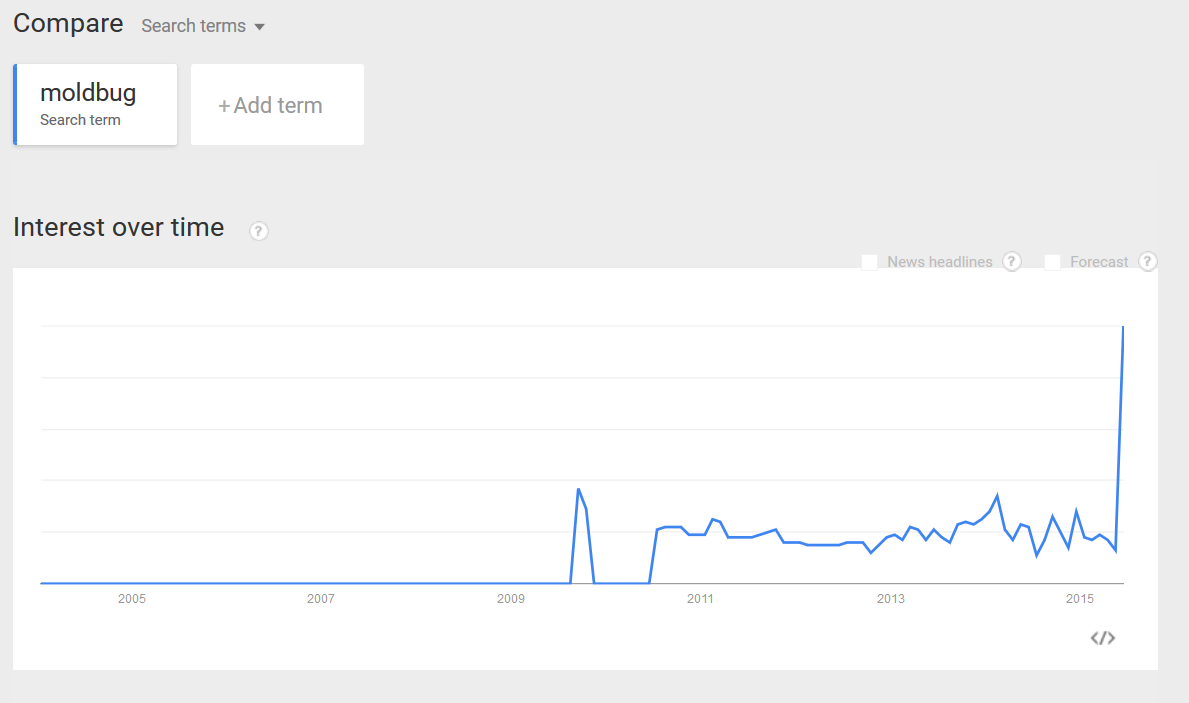
Scott Alexander summarizes the latest hullabaloo:

Curtis Yarvin (aka “Mencius Moldbug”) was invited to give a presentation on his new computer system Urbit to the Strange Loop tech conference. Then some of his ideological enemies (actually literal Communists) found out, objected to his political views, and he got banned from the conference. Article here, Hacker News thread here, impressively prescient Moldbug post here, demonstration of inevitable Streisand Effect here. I did consider not linking this since it’s so obviously toxoplasma, but I was convinced to do so by this letter where the conference organizer states he’s never read any Moldbug himself, but decided to cave to the ban request because otherwise politics overshadow the conference, which was supposed to be about tech. This kind of crystallizes a pattern I’ve been noticing recently where some social justice activists use a tactic along the lines of “Nice institution youse gots here, shame if somebody were to politicize it”. I sympathize with the desire to give into that to avoid trouble, but I think maybe the only way to avoid enshrining that kind of heckler’s veto always working is to make it clear that the choice to give in will also be politicized. Maybe if organizers know that banning all insufficiently-leftist-people and not banning all insufficiently-leftist-people will both result in politicization and Internet firestorms, they’ll say “screw it” and just follow their principles.