 NASA scientists have found higher life beneath 600 feet of ice, where a three-inch shrimp-like Lyssianasid amphipod swam up to their video camera, and a foot-long jellyfish left behind a tentacle.
Scientists find creatures beneath 600 feet of ice
Tuesday, March 16th, 2010The Snake Made Us Human
Tuesday, March 16th, 2010Anthropologist and animal behaviorist Lynne Isbell posits that Genesis has it right — the snake made us human:
Coolly testing hypotheses and assessing evidence across an impressive range of disciplines — neuroscience, primate behavior, paleogeography, molecular biology, and genetics — she argues that our distant primate relatives developed their exceptional ability to see and identify “objects that were close by and in front of them” in order to detect and avoid what was almost certainly their most dangerous predator — the snake. This unique visual acuity led indirectly (to crudely oversimplify) to the peculiar evolutionary path of primate brains. Furthermore, as Isbell points out, of all the species, only humans point declaratively, and we are much better at following the pointing of others to our visual periphery than to our visual center, and while looking down rather than up. “What was it outside central vision and in the lower visual field that was so urgent for our ancestors to see that it caused neurological changes to enable us to turn automatically in the direction of a gaze and a pointing finger?” Isbell asks. Her answer: snakes. “I cannot think of any other object in the lower visual field that would have been more difficult to see and more unforgiving if missed.” The relationship between declarative pointing and the evolution of language is so strong, neurological and cognitive studies find, that the two are, to a degree, interchangeable.
Killer Whale Kills Again
Thursday, February 25th, 2010 Tilikum, a 30-year-old orca, or killer whale, has just killed its third human, Dawn Brancheau, one of the more experienced trainers at SeaWorld in Orlando:
Brancheau’s interaction with the whale appeared leisurely and informal at first to audience member Eldon Skaggs. But then, the whale “pulled her under and started swimming around with her,” Skaggs told The Associated Press.
Babies and Bunnies
Monday, February 22nd, 2010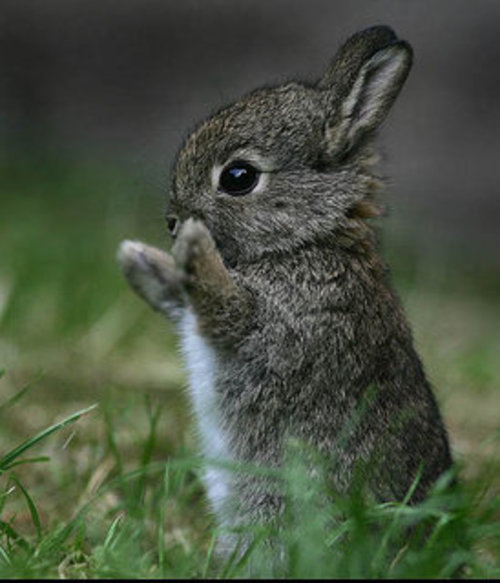 When Alicorn compares babies and bunnies, she finds the bunnies much cuter, which puzzles her:
Now, bunnies are not evolutionarily important for humans to like and want to nurture. In fact, bunnies are edible. By rights, my evolutionary response to the bunny should be “mmm, needs a sprig of rosemary and thirty minutes on a spit”.
She and all the commenters seem to be missing the obvious evo-psych explanation — probably because they’ve grown up in the suburbs, with zero exposure to farming or ranching.
We’re a race of hunter-gatherers who evolved into pastoralists and farmers. We instinctively take care of cute little animals — until they grow up and turn not-cute. Then, suddenly, they become edible. It’s almost as if we instinctively raise animals for food…
Edit: Apparently Alicorn is upset that I did not recognize her feminine nature by her user name, which is the technical term for a unicorn’s horn. I’ve since replaced neutral masculine pronouns with explicitly feminine ones. (I can be reached, by the way, at isegoria at this domain — which is a .net domain.)
Platypus Babies
Monday, January 25th, 2010Platypus babies are cute:

Moscow’s stray dogs
Tuesday, January 19th, 2010 Moscow’s stray dogs number in the tens of thousands — the current best guess is 35,000, or 84 stray dogs per square mile — and they fall into four basic categories:
Those that remain most comfortable with people Poyarkov calls “guard dogs”. Their territories tend to be garages, warehouses, hospitals and other fenced-in institutions, and they develop ties to the security guards from whom they receive food and whom they regard as masters. I’ve seen them in my neighbourhood near the front gate to the Central Clinical Hospital for Civil Aviation. When I pass on the other side with my dog they cross the street towards us, barking loudly.“The second stage of becoming wild is where the dog is socialised to people in general, but not personally,” says Poyarkov. “These are the beggars and they are excellent psychologists.” He gives as an example a dog that appears to be dozing as throngs of people walk past, but who rears his head when an easy target comes into view: “The dog will come to a little old lady, start smiling and wagging his tail, and sure enough, he’ll get food.” These dogs not only smell who is carrying something tasty, but sense who will stop and feed them.
The beggars live in relatively small packs and are subordinate to leaders. If a dog is intelligent but occupies a low rank and does not get enough to eat, he will separate from the pack frequently to look for food. If he sees other dogs begging, he will watch and learn.
The third group comprises dogs that are somewhat socialised to people, but whose social interaction is directed almost exclusively towards other strays. Their main strategy for acquiring food is gathering scraps from the streets and the many open rubbish bins. During the Soviet period, the pickings were slim, which limited their population (as did a government policy of catching and killing them). But as Russia began to prosper in the post-Soviet years, official efforts to cull them fell away and, at the same time, many more choice offerings appeared in the bins. The strays flourished.
The last of Poyarkov’s groups are the wild dogs. “There are dogs living in the city that are not socialised to people. They know people, but view them as dangerous. Their range is extremely broad, and they are predators. They catch mice, rats and the occasional cat. They live in the city, but as a rule near industrial complexes, or in wooded parks. They are nocturnal and walk about when there are fewer people on the streets.”
But there’s also a fifth category of stray dog, the metro dog:
There is one special sub-group of strays that stands apart from the rest: Moscow’s metro dogs. “The metro dog appeared for the simple reason that it was permitted to enter,” says Andrei Neuronov, an author and specialist in animal behaviour and psychology, who has worked with Vladimir Putin’s black female Labrador retriever, Connie (“a very nice pup”). “This began in the late 1980s during perestroika,” he says. “When more food appeared, people began to live better and feed strays.” The dogs started by riding on overground trams and buses, where supervisors were becoming increasingly thin on the ground.Neuronov says there are some 500 strays that live in the metro stations, especially during the colder months, but only about 20 have learned how to ride the trains. This happened gradually, first as a way to broaden their territory. Later, it became a way of life. “Why should they go by foot if they can move around by public transport?” he asks.
“They orient themselves in a number of ways,” Neuronov adds. “They figure out where they are by smell, by recognising the name of the station from the recorded announcer’s voice and by time intervals. If, for example, you come every Monday and feed a dog, that dog will know when it’s Monday and the hour to expect you, based on their sense of time intervals from their biological clocks.”
The metro dog also has uncannily good instincts about people, happily greeting kindly passers by, but slinking down the furthest escalator to avoid the intolerant older women who oversee the metro’s electronic turnstiles. “Right outside this metro,” says Neuronov, gesturing toward Frunzenskaya station, a short distance from the park where we were speaking, “a black dog sleeps on a mat. He’s called Malish. And this is what I saw one day: a bowl of freshly ground beef set before him, and slowly, and ever so lazily, he scooped it up with his tongue while lying down.”
Russians haven’t adopted the practice of sterilizing their pets, so the supply of new strays is never-ending — but at an equilibrium:
One Russian, noting that my male Ridgeback is neutered, exclaimed: “Now, why would you want to cripple a dog in that way?” Even though the city budget allocated more than $30m to build 15 animal shelters last year, that is not nearly enough to accommodate the strays. Still, there is pressure from some quarters to return to the practice of catching and culling them. Poyarkov believes this would be dangerous. While the goal, he acknowledges, “is to do away with dogs who carry rabies, tapeworms, toxoplasmosis and other infections, what actually happens is that infected dogs and other animals outside Moscow will come into the city because the biological barrier maintained by the population of strays in Moscow is turned upside down. The environment becomes chaotic and unpredictable and the epidemiological situation worsens.”
(Hat tip to Razib Khan.)
Part Animal, Part Plant
Wednesday, January 13th, 2010 The green sea slug, Elysia chlorotica, is part animal, part plant:
Pierce emphasized that this green slug goes far beyond animals such as corals that host live-in microbes that share the bounties of their photosynthesis. Most of those hosts tuck in the partner cells whole in crevices or pockets among host cells. Pierce’s slug, however, takes just parts of cells, the little green photosynthetic organelles called chloroplasts, from the algae it eats. The slug’s highly branched gut network engulfs these stolen bits and holds them inside slug cells.Some related slugs also engulf chloroplasts but E. chlorotica alone preserves the organelles in working order for a whole slug lifetime of nearly a year. The slug readily sucks the innards out of algal filaments whenever they’re available, but in good light, multiple meals aren’t essential. Scientists have shown that once a young slug has slurped its first chloroplast meal from one of its few favored species of Vaucheria algae, the slug does not have to eat again for the rest of its life. All it has to do is sunbathe.
But the chloroplasts need a continuous supply of chlorophyll and other compounds that get used up during photosynthesis. Back in their native algal cells, chloroplasts depended on algal cell nuclei for the fresh supplies. To function so long in exile, “chloroplasts might have taken a go-cup with them when they left the algae,” Pierce said.
There have been previous hints, however, that the chloroplasts in the slug don’t run on stored-up supplies alone. Starting in 2007, Pierce and his colleagues, as well as another team, found several photosynthesis-related genes in the slugs apparently lifted directly from the algae. Even unhatched sea slugs, which have never encountered algae, carry “algal” photosynthetic genes.
At the meeting, Pierce described finding more borrowed algal genes in the slug genome for enzymes in a chlorophyll-synthesizing pathway. Assembling the whole compound requires some 16 enzymes and the cooperation of multiple cell components. To see whether the slug could actually make new chlorophyll a to resupply the chloroplasts, Pierce and his colleagues turned to slugs that hadn’t fed for at least five months and had stopped releasing any digestive waste. The slugs still contained chloroplasts stripped from the algae, but any other part of the hairy algal mats should have been long digested, he said.
After giving the slugs an amino acid labeled with radioactive carbon, Pierce and his colleagues identified a radioactive product as chlorophyll a. The radioactively tagged compound appeared after a session of slug sunbathing but not after letting slugs sit in the dark.
Feathered Dinosaurs Were Venomous Predators
Wednesday, January 6th, 2010 Feathered dinosaurs weren’t simply feathered like birds — they were also venomous like rear-fanged snakes and lizards:
Analysis of skulls belonging to different species of Sinornithosaurus, a group of feathered predatory theropods that lived 125 million years ago in what is now northeast China, shows skeletal features reminiscent of modern rear-fanged snakes and lizards.Sinornithosaurus‘ rear teeth were long, with grooves connected to ducts running under their fangs to a pocket that could have housed a venom gland. “These features are all analogous to the venomous morphology of lizards,” wrote paleontologists in a paper published Monday in the Proceedings of the National Academy of Sciences.
The researchers speculate that Sinornithosaurus‘ long teeth could have penetrated the feathers of its avian prey, penetrating just far enough to release their poison. Like most modern rear-fanged reptiles, the venom probably wasn’t lethal, but instead shocked prey into immobility.
Short front teeth were probably used “to pluck the feathers off their victims,” wrote the researchers, who suggest that other members of Sinornithosaurus‘ family, including the velociraptors of Jurassic Park fame, had the same venomous capabilities.
See-through goldfish
Saturday, January 2nd, 2010 Because the common people have demonstrated insufficient fear of science, Japanese researchers have produced goldfish whose beating hearts can be seen through translucent scales and skin:
“You can see a live heart and other organs because the scales and skin have no pigments,” said Yutaka Tamaru, an associate professor in the department of life science at Mie University.“You don’t have to cut it open. You can see a tiny brain above the goldfish’s black eyes.”
The joint team of researchers at Mie University and Nagoya University in central Japan produced the “ryukin” goldfish by picking mutant hatchery goldfish with pale skin and breeding them together.
“Having a pale colour is a disadvantage for goldfish in an aquarium but it’s good to see how organs sit in a body three-dimensionally,” Tamaru told AFP.
The fish are expected to live up to roughly 20 years and could grow as long as 25 centimetres (10 inches) and weigh more than two kilograms (five pounds), much bigger than other fish used in experiments, such as zebrafish and Japanese medaka, Tamaru said.
“As this goldfish grows bigger, you can watch its whole life,” he said.
The claim is that they reduce the need for dissections.
Scientists find clue to killer of Tasmanian devils
Friday, January 1st, 2010 Tasmanian devils suffer from an unusual cancer, which is contagious and causes tumors that grow so large on the face and neck that the animals eventually can’t eat:
The furry black animals spread a fast-killing cancer when they bite each other’s faces. Since the disease’s discovery in 1996, their numbers have plummeted by 70 percent.
Genetic studies suggest an origin:
It didn’t jump from another species, said Murchison. Tasmanian devils, for unknown reasons, are prone to various types of cancer. This tumor’s genetic signature suggests that probably no more than 20 years ago, mutations built up in some animals’ Schwann cells — cells that produce the insulation, called myelin, crucial for nerves — until the first devil fell ill with this new type.Those mutations went far beyond a typical cancer. When one sick animal bites another, it transplants living cancer cells that form a copy of the first animal’s tumor. Murchison’s team tested 25 tumors gathered from devils in different parts of Tasmania, and found the tumors were essentially identical to one another.
It’s one of only two forms of cancer known to spread this way, Murchison said; the other is a sexually transmitted cancer in dogs. (That’s quite different than people’s transmission of a few cancer-causing viruses, such as the human papillomavirus that causes cervical cancer.)
Acting Like a Polite Ape
Sunday, December 20th, 2009 James Gurney (Dinotopia) notes that if you want to draw portraits of great apes, you have to approach them in the proper way:
You can’t just march up to a great ape enclosure and start staring at them, or they’ll get all shy and disgusted and turn their back on you, because staring is a threat to them.Yesterday we went to the North Carolina Zoo, the third largest zoo in the U.S.A. We got there early in the day when the gorillas were just waking up.
I remembered something I learned in my primate social behavior class. I approached the glass with a submissive posture, looking down at the ground and backing up with my hand out.
The gorilla loved it. He had never seen a human act like a polite ape before. He came right up to the glass and posed for me while I did this half-hour portrait from just two feet away. It was like sketching someone on a subway. I tried to just glance at him discreetly out of the corner of my eye.

The Most Important Fish in the Sea
Thursday, December 17th, 2009Paul Greenberg looks at The Most Important Fish in the Sea:
The deal with fish oil, I found out, is that a considerable portion of it comes from a creature upon which the entire Atlantic coastal ecosystem relies, a big-headed, smelly, foot-long member of the herring family called menhaden, which a recent book identifies in its title as “The Most Important Fish in the Sea.”The book’s author, H. Bruce Franklin, compares menhaden to the passenger pigeon and related to me recently how his research uncovered that populations were once so large that “the vanguard of the fish’s annual migration would reach Cape Cod while the rearguard was still in Maine.” Menhaden filter-feed nearly exclusively on algae, the most abundant forage in the world, and are prolifically good at converting that algae into omega-3 fatty acids and other important proteins and oils. They also form the basis of the Atlantic Coast’s marine food chain.
Nearly every fish a fish eater likes to eat eats menhaden. Bluefin tuna, striped bass, redfish and bluefish are just a few of the diners at the menhaden buffet. All of these fish are high in omega-3 fatty acids but are unable themselves to synthesize them. The omega-3s they have come from menhaden.
But menhaden are entering the final losing phases of a century-and-a-half fight for survival that began when humans started turning huge schools into fertilizer and lamp oil. Once petroleum-based oils replaced menhaden oil in lamps, trillions of menhaden were ground into feed for hogs, chickens and pets. Today, hundreds of billions of pounds of them are converted into lipstick, salmon feed, paint, “buttery spread,” salad dressing and, yes, some of those omega-3 supplements you have been forcing on your children. All of these products can be made with more environmentally benign substitutes, but menhaden are still used in great (though declining) numbers because they can be caught and processed cheaply.
For the last decade, one company, Omega Protein of Houston, has been catching 90 percent of the nation’s menhaden. The perniciousness of menhaden removals has been widely enough recognized that 13 of the 15 Atlantic states have banned Omega Protein’s boats from their waters. But the company’s toehold in North Carolina and Virginia (where it has its largest processing plant), and its continued right to fish in federal waters, means a half-billion menhaden are still taken from the ecosystem every year.
For fish guys like me, this egregious privatization of what is essentially a public resource is shocking. [...] The menhaden is a small fish that in its multitudes plays such a big role in our economy and environment that its fate shouldn’t be effectively controlled by a single company and its bottles of fish oil supplements. If our government is serious about standing up for the little guy, it should start by giving a little, but crucial, fish a fair deal.
Greenberg’s concern for the menhaden seems genuine and well placed, but his policy prescription is backwards. Omega Protein is “mining” a valuable resource specifically because it does not own and control it. It’s a free-for-all, and Omega Protein is looting faster than the competition. If it owned the sole right to fish menhaden, it would husband the fish for future consumption; it would have its own incentive for fishing sustainably.
Scotland’s deer are changing shape due to hybridisation
Wednesday, December 16th, 2009 Scotland's red deer are shrinking — and its imported Sika deer are getting larger:
Sika deer (Cervus nippon) occur in many of the habitats in Scotland that the native red deer (Cervus elaphus) lives.Although it was already known that sika crossbreed with red deer, it was thought the overall impact on the native species was low.
The two species differ greatly in appearance: red deer are larger than sika, usually standing 30cm taller at the shoulder.
Red deer stags can also grow antlers with 12 points or more but sika antlers rarely exceed eight points.
Despite the fact that sika are smaller in size, the two species can mate giving birth to hybrids that are fertile.
At present hybrids are a rare occurrence, with scientists estimating that between 0.01 to 0.02% of deer in most areas where the species overlap are hybrids.
However, it has been found that in some areas as many as 40% of deer are of mixed breed.
Such crossbreeding may permanently alter wild deer on Scotland’s mainland, some researchers fear.
Monkey Talk
Thursday, December 10th, 2009 I would not say that Campbell’s monkeys have a language with syntax simply because they can string three sounds — boom, krak, and hok — together:
“Krak” is a call that warns of leopards in the vicinity. The monkeys gave it in response to real leopards and to model leopards or leopard growls broadcast by the researchers. The monkeys can vary the call by adding the suffix “-oo”: “krak-oo” seems to be a general word for predator, but one given in a special context — when monkeys hear but do not see a predator, or when they hear the alarm calls of another species known as the Diana monkey.The “boom-boom” call invites other monkeys to come toward the male making the sound. Two booms can be combined with a series of “krak-oos,” with a meaning entirely different to that of either of its components. “Boom boom krak-oo krak-oo krak-oo” is the monkey’s version of “Timber!” — it warns of falling trees.
There is yet another variation on this theme, Dr. Zuberbühler’s team reports. Into the “Timber!” call, the Campbell’s monkeys insert a series of up to seven “hok-oo” calls. The combined call indicates the presence of other monkey groups and is heard most often when the monkeys are on the edge of their home range.
The meaning of monkey calls was first worked out with vervet monkeys, which have distinct alarm calls for each of their three main predators: the martial eagle, leopards and snakes. But the vervets did not combine their alarm calls to generate new meanings, unlike human words that can be combined in an infinite number of different sentences.
Feeding Birds Could Create New Species
Wednesday, December 9th, 2009Feeding birds could create new species:
Central European blackcap warblers that spend the winter in the birdfeeder-rich United Kingdom are on a different evolutionary trajectory than those that migrate to Spain. The population hasn’t yet split into two species, but it’s headed in that direction.“This is reproductive isolation, the first step of speciation,” said Martin Schaefer, a University of Freiburg evolutionary biologist.
Blackcap migration routes are genetically determined, and the population studied by Schaefer has historically wintered in Spain. Those that flew north couldn’t find food in barren winter landscapes, and perished. But during the last half-century, people in the U.K. put so much food out for birds that north-flying blackcaps could survive.
About 30 percent of blackcaps from southern Germany and Austria now migrate to the United Kingdom, shaving some 360 miles from their traditional, 1000 mile Mediterranean voyage. Because they’ve less distance to travel, they tend to arrive home first in the summertime, and to live in prime forest-edge spots. All this makes the U.K. migrants more likely to mate with each other than with their old-fashioned brethren.

From these groupings, subtle differences are emerging. The U.K. birds tend to have rounded wings, which sacrifice long-distance flying power for increased maneuverability. Now that they don’t need wide bills to eat Mediterranean olives in winter, their bills are becoming narrower and better-suited to summer insect diets. They’re also slightly darker.