Who will watch the Watchmen smoke?

Monday, February 23rd, 2009

With Watchmen coming out soon, and with the recent development of the electronic cigarette, I thought some enterprising entrepreneur would introduce a look-alike product mimicking the harmless cigarette developed by the superhuman Doctor Manhattan.

But it looks like the movie won’t be providing free advertising after all. Who will watch the Watchmen smoke?

It’s no secret that Zack Snyder paid insane attention to the detail in Watchmen. We’ve seen full pages of Tijuana bibles, and a to-scale Gunga Diner recreation. But Laurie’s smokes are noplace to be seen. So we asked the OCD director himself, while he was doing press for Watchmen, why Ms. Laurie Juspeczyk has kicked her habit.

Where were Laurie’s smokes, Zack?

“Yeah, Alan hates smoking. Alan Horn — the head of the studio — that’s his biggest, biggest thing. The Comedian can smoke, because he might be a bad guy, he’s the bad guy, but that’s it. That was the line that he drew.”

But aren’t those kind of a small plot device for the character to watch her go on and off the wagon?

“I was sad, but it was either that or… the movie wouldn’t have been made, literally.”

(Hat tip to Jacob Grier via Reason.)

The Crisis of Credit Visualized

Sunday, February 22nd, 2009

Jonathan Jarvis has produced a beautiful piece, The Crisis of Credit Visualized, as part of his thesis work for the Media Design Program at the Art Center College of Design in Pasadena, California:

Watchmen is Awesome?

Sunday, February 22nd, 2009

Wil Wheaton has seen an early screening of Watchmen, and he declares it f—ing awesome — which, I must admit, surprised me. Director Zack Snyder had a couple interesting points to make in the Q&A:

He said that when he was in film school, he wanted to make movies out of everything, whether it was a pair of shoes, or a cup of coffee. When he read comics back then, he thought that it would be great to make some of them into movies. He singled out Dark Knight Returns and Sin City, but when he got to Watchmen, he said there was no way he would even attempt it.

Then the studio came to him after 300 and asked him to make the movie. He didn’t want to do it at first, partially because he was so afraid he’d screw it up, but also because the script was just horrible. It was set in the current day, it was about Doctor Manhattan going to Iraq, something about “The War on Terror” and was a PG-13 monstrosity that would be left open to a sequel. It was, in other words, exactly the kind of thing we’re so afraid the studios will do to things we love when they adapt them for film.

He said that the more he thought about it, though, the more he felt a responsibility to make it. He said something like, “If I made it, I had a chance to not screw it up. If I did screw it up, at least it was me who screwed it up. But if I let them take the script they showed me to someone else to screw up, it would have been my fault. So I had to make it.”

He also talked about how the studio kept trying to turn it into what he called a “PG-13 Superhero movie” and how he just refused to let that happen. He said that it was going to be rated R, there wouldn’t be this ending that they wanted which would make you go for f—’s sake, are you serious with that bullshit? It would be set in 1985, and it would be faithful to the book.

The merchandising machinery is already rolling, by the way, with figures and busts of the characters aimed at the comic-collecting geek crowd, but what caught my eye was the Watchmen lunch box with the Minutemen on the lid. Cute.

I have to wonder how mainstream audiences will receive a left-anarchist 80s period piece.

Idiocracy

Thursday, February 19th, 2009

Idiocracy is not a good movie, but its premise could make for a good movie:

Auto-Tune: Why Pop Music Sounds Perfect

Tuesday, February 17th, 2009

A now-ubiquitous piece of clever software called Auto-Tune explains why pop music sounds perfect, if uninspired, these days:

Auto-Tune’s inventor is a man named Andy Hildebrand, who worked for years interpreting seismic data for the oil industry. Using a mathematical formula called autocorrelation, Hildebrand would send sound waves into the ground and record their reflections, providing an accurate map of potential drill sites. It’s a technique that saves oil companies lots of money and allowed Hildebrand to retire at 40. He was debating the next chapter of his life at a dinner party when a guest challenged him to invent a box that would allow her to sing in tune. After he tinkered with autocorrelation for a few months, Auto-Tune was born in late 1996.

Almost immediately, studio engineers adopted it as a trade secret to fix flubbed notes, saving them the expense and hassle of having to redo sessions. The first time common ears heard Auto-Tune was on the immensely irritating 1998 Cher hit “Believe.” In the first verse, when Cher sings “I can’t break through” as though she’s standing behind an electric fan, that’s Auto-Tune–but it’s not the way Hildebrand meant it to be used. The program’s retune speed, which adjusts the singer’s voice, can be set from zero to 400. “If you set it to 10, that means that the output pitch will get halfway to the target pitch in 10 milliseconds,” says Hildebrand. “But if you let that parameter go to zero, it finds the nearest note and changes the output pitch instantaneously”–eliminating the natural transition between notes and making the singer sound jumpy and automated. “I never figured anyone in their right mind would want to do that,” he says.

Like other trends spawned by Cher, the creative abuse of Auto-Tune quickly went out of fashion, although it continued to be an indispensable, if inaudible, part of the engineer’s toolbox. But in 2003, T-Pain (Faheem Najm), a little-known rapper and singer, accidentally stumbled onto the Cher effect while Auto-Tuning some of his vocals. “It just worked for my voice,” says T-Pain in his natural Tallahassee drawl. “And there wasn’t anyone else doing it.”

Let’s Get It On — for Free

Friday, February 13th, 2009

In an effort to promote its MP3 store this Valentine’s Day, Amazon is giving away free copies of Marvin Gaye’s Let’s Get It On. Cute.

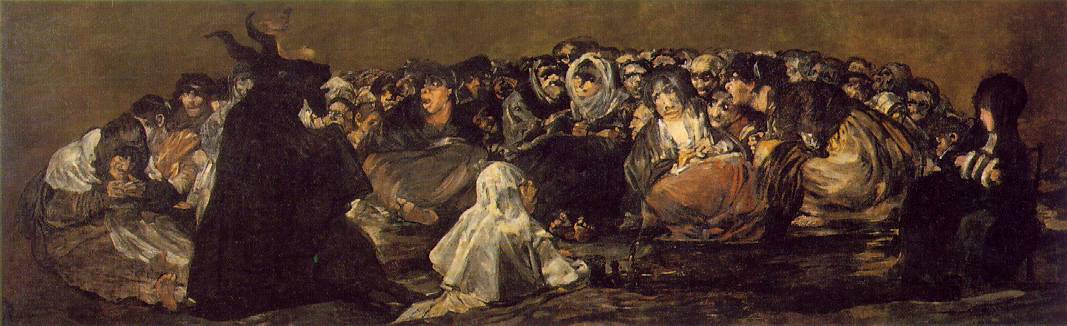
A Great, Horn-Crowned Hog

Thursday, February 12th, 2009

Mencius Moldbug has some fun with the works of a bitter, old artist and the government’s response to our current economic crisis:

Goya left no captions for his Black Paintings, so we have no way of knowing whether or not he meant to call this one Democracy. Events of the last week, however, have shown that Goya got one thing wrong. The black-robed figure is no goat at all — but a great, horn-crowned hog.

Here comes the e-book revolution

Sunday, February 8th, 2009

Here comes the e-book revolution, Mike Elgan says:

At what temperature do electronic books catch fire? We’re going to find out sometime this year. E-book sales are about to ignite.

On Monday, Amazon.com is expected to unveil a new version of its Kindle reader. It will probably be a lot better and a little cheaper than the first version. But the real news already broke this week: A company spokesman announced that Amazon plans to offer Kindle books on cell phones.

This news countered Google’s announcement that the 1.5 million public domain books available on its Google Book Search offering will soon be available (free, of course) via a new cell phone application.

He lists six trends driving this growth, but I have to wonder about his very first trend:

1. The economy. The economy is in the tank, and people are looking to cut costs any way they can. An Amazon Kindle pays for itself after the purchase of 20 or 30 books, then starts paying dividends.

In a bad economy, people are going to make a big up-front expenditure that will pay back after they buy 20 to 30 books?

I found this analysis amusing:

The blog did the math and determined that the New York Times could buy every single subscriber an Amazon Kindle e-book reader, and it would still cost them half as much as it will cost them to send paper newspapers for just one year.

The Trials of J. Robert Oppenheimer

Friday, February 6th, 2009

I suppose I first learned about Oppenheimer — beyond that he was the “father of the bomb” — a few years back, when I read E=mc2: A Biography of the World’s Most Famous Equation.

Born into a wealthy family, he was a frail but precocious boy, pampered and socially awkward, who grew up to be an arrogant and even cruel young man — but somehow he ended up running the Manhattan Project and running it well.

The latest episode of PBS’s American Experience, The Trials of J. Robert Oppenheimer, gives an extremely sympathetic portrayal of his life and the infamous loss of his security clearance years after the war.

I feel a great deal of sympathy for Oppenheimer, but I’m amazed how shocked — shocked! — we’re supposed to be that the military would not trust a man who almost married one (crazy) Communist, did marry another (crazy) Communist, had a brother who was a Communist, had good friends who were Communists, including one who asked him to pass along secrets, etc., especially after the Communists had already developed an atomic bomb using technical secrets stolen from Americans.

How dare they take away his security clearance!?

Can’t we admit that both sides were reasonable? Oppenheimer knew he wasn’t handing over atomic secrets, but the military had good reason to believe he might?

Anyway, watch the whole thing yourself online.

(Hat tip à mon père.)

Terrorists Love Action Movies

Friday, February 6th, 2009

From reading Christopher Dickey’s Securing the City, Dwight Garners learned the comical and scary degree to which terrorists (and would-be terrorists) have been in thrall to American action movies:

The scenes of Godzilla stomping across New York City, crushing everything in its path, were mesmerizing and inspiring. One captured terrorist later warned of an attack against “the bridge in the Godzilla movie.” Interrogators had to go rent Mr. Emmerich’s film to find out what he meant: the Brooklyn Bridge.
[...]
Richard Reid, the failed shoe bomber, used the pseudonym Van Damme, after the B-grade martial arts star Jean-Claude Van Damme. Another terrorist was obsessed with “Air Force One,” the Harrison Ford president-in-peril film.

Weirdest of all, Khalid Sheikh Mohammed — the pudgy 9/11 plotter who will be forever remembered for his disheveled mug shot — was supposedly an amusing guy when he attended an agricultural state university in North Carolina. His nickname? “B’lushi.”

The Decline of Text

Tuesday, February 3rd, 2009

Marti Hearst suspects that the decline of text will change everything:

As an academic I am of course loathe to think about a world without reading and writing, but with the rapidly increasing ease of recording and distributing video, and its enormous popularity, I think it is only a matter of time before text and the written word become relegated to specialists (such as lawyers) and hobbyists.

Movies have already replaced books as cultural touchstones in the U.S. And most Americans dislike watching movies with subtitles. I assume that given a choice, the majority of Americans would prefer a video-dominant world to a text-dominant one. (Writing as a technologist, I don’t feel I can speak for other cultures.) A recent report by Pew Research included a quote from a media executive who said that emails containing podcasts were opened 20% more often than standard marketing email. And I was intrigued by the use of YouTube questions in the U.S. presidential debates. Most of the citizen-submitted videos that were selected by the moderators consisted simply of people pointing the camera at themselves and speaking their question out loud, with a backdrop consisting of a wall in a room of their home. There were no visual flourishes; the video did not add much beyond what a questioner in a live audience would have conveyed. Video is becoming a mundane way to communicate.

Note that I am not predicting the decline of erudition, in the tradition of Allan Bloom. Nor am I arguing that video will make us stupid, as in Niel Postman’s landmark “Amusing Ourselves to Death.” The situation is different today. In Postman’s time, the dominant form of video communication was television, which allowed only for one-way, broadcast-style interaction. We should expect different consequences when everyone uses video for multi-way communication. What I am espousing is that the forms of communication that will do the cultural “heavy lifting” will be audio and video, rather than text.

James Bobin on NPR

Thursday, January 29th, 2009

NPR’s Fresh Air interviews James Bobin — who, you may not have realized, co-created Flight of the Conchords and helped create Sacha Baron Cohen’s characters (Ali G, Borat, and Bruno).

Furry, Proud, and Red

Wednesday, January 28th, 2009

One of the well-known “secrets” of Sesame Street‘s enduring success is that it is not aimed purely at its pre-literate, toddler audience. Many of the skits have a sly sense of humor aimed at any adults in the room.

The Muppet Show took this a step further, with many (fairly) contemporary acts performing. After The Muppet Show‘s successful run, it looks like Sesame Street moved further in that direction.

For instance, even though I can’t say I was a fan of the Goo Goo Dolls in their heyday, I really enjoyed their Sesame Street performance of Pride, a reworking of their hit single Slide:

It’s amazing how earnest the lead singer is — especially in contrast to the other members of the band, who are clearly acting like they’re playing with a toddler (Elmo).

I can’t say I was ever a fan of Hootie and the Blowfish either, but I love the notion of turning Hold My Hand into a traffic-safety song:

Incidentally, these videos remind you why the front man is the front man. Darius seems perfectly comfortable singing to a red puppet. The other guys? Not so much.

Lastly, Norah Jones turns Don’t Know Why into Don’t Know Y — and really performs a part:

Euhemerism

Monday, January 19th, 2009

I had never heard of Euhemerus, until a friend mentioned Gaiman‘s American Gods, and I stumbled across a reference to Euhemerism, while reading up on Baldr, the Norse god:

In the 12th century, Danish accounts by Saxo Grammaticus and other Danish Latin chroniclers recorded a euhemerized account of his story. Compiled in Iceland in the 13th century, but based on much older Old Norse poetry, the Poetic Edda and the Prose Edda contain numerous references to the death of Baldr as both a great tragedy to the Æsir and a harbinger of Ragnarök.

So, who was Euhemerus, and what is Euhemerism?

Euhemerus (????????, Euh?meros) (working late fourth century B.C.) was a Greek mythographer at the court of Cassander, the king of Macedon. Euhemerus’ birthplace is disputed, with Messina in Sicily or Messene in the Peloponnese as the most probable locations, while others champion Chios, or Tegea.

He is chiefly known for a rationalizing method of interpretation, known as Euhemerism, that treats mythological accounts as a reflection of actual historical events shaped by retelling and traditional mores. In the skeptic philosophical tradition of Theodorus of Cyrene and the Cyrenaics, Euhemerism forged a new method of interpretation for the contemporary religious beliefs. Though his work is lost, the reputation of Euhemerus was that he believed that much of Greek mythology could be interpreted as natural events subsequently given supernatural characteristics. Living at court in the generation following the superhuman feats of Alexander the Great and Alexander’s subsequent deification, with the contemporaneous “pharaoization” of the Ptolemies in a fusion of Hellenic and native Egyptian traditions, Euhemerus was trained in the rational philosophizing current of Hellenistic culture; the two strains meet in his materialist rationalizing of Greek myth. “Euhemerus may be credited as the writer who systematized and explained an ancient and widely accepted popular belief, namely that the dividing line between gods and men is not always clear,” S. Spyridakis, among others, has observed.

Again, this was in the late fourth century B.C.

Commercials I Wish Had Toy Tie-Ins

Monday, January 19th, 2009

Laura McMullan of Toy Whimsy shares two commercials that she wished had toy tie-ins — one with cute li’l kaiju (not-so-giant monsters) and a second with a Gossamer-inspired hunger beast: