Halloween has come and gone, but Beaker’s misfortune is still a source of joy. Enjoy Muppet Labs Experiment 2Q975: Carve-O-Matic.
Muppet Labs Experiments
Saturday, November 28th, 2009Cårven Der Pümpkîn
Friday, November 27th, 2009A lesson in Cårven Der Pümpkîn from the Swedish Chef:
The Muppets Do Bohemian Rhapsody
Wednesday, November 25th, 2009When I saw this, I felt like it was meant to happen:
Fantasy Art Has Arrived
Friday, November 20th, 2009
Fantasy art has arrived, John Baichtal declares, because Frank Frazetta’s cover painting for the Lancer paperback, Conan the Conqueror by Robert E. Howard, sold this week to a private collector for a reported $1,000,000:
The previous record price for a Frazetta painting was the $251,000 All Star Auctions fetched for the cover to Escape on Venus by Edgar Rice Burroughs in 2008.There has always been something of a mystique surrounding Frazetta’s Conan covers; partly because they were the “first” successful Conan paperbacks and the first exposure to the character for the Baby Boomer generation of readers; partly because Frank got the assignment at the time when his painting skills had improved significantly and he felt he had something to prove; partly because the Frazettas had kept all of the Conan covers for the last 40-odd years (except for Conan of Aquilonia, which was stolen from Lancer’s office when the publisher went bankrupt).
The covers only rarely followed Howard’s descriptions or story situations and when asked if he had ever read the books Frank recently replied, “I didn’t read any of it. It was too opposite of what I do. I told them that. So, I drew him my way. It was really rugged. And it caught on. I didn’t care about what people thought. People who bought the books never complained about it. They probably didn’t read them.”
His cover for Escape on Venus conjures more thoughts of the Roman goddess than of the inhospitable planet.

Terror in Mumbai
Friday, November 20th, 2009 HBO’s Terror in Mumbai is especially chilling because of a successful operation by Indian intelligence — they managed to pass along a number of SIM cards to Pakistani militants, and three of those cards were being used by the Mumbai attackers in their cell phones. So the documentary includes actual conversations between the young killers and their controller back in Pakistan:
The phone intercepts provide a grotesque running commentary as the controllers, watching events unfold on live TV, direct the gunmen, telling them where the security forces are, which of their hostages should be killed and how to do it. With the killers wounded and asking what to do next, the tapes reveal the controllers calmly urging them to fight to the death and not allow themselves to be taken alive.Guests from the Taj Mahal and Oberoi hotels tell how the terrorists first staged mass executions, then worked their way through the corridors, killing whenever they managed to enter a room. An elderly couple recounts how they were spared by the terrorists when it was realized they were fellow Muslims, while all around them were mowed down in a hail of bullets. Perhaps the most unsettling testimony comes from Ajmal Amir Kasab, the sole surviving terrorist, who answers his captors’ questions with startling frankness from a gurney soon after being captured.
The documentary inadvertently makes the case for the importance of leadership and strong morale in combat, as the terrorists, with their controller exhorting them on the phone, maintain the initiative and keep advancing toward their objectives, and the Indian police freeze, unable to react, let along to seize the initiative.
Dave Grossman makes the case that it is difficult to get soldier to overcome their innate resistance to killing. This may be less true of rural Pakistani boys than of suburban American kids, but the terrorists clearly used the proper techniques for overcoming any such resistance:

Religious martyrs with a strong “brother” on the line can and will fight to the death — and if they don’t die, and they lose that reassuring voice, they break down like the poor lost boys they are.
Frak ‘im up!
Wednesday, November 18th, 2009This Cylon Centurion practice target is a bit more expensive than the two-dollar zombie targets at the local range, but I suppose you could go through a few hundred rounds aiming not just for a head shot but an eye shot:
In our continuing quest to bring you affordable, screen-accurate replicas of the iconic props from TV’s greatest saga, we are proud to present our screen-accurate replica of the Cylon Centurion practice target as seen on Galactica’s shooting range.Reproduced from the same digital files used to print the screen-used props, QMx has painstakingly reproduced this practice target on an 18″x24″ poster printed on 60-pound flat-finish paper stock. We’ve even die cut the poster into the same distinctive trapizoid shape (why do Colonials hate right angles so much?) and we’ve included the scoring form in lower right corner of the poster.
All for just $9.95 per poster. Perfect way to prepare for the fight against our Cylon oppressors, when that day inevitably comes.

Can D.I.Y. Supplant the First-Person Shooter?
Wednesday, November 18th, 2009Video games are too big for their own good, according to “indie” game designers:
Video-game companies were once nimble trailblazers born in the countercultural spirit of the 1970s. But it didn’t take long for the industry to grow into a kingdom of conglomerates, spending tens of millions of dollars on big titles. Soaring development costs squeezed out small publishers and stifled creativity. “There are some great mainstream games, but they are getting to be fewer and further between,” says Rob Auten, who used to run video-game production for 20th Century Fox. “Our industry is probably more risk-averse than Hollywood. It is extremely difficult to break the patterns of the establishment.”
[...]
Showcasing these flashy graphics requires bigger teams and more money, which has guided the industry toward safe prospects like licensed properties and sequels. Even when working on more original fare, the enormous teams that create today’s video games dilute artistic intention. There are exceptions like Will Wright, whose legacy includes The Sims, but they stand out because they are exceptions. “For the most part,” Rohrer said, “there’s no single person trying to bring a specific vision to life.”Making matters worse, according to Rohrer and others, video games fall into the trap of using the wizardry and craft of those big teams to emulate movies — bad movies at that. The narrative elements in today’s big games tend to be retreads of film-genre clichés. Or they’re extensions of actual film brands, like “The Godfather.” Rohrer calls this cinematic approach to video games “asymptotic”: in his view there’s no point in making video games as good as movies, because we already have movies. “Just as early film production copied the stage,” he said, video games have yet to escape the influence of film. “Eventually film figured out editing, camera movement — the tools that made movies movies. Video games need to discover what’s special and different about their own medium to break out of their cultural ghetto.”
The article recommends four small games:
- Jonathan Blow’s Braid
- Jason Rohrer’s Passage
- Thatgamecompany’s Flower
- Erik Svedang’s Blueberry Garden
AMC’s The Prisoner
Friday, November 13th, 2009 Somehow I just learned that AMC has remade The Prisoner, and the miniseries begins this Sunday. (Pardon me while I run to the DVR.)
Further, AMC has put full episodes of the original 1960s show online.
Brideshead Revisited for heterosexual American grown-ups
Wednesday, November 11th, 2009Steve Sailer calls Mad Men a sort of Brideshead Revisited for heterosexual American grown-ups:
For Baby Boomers, it’s hard to watch Mad Men without enviously exclaiming: Our parents had it better!Like the eleven-hour 1981 British adaptation of Evelyn Waugh’s novel about the elegance and indolence of post-Great War Oxford undergrads, Mad Men’s languorous 13-hours per year pace affords viewers the time to wallow in the visual details and manners of a more adult age than our own.
[...]
While Waugh wore his reactionary heart on his sleeve in Brideshead, Weiner maintains plausible deniability in Mad Men by methodically depicting how unenlightened the upper-middle class WASPs of a half century ago were. We in the audience are scandalized to note, for example, that even the most respectable parents in 1960 devoted more time to socializing with other adults than to obsessively overseeing their offspring’s next leap up the steep slope of the meritocratic pyramid.Moreover, many families in 1960 can afford a home on just one income. As Betty Friedan noted, housewives are imprisoned in their suburban homes, escaping in Mad Men only, well… any time they feel like it.
Worse, firms pay married workers more than equally productive single ones, in violation of all the tenets of Friedan and Friedman. Employers back then felt they had a “duty to society,” a concept with which our advanced cultures are no longer familiar.
Even more shockingly, the employees at the Sterling Cooper ad agency knock off work right at 5:15 PM each day. They appear to have some weird Depression-era relic of a notion of solidarity among American workers: that if the bosses want more work done, they should hire more workers.
Didn’t they understand back then that cheap wages and expensive land are what made America great?
[...]
While watching Mad Men, Weiner affords us ample opportunity to congratulate ourselves on how much progress we’ve made. For example, most of the black characters in Mad Men have servile jobs. Today, of course, things are infinitely better. Black men are seldom seen in servile jobs (unless they are African immigrants or gay). In fact, black men aren’t seen in any jobs as much anymore: ten percent of black men were out of the work force in Don Draper’s 1960 versus 24 percent in booming 2000. Indeed, black men aren’t even seen at all as much anymore because a million are now locked away in prison. (The incarceration rate of black male high school dropouts was one percent in the Bad Old Days of Dwight Eisenhower’s last year in office versus 25 percent in Bill Clinton’s glorious finale.)
[...]
As a social commentator, Weiner is on the winning side in the culture war. Yet, as an artist, he senses a void in the brave new America. While he may lack the vocabulary to articulate it, this longing helps give Mad Men its romantic aura that lifts it above its own soap operaish and soft porn tendencies.
The scholarly creative method of JRR Tolkien
Wednesday, November 11th, 2009Bruce Charlton examines the scholarly creative method of JRR Tolkien:
Tolkien’s remarkable creative method has been elucidated by TA Shippey in his Road to Middle Earth; and amply confirmed by the evidence from the History of Middle Earth (HoME) edited by Christopher Tolkien.In a nutshell, Tolkien treats his ‘first draft’ as if it were an historical text of which he is a scholarly editor. So when Tolkien is revising his first draft his approach is similar to that he would take when preparing (for example) an historically-contextualized edition of Sir Gawain and the Green Knight, or Beowulf.
So, as he reads his own first draft, he is trying to understand what ‘the author’ (himself) ‘meant’, he is aware of the possibility of errors in transcription, or which may have occurred during the historical transmission. He is also aware that ‘the author’ was writing from a position of incomplete knowledge, and was subject to bias.
This leads to some remarkable compositional occurrences. For example, in the HoME Return of the Shadow (covering the writing of the first part of Lord of the Rings — LotR) Tolkien wrote about the hobbits hiding from a rider who stopped and sniffed the air. The original intention was that this rider was to be Gandalf and they were hiding to give him a surprise ‘ambush’. In the course of revision the rider became a ‘Black Rider’ and the hobbits were hiding in fear — the Black Riders were later, over many revisions, and as the story progressed, developed into the most powerful servants of Sauron.
This is a remarkable way of writing. Most writers know roughly what they mean in their first draft, and in the process of revising and re-drafting they try to get closer to that known meaning. But Tolkien did the reverse: he generated the first draft, then looked at it as if that draft had been written by someone else, and he was trying to decide what it meant — and in this case eventually deciding that it meant something pretty close to the opposite of the original meaning.
In other words, Tolkien’s original intention counted for very little, but could be — and was, massively reinterpreted by the editorial decision.
The specifics of the incident (rider, sniffing) stayed the same; but the interpretation of the incident was radically altered.
By contrast, most authors maintain the interpretation of incidents throughout revisions, but change the specific details.
Actually, Charlton does not describe Tolkien’s method as simplyscholarly, but as shamanistic:
By shamanistic, I mean that I believe much of Tolkien’s primary, first-draft creative, imaginative work was done in a state of altered consciousness — a ‘trance’ state or using ideas from dreams.This is not unusual among creative people, especially poets. Robert Graves wrote about this a great deal. And neither is it unusual for poets to treat their ‘inspired’ first draft as material for editing. The first draft — if it truly is inspired — is interpreted as coming from elsewhere — from divine sources, from ‘the muse’, or perhaps from the creative unconscious; at any rate, the job of the alert and conscious mind is to ‘make sense’ of this material without destroying the bloom or freshness derived from its primary source.
This is, I believe, why Tolkien did not see himself as inventing, rather as understanding. If key evidence was missing, he could try and interpolate it like a historian by extrapolation from other evidence, or he could await poetic inspiration, which might provide the answer.
Sherlock Holmes
Tuesday, November 10th, 2009Have Jerry Bruckheimer and Michael Bay teamed up to produce a new Sherlock Holmes movie?
After watching that trailer, I assumed so, but the new film is directed by Guy Ritchie — who has yet to recapture the magic of Lock, Stock and Two Smoking Barrels.
As someone with a more than passing interest in Sherlock Holmes, self-defense with a walking stick (or single-stick), and exotic weapons, I nonetheless do not want to watch a Holmes-Matrix mash-up with buddy-cop clichés borrowed from Lethal Weapon and Bad Boys. Sigh.
I won’t complain the Robert Downey Jr. is miscast though — not after Iron Man.
Pigeons From Hell
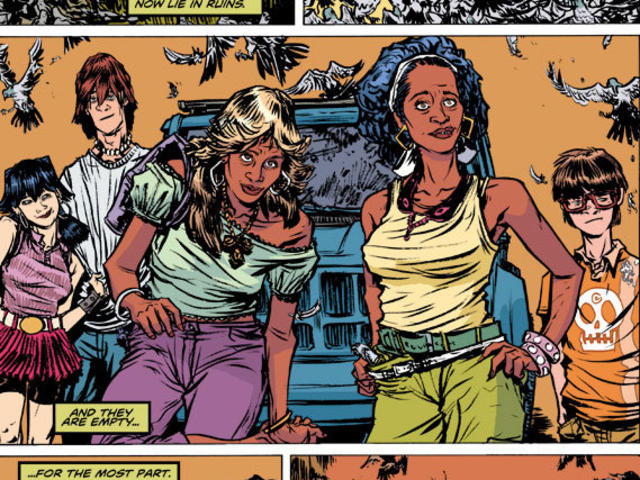
Sunday, November 8th, 2009Robert E Howard’s much-loved gothic bayou horror classic, Pigeons From Hell, has been adapted into a graphic novel — and updated:
Lansdale’s update of the story — the new protagonists are a pair of sisters descended from the slaves who inherited the house from their masters; they go to take possession with their friends in a kind of Scooby Doo pack — only lightly changes the material, leaving the scare intact.
Only lightly changes the material? Seriously? Adding a Scooby gang? And shifting the story from when slavery was within living memory to now, in the 21st century?
Civilisation: A Personal View
Thursday, November 5th, 2009 In 1970, the newly hatched Public Broadcasting Service aired a 13-part TV series called Civilisation: A Personal View, which had already been a high-brow hit for the BBC the year before:
“The very simple thought I started from,” said David Attenborough, the BBC executive who dreamed up “Civilisation,” “was to get on the screen the loveliest things created by European man in the past thousand years.” When Clark was invited to serve as its host and writer, he added an urgent imperative of his own: “It’s worth trying . . . to make people realize how fragile civilisation is and how easily it might slip from our grasp.”By “civilisation” Clark meant Western civilization, and the first episode, “The Skin of Our Teeth,” made it clear that he was no less firm a believer in the primacy of high culture and the genius of great men. In the opening sequence, an unseen organist thunders out a toccata as the camera pans across the face of Michelangelo’s David, the façade of Chartres Cathedral and other icons of Western art. Then Clark reads the stately words of John Ruskin: “Great nations write their autobiographies in three manuscripts, the book of their deeds, the book of their words, and the book of their art. Not one of these books can be understood unless we read the two others, but of the three the only trustworthy one is the last.” From there he embarks on a discursive tour d’horizon devoted solely to the doings of dead white giants: Charlemagne, Raphael, Bach, Montaigne, Shakespeare, Thomas Jefferson, Byron, Rodin. If you think Michael Jackson was a musical master, you’ve come to the wrong shop.
Much of the effect of “Civilisation” arose from the witty flair with which Clark conducted this highbrow travelogue. “Lives devoted to Beauty seldom end well,” he proclaimed in one episode. In another he described opera as “one of the strangest inventions of Western man. It could not have been foreseen by any logical process.” But for all his charm, you were never in a moment’s doubt of his passionate belief in the power and significance of Western culture.
Four decades ago, Time magazine declared “Civilisation” to be TV’s “most distinguished (not to mention only new) cultural series” of the year. Those words have a hollow ring today. For years PBS has been trimming back its high-culture programming, partly because it doesn’t do well in the ratings and partly, I suspect, because such lofty fare has lost favor with the intellectual elite. The notion of devoting a 13-hour TV series to the glories of Western art would now be thought comical—or contemptible—by those well-placed eggheads who regard the West as the source of all evil in the postmodern world. Among such enlightened folk, “Civilisation” is regarded as an embarrassing relic, painfully slow-moving and politically retrogressive.
I doubt that Clark, who died in 1983, would have been surprised to hear that. In “Civilisation” he warned that Western culture rested on a thin crust of ice: “Advanced thinkers, who even in Roman times thought it fine to gang up with the barbarians, have begun to question whether civilization is indeed worth preserving. . . . It is lack of confidence, more than anything else, that kills a civilisation. We can destroy ourselves by cynicism and disillusion just as effectively as by bombs.” The day that PBS replays “Civilisation” in prime time is the day I’ll breathe a little easier about the prospects for the preservation of the art that Kenneth Clark championed so eloquently—and unapologetically.
Behold the first six minutes of the first episode:
The whole series is available on DVD.
Did James Cameron Rip Off Poul Anderson’s Novella?
Thursday, November 5th, 2009James Cameron’s new spectacle, Avatar, is coming to theaters this winter:
After watching that trailer, I immediately thought of Poul Anderson’s classic novella, Call Me Joe, about a wheel-chair-bound man psionically controlling a genetically engineered creature on the inhospitable surface of Jupiter. Apparently I was not alone in seeing the similarities, as others have harshly asked, Did James Cameron rip off Poul Anderson’s Novella?
Well, he certainly started from Anderson’s premise — but Anderson didn’t produce a trite story of noble savages fending off capitalist-imperialist-colonialist corporations out to destroy their planet.