Brideshead Revisited for heterosexual American grown-ups

Wednesday, November 11th, 2009

Steve Sailer calls Mad Men a sort of Brideshead Revisited for heterosexual American grown-ups:

For Baby Boomers, it’s hard to watch Mad Men without enviously exclaiming: Our parents had it better!

Like the eleven-hour 1981 British adaptation of Evelyn Waugh’s novel about the elegance and indolence of post-Great War Oxford undergrads, Mad Men’s languorous 13-hours per year pace affords viewers the time to wallow in the visual details and manners of a more adult age than our own.
[...]
While Waugh wore his reactionary heart on his sleeve in Brideshead, Weiner maintains plausible deniability in Mad Men by methodically depicting how unenlightened the upper-middle class WASPs of a half century ago were. We in the audience are scandalized to note, for example, that even the most respectable parents in 1960 devoted more time to socializing with other adults than to obsessively overseeing their offspring’s next leap up the steep slope of the meritocratic pyramid.

Moreover, many families in 1960 can afford a home on just one income. As Betty Friedan noted, housewives are imprisoned in their suburban homes, escaping in Mad Men only, well… any time they feel like it.

Worse, firms pay married workers more than equally productive single ones, in violation of all the tenets of Friedan and Friedman. Employers back then felt they had a “duty to society,” a concept with which our advanced cultures are no longer familiar.

Even more shockingly, the employees at the Sterling Cooper ad agency knock off work right at 5:15 PM each day. They appear to have some weird Depression-era relic of a notion of solidarity among American workers: that if the bosses want more work done, they should hire more workers.

Didn’t they understand back then that cheap wages and expensive land are what made America great?
[...]
While watching Mad Men, Weiner affords us ample opportunity to congratulate ourselves on how much progress we’ve made. For example, most of the black characters in Mad Men have servile jobs. Today, of course, things are infinitely better. Black men are seldom seen in servile jobs (unless they are African immigrants or gay). In fact, black men aren’t seen in any jobs as much anymore: ten percent of black men were out of the work force in Don Draper’s 1960 versus 24 percent in booming 2000. Indeed, black men aren’t even seen at all as much anymore because a million are now locked away in prison. (The incarceration rate of black male high school dropouts was one percent in the Bad Old Days of Dwight Eisenhower’s last year in office versus 25 percent in Bill Clinton’s glorious finale.)
[...]
As a social commentator, Weiner is on the winning side in the culture war. Yet, as an artist, he senses a void in the brave new America. While he may lack the vocabulary to articulate it, this longing helps give Mad Men its romantic aura that lifts it above its own soap operaish and soft porn tendencies.
The scholarly creative method of JRR Tolkien

Wednesday, November 11th, 2009

Bruce Charlton examines the scholarly creative method of JRR Tolkien:

Tolkien’s remarkable creative method has been elucidated by TA Shippey in his Road to Middle Earth; and amply confirmed by the evidence from the History of Middle Earth (HoME) edited by Christopher Tolkien.

In a nutshell, Tolkien treats his ‘first draft’ as if it were an historical text of which he is a scholarly editor. So when Tolkien is revising his first draft his approach is similar to that he would take when preparing (for example) an historically-contextualized edition of Sir Gawain and the Green Knight, or Beowulf.

So, as he reads his own first draft, he is trying to understand what ‘the author’ (himself) ‘meant’, he is aware of the possibility of errors in transcription, or which may have occurred during the historical transmission. He is also aware that ‘the author’ was writing from a position of incomplete knowledge, and was subject to bias.

This leads to some remarkable compositional occurrences. For example, in the HoME Return of the Shadow (covering the writing of the first part of Lord of the RingsLotR) Tolkien wrote about the hobbits hiding from a rider who stopped and sniffed the air. The original intention was that this rider was to be Gandalf and they were hiding to give him a surprise ‘ambush’. In the course of revision the rider became a ‘Black Rider’ and the hobbits were hiding in fear — the Black Riders were later, over many revisions, and as the story progressed, developed into the most powerful servants of Sauron.

This is a remarkable way of writing. Most writers know roughly what they mean in their first draft, and in the process of revising and re-drafting they try to get closer to that known meaning. But Tolkien did the reverse: he generated the first draft, then looked at it as if that draft had been written by someone else, and he was trying to decide what it meant — and in this case eventually deciding that it meant something pretty close to the opposite of the original meaning.

In other words, Tolkien’s original intention counted for very little, but could be — and was, massively reinterpreted by the editorial decision.

The specifics of the incident (rider, sniffing) stayed the same; but the interpretation of the incident was radically altered.

By contrast, most authors maintain the interpretation of incidents throughout revisions, but change the specific details.

Actually, Charlton does not describe Tolkien’s method as simplyscholarly, but as shamanistic:

By shamanistic, I mean that I believe much of Tolkien’s primary, first-draft creative, imaginative work was done in a state of altered consciousness — a ‘trance’ state or using ideas from dreams.

This is not unusual among creative people, especially poets. Robert Graves wrote about this a great deal. And neither is it unusual for poets to treat their ‘inspired’ first draft as material for editing. The first draft — if it truly is inspired — is interpreted as coming from elsewhere — from divine sources, from ‘the muse’, or perhaps from the creative unconscious; at any rate, the job of the alert and conscious mind is to ‘make sense’ of this material without destroying the bloom or freshness derived from its primary source.

This is, I believe, why Tolkien did not see himself as inventing, rather as understanding. If key evidence was missing, he could try and interpolate it like a historian by extrapolation from other evidence, or he could await poetic inspiration, which might provide the answer.

Sherlock Holmes

Tuesday, November 10th, 2009

Have Jerry Bruckheimer and Michael Bay teamed up to produce a new Sherlock Holmes movie?

After watching that trailer, I assumed so, but the new film is directed by Guy Ritchie — who has yet to recapture the magic of Lock, Stock and Two Smoking Barrels.

As someone with a more than passing interest in Sherlock Holmes, self-defense with a walking stick (or single-stick), and exotic weapons, I nonetheless do not want to watch a Holmes-Matrix mash-up with buddy-cop clichés borrowed from Lethal Weapon and Bad Boys. Sigh.

I won’t complain the Robert Downey Jr. is miscast though — not after Iron Man.

Pigeons From Hell

Sunday, November 8th, 2009

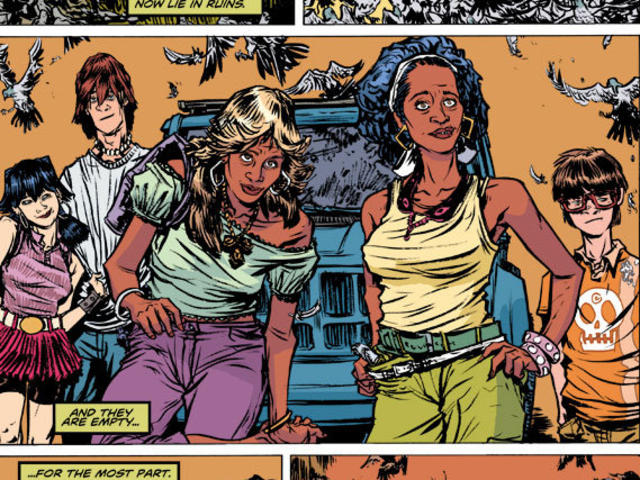
Robert E Howard’s much-loved gothic bayou horror classic, Pigeons From Hell, has been adapted into a graphic novel — and updated:

Lansdale’s update of the story — the new protagonists are a pair of sisters descended from the slaves who inherited the house from their masters; they go to take possession with their friends in a kind of Scooby Doo pack — only lightly changes the material, leaving the scare intact.

Only lightly changes the material? Seriously? Adding a Scooby gang? And shifting the story from when slavery was within living memory to now, in the 21st century?

Civilisation: A Personal View

Thursday, November 5th, 2009

In 1970, the newly hatched Public Broadcasting Service aired a 13-part TV series called Civilisation: A Personal View, which had already been a high-brow hit for the BBC the year before:

“The very simple thought I started from,” said David Attenborough, the BBC executive who dreamed up “Civilisation,” “was to get on the screen the loveliest things created by European man in the past thousand years.” When Clark was invited to serve as its host and writer, he added an urgent imperative of his own: “It’s worth trying . . . to make people realize how fragile civilisation is and how easily it might slip from our grasp.”

By “civilisation” Clark meant Western civilization, and the first episode, “The Skin of Our Teeth,” made it clear that he was no less firm a believer in the primacy of high culture and the genius of great men. In the opening sequence, an unseen organist thunders out a toccata as the camera pans across the face of Michelangelo’s David, the façade of Chartres Cathedral and other icons of Western art. Then Clark reads the stately words of John Ruskin: “Great nations write their autobiographies in three manuscripts, the book of their deeds, the book of their words, and the book of their art. Not one of these books can be understood unless we read the two others, but of the three the only trustworthy one is the last.” From there he embarks on a discursive tour d’horizon devoted solely to the doings of dead white giants: Charlemagne, Raphael, Bach, Montaigne, Shakespeare, Thomas Jefferson, Byron, Rodin. If you think Michael Jackson was a musical master, you’ve come to the wrong shop.

Much of the effect of “Civilisation” arose from the witty flair with which Clark conducted this highbrow travelogue. “Lives devoted to Beauty seldom end well,” he proclaimed in one episode. In another he described opera as “one of the strangest inventions of Western man. It could not have been foreseen by any logical process.” But for all his charm, you were never in a moment’s doubt of his passionate belief in the power and significance of Western culture.

Four decades ago, Time magazine declared “Civilisation” to be TV’s “most distinguished (not to mention only new) cultural series” of the year. Those words have a hollow ring today. For years PBS has been trimming back its high-culture programming, partly because it doesn’t do well in the ratings and partly, I suspect, because such lofty fare has lost favor with the intellectual elite. The notion of devoting a 13-hour TV series to the glories of Western art would now be thought comical—or contemptible—by those well-placed eggheads who regard the West as the source of all evil in the postmodern world. Among such enlightened folk, “Civilisation” is regarded as an embarrassing relic, painfully slow-moving and politically retrogressive.

I doubt that Clark, who died in 1983, would have been surprised to hear that. In “Civilisation” he warned that Western culture rested on a thin crust of ice: “Advanced thinkers, who even in Roman times thought it fine to gang up with the barbarians, have begun to question whether civilization is indeed worth preserving. . . . It is lack of confidence, more than anything else, that kills a civilisation. We can destroy ourselves by cynicism and disillusion just as effectively as by bombs.” The day that PBS replays “Civilisation” in prime time is the day I’ll breathe a little easier about the prospects for the preservation of the art that Kenneth Clark championed so eloquently—and unapologetically.

Behold the first six minutes of the first episode:

The whole series is available on DVD.

Did James Cameron Rip Off Poul Anderson’s Novella?

Thursday, November 5th, 2009

James Cameron’s new spectacle, Avatar, is coming to theaters this winter:

After watching that trailer, I immediately thought of Poul Anderson’s classic novella, Call Me Joe, about a wheel-chair-bound man psionically controlling a genetically engineered creature on the inhospitable surface of Jupiter. Apparently I was not alone in seeing the similarities, as others have harshly asked, Did James Cameron rip off Poul Anderson’s Novella?

Well, he certainly started from Anderson’s premise — but Anderson didn’t produce a trite story of noble savages fending off capitalist-imperialist-colonialist corporations out to destroy their planet.

The F Word

Thursday, November 5th, 2009

The most recent episode of South Park mocks inconsiderate f–––––s:

I wasn’t expecting them to run with the whole question of what The F Word — not the F word, the other one — even means, but they handled it well — dialing the vulgarity to 11, yes, but also including some nuanced subtext.

Serial Killers

Tuesday, November 3rd, 2009

In Serial Killers, Steve Sailer discusses the precursors to modern serial dramas like Mad Men:

In its time, thirtysomething was probably the best written and certainly the most realistic show on television (my twentysomething new bride and I watched it wide-eyed as we learned what was in store for us). For a few years, it had a limited but lucrative yupscale demographic enthralled over whether Michael and Hope would be able to make their marriage work and other questions that seemed a lot more interesting at the time than they do now. (At this point, I can mostly just remember Miles Drentell, the ruthless Sun Tzu-quoting CEO of the trendy ad agency where Michael worked.)

The downside of “And then what happens?” is that the answer usually turns out to be “A whole bunch of stuff.” While satisfying at the time, serials tend to be consumable only once. For example, although thirtysomething was immediately influential within the entertainment industry, it was almost forgotten by the public once its run was over in 1991. (It wasn’t even released on DVD until this year).

A reaches back to some even earlier precursors to such “novelistic” shows — actual novels:

Novelists have given up publishing their works in installments, even though that was hugely profitable for numerous 19th Century novelists, such as Charles Dickens. His books were typically serialized in 20 monthly installments of 32 pages of text and 16 pages of advertising. The protracted death of Little Nell in Dickens’ serialization of The Old Curiosity Shop turned into an ongoing international tragedy. At New York’s piers in 1841, American fans would shout out to docking boats from England, “Is Little Nell alive?”

Tom Wolfe, who had long denounced 20th-century literary fiction for not showing us The Way We Live Now (an Anthony Trollope novel that was, of course, serialized), published his first novel, The Bonfire of the Vanities, in 27 installments in Rolling Stone in 1984–1985. Jan Wenner paid him $200,000 for the rights, and the pressure forced the vastly ambitious Wolfe past the writer’s block he had developed after spending years hinting broadly that one of these days he was going to show all living novelists how fiction should be written.

Unfortunately, Bonfire didn’t make much of a splash in Rolling Stone … because it wasn’t very good. It was a first draft, and Wolfe’s first drafts turned out not to be as good as Dickens’s had been. Moreover, there are obvious problems inherent in going public with the beginning before you’ve written the ending. (This has been a particular conundrum for American TV serial dramas because the writers don’t even know how many years the show will run. Thus, they tend to start strong and peter out. In Britain, however, fixed durations serials are more common.)

Wolfe then rewrote Bonfire after doing the additional research necessary to change his protagonist’s career from Wolfe’s lazy initial choice — writer — to a much more timely and under-publicized one — bond-trader. Revised, Bonfire became a huge bestseller. A long string of subsequent real-life incidents all the way up through the Duke lacrosse rape hoax that seem like plot twists out of Wolfe’s tale of the hunt for “the Great White Defendant” has cemented its status as the Great American Novel of the 1980s.

Tell me your premises

Wednesday, October 28th, 2009

Sam Anderson describes Mrs. Logic with verve:

Whenever Ayn Rand met someone new — an acolyte who’d traveled cross-country to study at her feet, an editor hoping to publish her next novel — she would open the conversation with a line that seems destined to go down as one of history’s all-time classic icebreakers: “Tell me your premises.” Once you’d managed to mumble something halfhearted about loving your family, say, or the Golden Rule, Rand would set about systematically exposing all of your logical contradictions, then steer you toward her own inviolable set of premises: that man is a heroic being, achievement is the aim of life, existence exists, A is A, and so forth — the whole Objectivist catechism. And once you conceded any part of that basic platform, the game was pretty much over. She’d start piecing together her rationalist Tinkertoys until the mighty Randian edifice towered over you: a rigidly logical Art Deco skyscraper, 30 or 40 feet tall, with little plastic industrialists peeking out the windows — a shining monument to the glories of individualism, the virtues of selfishness, and the deep morality of laissez-faire capitalism. Grant Ayn Rand a premise and you’d leave with a lifestyle.

Stated premises, however, rarely get us all the way down to the bottom of a philosophy. Even when we think we’ve reached bedrock, there’s almost always a secret subbasement blasted out somewhere underneath. William James once argued that every philosophic system sets out to conceal, first of all, the philosopher’s own temperament: that pre-rational bundle of preferences that urges him to hop on whatever logic-train seems to be already heading in his general direction. This creates, as James put it, “a certain insincerity in our philosophic discussions: the potentest of all our premises is never mentioned?…?What the system pretends to be is a picture of the great universe of God. What it is — and oh so flagrantly! — is the revelation of how intensely odd the personal flavor of some fellow creature is.”

No one would have been angrier about this claim, and no one confirms its truth more profoundly, than Ayn Rand. Few fellow creatures have had a more intensely odd personal flavor; her temperament could have neutered an ox at 40 paces. She was proud, grouchy, vindictive, insulting, dismissive, and rash. (One former associate called her “the Evel Knievel of leaping to conclusions.”) But she was also idealistic, yearning, candid, worshipful, precise, and improbably charming. She funneled all of these contradictory elements into Objectivism, the home-brewed philosophy that won her thousands of Cold War–era followers and that seems to be making some noise once again in our era of bailouts and tea parties. (Glenn Beck and Ron Paul are Rand fans; Alan Greenspan, once a member of her inner circle, had his faith in the market’s rationality shaken by the crash.)

It’s easy to chuckle at Rand, smugly, from the safe distance of intervening decades or an opposed ideology, but in person — her big black eyes flashing deep into the night, fueled by nicotine, caffeine, and amphetamines — she was apparently an irresistible force, a machine of pure reason, a free-market Spock who converted doubters left, right, and center. Eyewitnesses say that she never lost an argument. One of her young students (soon to be her young lover) staggered out of his first all-night talk session referring to her, admiringly, as “Mrs. Logic.” And logic, in Rand’s hands, seemed to enjoy superpowers it didn’t possess with anyone else. She claimed, for instance, that she could rationally explain every emotion she’d ever had. “Tell me what a man finds sexually attractive,” she once wrote, “and I will tell you his entire philosophy of life.” One convert insisted that “she knows me better after five hours than my analyst does after five years.” The only option was to yield or stay away. (I should admit here my own bias: I was a card-carrying Objectivist from roughly age 16 to 19, during which time I did everything short of changing my last name to Randerson — a phase I’m deeply embarrassed by, but also secretly grateful for.)

Rand insisted, over and over, that the details of her life had nothing to do with the tenets of her philosophy. She would cite, on this subject, the fictional architect Howard Roark, hero of her novel The Fountainhead: “Don’t ask me about my family, my childhood, my friends or my feelings. Ask me about the things I think.” But the things she thought, it turns out, were very much dependent on her family, her childhood, her friends, and her feelings — or at least on her relative lack of all that.

Anne Heller’s new biography, Ayn Rand and the World She Made, allows us to poke our heads, for the first time, into the Russian-American’s overheated philosophical subbasement. After reading the details of Rand’s early life, I find it hard to think of Objectivism as very objective at all — it looks more like a rational program retrofitted to a lifelong temperament, a fantasy world created to cancel the nightmare of a terrifying childhood. This is the comedy, the tragedy, and the power of Rand: She built a glorious imaginary empire on that nuclear-grade temperament, then devoted every ounce of her will and intelligence to proving it was all pure reason.

This anecdote says so much:

Toward the end of her life, Rand listened as a prominent psychologist stood onstage and dismissed her fictional heroes — those idealized steel barons and physicists and composers — as implausible. Soon she’d had enough and stood up in the crowd, outraged.

“Am I unreal?” she shouted. “Am I a character who can’t possibly exist?”

She intended this, one suspects, as a refutation. It strikes me as maybe the most profound question she ever raised.

Pandora

Wednesday, October 21st, 2009

A few years ago, Steve Sailer tried out Pandora, the “Music Genome Project” for Internet radio — which does not recommend songs based on shared tastes but rather relies on experts’ assessments of songs across 250 factors — and found that it worked pretty well:

But one response was off: I put in Revolution Rock by the Clash, which isn’t a rock song at all, but a lazy, joyous reggae ramble. Pandora came back with the punk Career Opportunities by the Clash, which suggests that one of their employees had cut corners and categorized Revolution Rock by title rather than by music.

Anyway, a recent New York Times Magazine piece shares this anecdote:

[Pandora CEO Paul Westergren] likes to tell a story about a Pandora user who wrote in to complain that he started a station based on the music of Sarah McLachlan, and the service served up a Celine Dion song. “I wrote back and said, ‘Was the music just wrong?’ Because we sometimes have data errors,” he recounts. “He said, ‘Well, no, it was the right sort of thing — but it was Celine Dion.’ I said, ‘Well, was it the set, did it not flow in the set?’ He said, ‘No, it kind of worked — but it’s Celine Dion.’ We had a couple more back-and-forths, and finally his last e-mail to me was: ‘Oh, my God, I like Celine Dion.’ ”

This anecdote almost always gets a laugh. “Pandora,” he pointed out, “doesn’t understand why that’s funny.”

A basic problem that you can’t get around in Pandora:

If you like a song not so much because of the style but because it’s an expert execution of a style, then Pandora isn’t as good as a recommendation site.

Pandora performs a sort of factor analysis on your musical tastes, Sailer notes — although he layers quite a bit of his own “insight” on top of it:

Listening to these songs that I picked out a few years ago plus other ones similar to them, I would say I have post-British Empire upper middle class public schoolboy tastes in music. This may seem odd, but my tastes in songs would seem most natural for a Scottish or northern English lad at a southern English boarding school for toffs, or maybe at Sandhurst, the military academy.
[...]
Very strange, but it also fits a lot of my taste in authors as well (Waugh, Orwell, Wodehouse, etc.). I now remember how much I liked David Niven’s autobiography, who was a Sandhurst grad. And the autobiography of Churchill, another public schoolboy/Sandhurst man.

So, it’s no surprise that The Clash were always my favorites. After all, Joe Strummer, despite his appalling teeth, was an upper middle class public schoolboy whose dad, a friend of Kim Philby’s, was a diplomat (i.e., spy) for the fading British Empire.

You could use Pandora’s database for scholarly purposes, he suggests:

For example, T.S. Eliot pointed out that an artist creates his own “school” of predecessors that nobody noticed had anything in common before. For example, I’ve always felt that the ancestors of the punk rock of 1976 included from the 1968 to 1973 era: Communication Breakdown by Led Zeppelin, Paranoid by Black Sabbath, and Saturday Night’s All Right for Fighting by Elton John, three songs that sounded like they have more in common after you’d heard the Ramones, Sex Pistols, and Clash than before. This giant proprietary database would presumably allow those kind of academic hypotheses to be tested objectively.

Barnes & Noble’s E-Reader

Wednesday, October 14th, 2009

Barnes & Noble is set to reveal its new Kindle competitor next week, Gizmodo says, with a black-and-white e-ink screen and a color multitouch screen, like an iPhone — all in a Reardon-metal frame, if the photos are to be believed. And it should run the Randroid OS.

(The sample page is from Ayn Rand’s The Fountainhead.)

Good work, sycophants

Tuesday, October 13th, 2009

The creative team from Sesame Street presents Mad Men — and sad men, and happy men:

Gonick the Great

Monday, October 12th, 2009

Larry Gonick — whom Bryan Caplan calls Gonick the Great — has finished his “magisterial” five-volume cartoon history of the universe:

Gonick’s masterpiece has many virtues: It’s full of facts and wisdom, horror and humor. It treats the Great Butchers and Useless Idiots of history with the respect they deserve. It’s multi-cultural in the good sense: He impartially covers a wide variety of human cultures, and spares no sacred cows. He’s a master of the Entertaining Aside, as well as what Tullock calls the “open secrets” of history.

Gonick’s one-two punch of pictures and words isn’t just a gimmick; it makes it much easier to remember the facts of history. If we really wanted kids (or adults!) to learn history, we’d throw away our textbooks, and teach Gonick. Everyone from kindergarteners to Ph.D.s can enjoy his cartoon histories — they’re The Simpsons of history. Seriously — I read these books to my sons when they were in kindergarten, and they couldn’t get enough.

They could be better though:

Gonick barely mentions the three amazing and almost unprecedented facts of the last two centuries: The doubling of life expectancy, the six-fold increase in population, and (by conservative estimates) the ten-fold increase in per-capita income. Sure, he talks a little about industrialization, new technology, and cheaper stuff. But he doesn’t notice that a billion human beings now live better than the emperors of Rome.

None of this is a political point — Brad DeLong will tell you the same thing. But I confess that I’m also unhappy with Gonick’s leftist economics. He makes snide references to free trade, without even considering that free trade might really be an important reason for rapid progress. And he writes about 19th-century socialists’ critique of industrialization as if they had a point. They didn’t. The socialists were lashing out at the greatest thing that ever happened to mankind — and when they seized power, they proved to be the kind of bloodthirsty tyrants Gonick exposed in his earlier volumes.

The source of his blind spot, perhaps, is his historian’s sense that “the more things change, the more they stay the same.” Gonick’s so used to conquerors’ phony rationalizations that he assumes that free-market policies are just the latest window dressing for plunder.

The Cold Eye

Friday, October 9th, 2009

Sinclair Lewis possessed the Cold Eye, and this, John Derbyshire argues, made him more conservative than he would have admitted:

The one organ indispensable to a social novelist — much more so than, for example, a brain — is the Cold Eye: the ability to see one’s characters in all their folly and self-absorption, from a detached point of view — and yet with cynicism kept always at bay by some tenderness and a little envy. In that respect, at least, Sinclair Lewis was a great social novelist, which is of course a much higher thing than a mere satirist. The Cold Eye is everywhere in his books: he could not be sentimental if he wanted to — which, of course, he didn’t.

The passage I always remember in Main Street is the one where Carol decides that:

[I]n the history of the pioneers was the panacea for Gopher Prairie, for all of America. We have lost their sturdiness, she told herself. We must restore the last of the veterans to power and follow them on the backward path to the integrity of Lincoln, to the gaiety of settlers dancing in a saw-mill … This smug in-between town, which had exchanged ‘Money Musk’ for phonographs grinding out ragtime, it was neither the heroic old nor the sophisticated new. Couldn’t she somehow, some yet unimagined how, turn it back to simplicity?

She therefore seeks out the Perrys, elderly survivors from the pioneer days when the town was founded.

Their heroism and simplicity, however, seen up close, repel her. The Perrys are, in fact, narrow-minded fundamentalists who believe that: “What we need is to get back to the true Word of God, and a good sound belief in hell, like we used to have it preached to us … All socialists ought to be hanged … People who make more than ten thousand a year or less than eight hundred are wicked …”

Carol’s hero-worship dwindled to polite nodding, and the nodding dwindled to a desire to escape, and she went home with a headache.

There is endless scope for sentimentality in a passage like that one: sentimentality of all sorts, from Old Left romanticizing of the hardihood and courage of common folk to New Left tongue-clicking about the wickedness of white Christians pushing aside colorful, soulful aborigines. Lewis succumbs to none of the available temptations. He shows the pioneers as they undoubtedly were, and sends his sentimental heroine home with a headache.

As a child of the Midwest himself, Lewis knew of course that the nation could not have been made without the dull-witted, slightly fanatical sturdiness of the pioneers. He lets you know it, too. This is the America that is, that we must somehow come to terms with, as Carol eventually comes to terms, somehow, with her town and her marriage, as George Babbitt comes to terms with his city and his work. For those of us who think that wishful thinking is the defining characteristic of the Left, Sinclair Lewis is a friendly spirit.

A Library to Last Forever

Friday, October 9th, 2009

Sergey Brins argues for a library to last forever:

Because books published before 1923 are in the public domain, I am able to view them easily.

But the vast majority of books ever written are not accessible to anyone except the most tenacious researchers at premier academic libraries. Books written after 1923 quickly disappear into a literary black hole. With rare exceptions, one can buy them only for the small number of years they are in print. After that, they are found only in a vanishing number of libraries and used book stores. As the years pass, contracts get lost and forgotten, authors and publishers disappear, the rights holders become impossible to track down.

Inevitably, the few remaining copies of the books are left to deteriorate slowly or are lost to fires, floods and other disasters. While I was at Stanford in 1998, floods damaged or destroyed tens of thousands of books. Unfortunately, such events are not uncommon — a similar flood happened at Stanford just 20 years prior. You could read about it in The Stanford-Lockheed Meyer Library Flood Report, published in 1980, but this book itself is no longer available.

Because books are such an important part of the world’s collective knowledge and cultural heritage, Larry Page, the co-founder of Google, first proposed that we digitize all books a decade ago, when we were a fledgling startup. At the time, it was viewed as so ambitious and challenging a project that we were unable to attract anyone to work on it. But five years later, in 2004, Google Books (then called Google Print) was born, allowing users to search hundreds of thousands of books. Today, they number over 10 million and counting.
[...]
In the Insurance Year Book 1880-1881, which I found on Google Books, Cornelius Walford chronicles the destruction of dozens of libraries and millions of books, in the hope that such a record will “impress the necessity of something being done” to preserve them. The famous library at Alexandria burned three times, in 48 B.C., A.D. 273 and A.D. 640, as did the Library of Congress, where a fire in 1851 destroyed two-thirds of the collection.

I hope such destruction never happens again, but history would suggest otherwise. More important, even if our cultural heritage stays intact in the world’s foremost libraries, it is effectively lost if no one can access it easily. Many companies, libraries and organizations will play a role in saving and making available the works of the 20th century. Together, authors, publishers and Google are taking just one step toward this goal, but it’s an important step. Let’s not miss this opportunity.

Of course, his real goal is to present Google’s legal dealings in the best possible light:

This agreement aims to make millions of out-of-print but in-copyright books available either for a fee or for free with ad support, with the majority of the revenue flowing back to the rights holders, be they authors or publishers.

Some have claimed that this agreement is a form of compulsory license because, as in most class action settlements, it applies to all members of the class who do not opt out by a certain date. The reality is that rights holders can at any time set pricing and access rights for their works or withdraw them from Google Books altogether. For those books whose rights holders have not yet come forward, reasonable default pricing and access policies are assumed. This allows access to the many orphan works whose owners have not yet been found and accumulates revenue for the rights holders, giving them an incentive to step forward.

Others have questioned the impact of the agreement on competition, or asserted that it would limit consumer choice with respect to out-of-print books. In reality, nothing in this agreement precludes any other company or organization from pursuing their own similar effort. The agreement limits consumer choice in out-of-print books about as much as it limits consumer choice in unicorns. Today, if you want to access a typical out-of-print book, you have only one choice — fly to one of a handful of leading libraries in the country and hope to find it in the stacks.