Mandarin

Friday, October 26th, 2012

Iron Man 3 pits our hero against one of his classic enemies from the original comics, the Mandarin — a Fu Manchu knock-off who has mastered alien technology and harnessed it in a number of rings he wears.

Naturally the studio cast Ben Kingsley in this role — to avoid problems.

If you go back and read the original novel, The Insidious Dr. Fu-Manchu, the villain is a worthy opponent — foreign, certainly, and sinister, but not a silly caricature. The movie versions and derivative characters though…

The Phantasmagorical Four

Wednesday, October 24th, 2012

Mike Sterling presents The Phantasmagorical Four — the Fantastic Four, as if they came from the pen of H.P. Lovecraft:

Professor Richards leaned forward at his desk, studying intently the papers laid out before him. After a few minutes of this quiet contemplation, he sat up, his wooden chair creaking at the movement. He looked over his shoulder at me, as if just now remembering that he had an assistant, one that had been waiting patiently for the good professor to finally turn his attentions to him. “My apologies,” Richards said, though his tone did not sound apologetic at all. “I am currently attempting to unwrap a particular historical puzzle, and have need of my volume of Egyptology.”

I inferred from this statement that he intended for me to fetch this book for him. Though I have spent little time in Richards’ personal study, I had no trouble spotting it amongst the many shelves burdened with books of science and history, both well-studied and obscure. It was a thick tome, discolored by age and resting on a shelf just barely out of my reach. I turned away from the professor to find the stepping stool or ladder that he must have somewhere nearby to facilitate the retrieval of books stored at such an inconvenient height. However, oddly enough I found none immediately evident, but my curiosity regarding this discovery was interrupted by….

What could I call it? A sense? A “feeling,” like the sort one would have when another person is peering intently at you, and you know for certain that you are being so rudely stared at even without directly confirming it yourself. This, however, was not the weight of another’s intense observation I felt upon me. This was the feeling that something was behind me, not approaching me, but passing by, twisting and serpentine, splitting through the air with haste. I saw nothing of what it was, frozen briefly by the sensation, staring blankly at a crowded row of books only a foot or two away. I heard nothing, save for what sounded for all the world like the hard cover of a book briefly scraping along a high and distant shelf.

Just as suddenly as the feeling had come upon me, it was gone; and, the spell broken, I spun around to try to determine what had just occurred unseen behind my back while I had vainly looked for a ladder that wasn’t there. Professor Richards was still seated in his chair, as if he’d never left it, and it creaked again lightly now as he once more leaned forward over his desk. It was not to study his papers, I saw to my surprise, but rather to read the book of Egyptology, the very one that had been sitting on the shelf moments before. I thought perhaps it was simply a twin of the volume, maybe one that Richards had stored in a desk drawer and removed unheard, but a quick glance upward revealed that the book that was once there, was no longer.

I tried to form the words, to ask the professor how he had done it, but as I was even drawing the breath to speak, Richards turned away from his studies only long enough for a terse “That will be all.” I found my need to question wither away, replaced by a relief at having reason to depart.

Middle Earth is coming to America’s diner

Tuesday, October 23rd, 2012

Middle Earth is coming to America’s diner. That is, Denny’s is launching a Hobbit tie-in menu:

Menu items include 11 breakfast, lunch and dinner items such as “Hobbit Hole Breakfast,” “Frodo’s Pot Roast Skillet,” “Gandalf’s Gobble Melt” and the “Build Your Own Hobbit Slam,” which includes limited-time items such as “Shire Sausage.”

I assume they serve elevenses all day.

Andy Serkis’s Animal Farm

Monday, October 22nd, 2012

Andy Serkis made his name performing the role of Gollum in Peter Jackson’s Lord of the Rings movies, but he has since worked as Jackson’s second-unit director on The Hobbit and formed his own performance-capture studio, The Imaginarium, which plans on making a new version of Animal Farm:

I think we found a rather fresh way of looking at it,” he tells The Hollywood Reporter. “It is definitely using performance capture, but we are using an amalgamation of filming styles to create the environmments.

“We are in proof-of-concept stage at the moment, designing characters and experimenting on our stage with the designs,” he continues. “It is quite a wide canvas as to how much and how far we can take performance capture with quadrupeds and how much we will be using facial [capture]. We are not discounting the use of keyframe animation or puppeteering parts of animals. We are in an experimental phase; it’s terribly exciting.”

On the storytelling, Serkis says: “We’re keeping it fable-istic and [aimed at] a family audience. We are not going to handle the politics in a heavy-handed fashion. It is going to be emotionally centered in a way that I don’t think has been seen before. The point of view that we take will be slightly different to how it is normally portrayed and the characters, We are examining this in a new light.”

A family-friendly version of Animal Farm?

Bill Slavicsek and the Star Wars RPG

Sunday, October 21st, 2012

After graduating college and spending a year working on a local newspaper, Bill Slavicsek found a job editing at West End Games, where he went on to develop the Star Wars roleplaying game, which was oddly influential:

I was a self-proclaimed (at the time) expert on the Star Wars universe. I saw the original film when it debuted, and actually went back to the theater thirty-eight times that summer to see the movie again and again. I like to say that 1977 was a formative year for me. That was the year that Star Wars, Dungeons & Dragons, and The Sword of Shannara ignited my imagination. Who knew at the time that those imagination igniters would turn into an amazing career? So, when fact-checking and lore questions began to come up around the office, I usually knew the answer or knew where to look to find it. Remember, this was before the Internet, when research had to be done by scouring back issues of Star Log, flipping pages of novels, and forwarding and rewinding the VCR until the tape snapped. But my knowledge paid off, and soon I was assigned as the co-designer of The Star Wars Sourcebook. That tome full of back story and world material earned me my first Origins Award for game design and set the stage for the expanded Star Wars universe that would begin to emerge a few years later.

There were a lot of firsts in those early Star Wars RPG products. They were the first RPG products to incorporate color printing. They were the first products to add to the Star Wars mythos since the original trilogy had wrapped up three years earlier. And they were the first Star Wars products to give names and back stories to the various aliens that inhabited the background of the films. Suddenly Hammer Head was an Ithorian, Bib Fortuna was a Twi’lek, and Greedo was a Rodian. The universe was more real. Later, novelists and comic book writers and action figure makers and creators of the animated series would use the names I had come up with. But at the time, all I was trying to do was add context and believability to the universe we all loved so much.

How Inter-service Rivalries Doomed the Galactic Empire

Monday, October 15th, 2012

Ben Adams explains how inter-service rivalries doomed the galactic empire of Star Wars:

In fact, our very first glimpse of the Imperial High Command is an argument between the Army and the Navy about the strategic vulnerability of the Death Star. The stakes are high: For the Navy, the Death Star represents the ultimate in bureaucratic power-grabs, a guarantee of perpetual dominance on top of the Imperial pecking order. For the Army, the Death Star represents the potential death of their service as a viable political force.

[...]

Nowhere is inter-service rivalry more apparent than in the lead up to the Invasion of Hoth in Empire Strikes Back. After coming out of light speed, an Army General reports to Vader that the Navy fleet has come out of light speed — a clear attempt to cut Admiral Ozzel off at the knees. Vader’s view of the situation is completely colored by the Army’s spin on the situation. Instead of allowing the Navy to give a report (and a possible justification for the strategy), the Admiral gets killed, the Army gets the glory, and CAPT Piett moves up a slot after learning a valuable lesson about the utility of throwing his Army colleagues under the bus.

[...]

The decision making process in the Empire is “efficient” in the sense that decisions can be made quickly, but utterly inefficient in the sense that it relies solely on the Emperor and his cronies to make perfect decisions 100% of the time. Because of the high stakes, the only objective of an Imperial Admiral or General is remaining in the Emperor’s good graces — and the lack of independent oversight means that their own mistakes will be covered up and rival services will be undercut whenever possible.

[...]

The Death Star is the apotheosis of the Imperial Navy’s drive for dominance of the Imperial Military, and the Imperial Navy’s single-mindedness about their “Technological Terror” is evident throughout the series. With it, they guarantee that an Admiral will always be at the helm of the “ultimate power” in the universe. Despite the Army’s (accurate) objections that the station is vulnerable, the Navy convinces the Emperor to build not one but TWO different battle stations that can be destroyed by a small fighter shooting a single shot.

The Navy’s fixation is almost pathological — when Leia gives up the supposed location of the Rebels on Dantooine, the logical next step would be to go to Dantooine and blow up the Rebels. If Leia is lying, they can always come back to Alderaan and threaten to blow it up again. To Tarkin and the pro-Death Star faction, however, demonstrating the “full power of this station” is the most important objective of all. Dantooine is “too remote to make an effective demonstration,” so they blow up Alderaan and lose whatever leverage they might have over Leia.

Even a fully operational and non-vulnerable-to-proton-torpedo Death Star is not a sustainable plan for long-term governance. “Fear of this battle station” will not keep the systems in line — as Leia points out, “The harder you squeeze, the more systems will slip through your fingers.”

[...]

Not only is the Empire’s strategic thinking wrong, but as Bruce Schneier might say, they are doing the wrong things badly. The Death Star is so vulnerable that the Rebels discover a devastating vulnerability with literally only hours of analysis. It’s almost certain that any number of Imperial planners and Navy personnel recognized the weakness of the exhaust port but said nothing — “nobody likes a whistle blower, and besides, even a computer can’t hit a target THAT small.”

In the Empire, everything is handled from the top down—the military submits their plans, the Emperor approves it. If the Navy has a plan for a Death Star, they bring the plan to the Emperor, he approves the funds and construction starts. While this seems may seem efficient, centralized management has serious consequences for the Empire. Because of the incentive structure in place in the Empire, the focus will always be on reporting success and pleasing your bosses — without any independent oversight, there’s little hope of fielding a quality product.

Shoddy workmanship is evident throughout the Star Wars saga. The Death Star is an OSHA nightmare, lacking safety rails in high-energy weapons systems and emergency shut-off switches in man-sized trash compacters. Door locks can be opened with blaster fire, and the Super Star Destroyer is so lacking in redundancy that a single errant fighter can bring the whole ship crashing down.

It’s not surprising that Storm Troopers never hit anything — their blasters are made by whichever contractor has the most political clout with the Imperial Command. If that contractor turns out a lot of defective blasters, the General who selected him certainly isn’t going to be the one to report the news to the Emperor and it’s not like the Storm Troopers are going to complain to Darth Vader or ask 60 Parsecs to do an independent investigation.

[...]

The debilitating effect of the Imperial Military intra-service rivalries reaches all the way down to the ground level. When a contingent of Storm Troopers is dispatched to recover the stolen Death Star plans, an Army unit is sent to rescue a project that represents the Navy’s best efforts to make the Army obsolete. Vader’s presence means that the Army is required to make a perfunctory effort at recovery of the plans, but the Army is not particularly motivated to come to the rescue of the Navy’s pet project. Their effort is half-hearted to say the least. Presented with a house-by-house search for the plans, the squad leader adapts the somewhat questionable policy of “If the door is locked, move on to the next one.”

When Obi Wan’s uses the Jedi mind trick on the “weak minded” it would be more accurate to say that the Storm Troopers will to do this particular thing is weak. The Army troops in question are in blinding heat, chasing all over the desert, cleaning up the mess that some Navy desk jockey made. If they DO find the plans, it will mean mountains of paperwork, the death of the Army’s political clout and precisely zero chance of getting off duty and enjoying the cantina. Finding the droids you are looking for is hard. Screw that — it’s the Navy’s problem, let them handle it.

Additionally, the Imperial Military is consistently unable to coordinate operations between large groups of units. In Empire Strikes Back, two Star Destroyers chasing Han Solo nearly collide with one another in their zeal to make a “catch” — instead of coordinating their efforts to catch the escaping ship (and risk letting the other Captain get credit for the kill), they act like kids at a soccer game, rushing towards the ball for their own personal ends.

There’s much more.

Partysaurus Rex

Thursday, October 11th, 2012

Let’s get this party started up in here:

Illuminate!

Tuesday, October 2nd, 2012

Borepatch just introduced me to Hijinks Ensue, and I particularly liked this one about the little Dalek who wouldn’t go to sleep:

Too Hot to Handle

Tuesday, October 2nd, 2012

Ian Fleming’s Moonraker was published in hardback in 1955, but it was published in paperback the next year in the US — as Too Hot to Handle, with Americanized English and explanatory footnotes.

The Origin of the James Bond Theme

Monday, October 1st, 2012

The idea for a Bond theme began in late 1961, when Dr. No co-producer Albert Broccoli asked songwriter Monty Norman to compose music for the film:

In early 1962, Mr. Norman traveled to the movie set in Jamaica, where he wrote the film’s Caribbean-flavored songs before returning to London that spring.

But time was running out for the theme. According to Mr. Norman’s website, he reached into his bottom drawer for a song he had already written for an aborted musical called “A House For Mr. Biswas,” based on the novel by V.S. Naipaul. It worked: The “Dr. No” producers liked the catchy melody on his “Bad Sign, Good Sign.”

Next, Mr. Broccoli and co-producer Harry Saltzman turned to John Barry, a film composer who had seen some success with his John Barry Seven rock band. Mr. Barry added orchestration to Mr. Norman’s melody line—but he felt his score still needed a dominant “voice” to symbolize Bond’s masculinity.

“John called me over to his apartment in June 1962,” recalled Mr. Flick, who was the John Barry Seven’s lead guitarist. “He showed me Monty Norman’s music and asked how we could give it more power.” Mr. Flick pecked out Mr. Norman’s melody on his guitar, Morse-code style, and suggested dropping the key to E-minor from A-minor for a stronger statement. And the theme as we know it was born.

In the end, Mr. Norman retained the theme’s sole composer credit. When Mr. Barry hinted that he deserved partial credit in a British magazine in 1997 and London’s Sunday Times followed up with a nasty jab at Mr. Norman, the theme’s composer sued the paper, and the jury decided in his favor.

Best. Theme song. Evar.

Atomic Missiles and Car Bombs

Monday, October 1st, 2012

Moonraker by Ian FlemingAs Ian Fleming’s third James Bond novel, published in 1955, Moonraker deals with German rocket scientists building a medium-range missile — like the (failed) real-life Blue Streak — for the British.

One of the central characters is badly scarred from the war, where he was the victim of a car-bomb attack by German saboteurs — working for the infamous Otto Skorzeny.

This struck me as odd, but not impossible, because I had read that the IRA had popularized car bombs long after the war. I found this history of the car bomb instructive:

On a warm September day in 1920, a few months after the arrest of his comrades Sacco and Vanzetti, a vengeful Italian anarchist named Mario Buda parked his horse-drawn wagon near the corner of Wall and Broad Streets, directly across from J. P. Morgan Company. He nonchalantly climbed down and disappeared, unnoticed, into the lunchtime crowd. A few blocks away, a startled postal worker found strange leaflets warning: “Free the Political Prisoners or it will be Sure Death for All of You!” They were signed: “American Anarchist Fighters.” The bells of nearby Trinity Church began to toll at noon. When they stopped, the wagon — packed with dynamite and iron slugs — exploded in a fireball of shrapnel.

“The horse and wagon were blown to bits,” writes Paul Avrich, the celebrated historian of American anarchism who uncovered the true story. “Glass showered down from office windows, and awnings twelve stories above the street burst into flames. People fled in terror as a great cloud of dust enveloped the area. In Morgan’s offices, Thomas Joyce of the securities department fell dead on his desk amid a rubble of plaster and walls. Outside scores of bodies littered the streets.”

Buda was undoubtedly disappointed when he learned that J.P. Morgan himself was not among the 40 dead and more than 200 wounded — the great robber baron was away in Scotland at his hunting lodge. Nonetheless, a poor immigrant with some stolen dynamite, a pile of scrap metal, and an old horse had managed to bring unprecedented terror to the inner sanctum of American capitalism.

His Wall Street bomb was the culmination of a half-century of anarchist fantasies about avenging angels made of dynamite; but it was also an invention, like Charles Babbage’s Difference Engine, far ahead of the imagination of its time. Only after the barbarism of strategic bombing had become commonplace, and when air forces routinely pursued insurgents into the labyrinths of poor cities, would the truly radical potential of Buda’s “infernal machine” be fully realized.

Buda’s wagon was, in essence, the prototype car bomb: the first use of an inconspicuous vehicle, anonymous in almost any urban setting, to transport large quantities of high explosive into precise range of a high-value target. It was not replicated, as far as I have been able to determine, until January 12, 1947 when the Stern Gang drove a truckload of explosives into a British police station in Haifa, Palestine, killing 4 and injuring 140. The Stern Gang (a pro-fascist splinter group led by Avraham Stern that broke away from the right-wing Zionist paramilitary Irgun) would soon use truck and car bombs to kill Palestinians as well: a creative atrocity immediately reciprocated by British deserters fighting on the side of Palestinian nationalists.

Vehicle bombs thereafter were used sporadically — producing notable massacres in Saigon (1952), Algiers (1962), and Palermo (1963) — but the gates of hell were only truly opened in 1972, when the Provisional Irish Republican Army (IRA) accidentally, so the legend goes, improvised the first ammonium nitrate-fuel oil (ANFO) car bomb. These new-generation bombs, requiring only ordinary industrial ingredients and synthetic fertilizer, were cheap to fabricate and astonishingly powerful: they elevated urban terrorism from the artisanal to the industrial level, and made possible sustained blitzes against entire city centers as well as the complete destruction of ferro-concrete skyscrapers and residential blocks.

In Moonraker, the effectiveness of a car-delivered payload seems lost on that former-victim later in life.

By the way, Moonraker also describes the villains as speculating against British currency, with their inside knowledge of impending doom. Is George Soros a Bond villain?

Aircraft Carriers in Space

Saturday, September 29th, 2012

Science-fiction authors often model their space battles on historical naval conflicts — the Age of Sail, World War I or World War II surface action, submarines, or fighters in space — so a show like Battlestar Galactica ends up with thinly disguised aircraft carriers in space.

The influence also goes the other way though, as Chris Weuve points out:

Many people point to the development of the shipboard Combat Information Center in World War II as being inspired by E.E. Doc Smith’s Lensman novels from the 1940s. Smith realized that with hundreds of ships over huge expanses, the mere act of coordinating them was problematic. I think there is a synergistic effect. I also know a number of naval officers who have admitted to me that the reason they joined the Navy was because Starfleet Command wasn’t hiring.

The Combat Information Center is that wonderfully telegenic room full of maps, computer consoles, and sweeping polar displays of radar and sonar echos:

Early versions were used in the second world war; according to Rear Admiral Cal Laning, the idea for a command information center was taken “specifically, consciously, and directly” from the spaceship Directrix in the Lensman novels of E.E. Smith, Ph.D., and influenced by the works of his friend and collaborator Robert Heinlein, a retired American Naval Officer.

After the numerous losses during the various naval battles off Guadalcanal during the war of attrition that was part and parcel of the Solomon Islands campaign and the Battle of Guadalcanal the United States Navy employed operational analysis, determined many of their losses were due to procedure and disorganization, and implemented the Combat Information Centers building on what was initially called “radar plot” according to an essay “CIC Yesterday and Today” by the Naval Historical Center.

That same article points out that in 1942 radar, radar procedure, battle experiences, needs, and the CIC all grew up together as needs developed and experience was gained and training spread, all in fits and starts beginning with the earliest radar uses in the Pacific battles starting with the Coral Sea, when radar gave rise to the first tentative attempt to vector an Air CAP to approaching Japanese flights, maturing some before the Battle of Midway, where post-battle analysis of Coral Sea’s results had given more confidence in the ability and to the process and the desire was bolstered by new procedures giving their measure of added confidence.

So, why wouldn’t we see aircraft carriers in space?

Aircraft carriers are a particularly good model to illustrate how the differences between the ocean and the air really drive how naval combat works, and hence don’t work so well when converted to space. An aircraft carrier is built around three things: the flight deck, which functions as the airplanes’ doorway between the sea and the sky, and also the parking lot for the airplanes; the hangar deck, where essential aircraft maintenance is carried out; and the propulsion spaces, because you really want that flight deck to be moving fast to generate wind over the deck, which in turn makes it easier to land and take off. Everything about the “airport” aspects of an aircraft carrier point towards making it big: big engines, and big flight deck that is also elevated away from the turbulence of the ocean surface. So, since you need a big ship anyway, we decide to put a lot of planes on, plus extra fuel, command and control facilities, a hospital, a post office, and so on. You name it, an aircraft carrier has it.

But in space, you don’t need that doorway between the sea and the sky, because your “fighter” is operating in the same medium as the mothership. You don’t need a flight deck. You just need a hatch, or maybe just a clamp that attaches the fighter to the hull if you don’t mind leaving it outside. You don’t need the big engines or the big elevated flight deck. And hence it doesn’t make nearly so much sense to put all of your eggs in one basket. There might still be some efficiencies in grouping them together, but the fighters are probably more analogous to helicopters rather than F-18s. Almost every ship in the U.S. Navy carries a helicopter, or at least could temporarily.

As always, amateurs study tactics, while the pros study logistics:

Another issue is that modern naval warfare is very much tied to a logistics. There is a lifeline to the shore, and on top of that, there is this support network across the world, such as satellite, meteorological support, and land-based aircraft. Air campaigns are planned ashore. This idea that Captain Kirk leaves on a five-year mission? We go to sea for six or nine months at a time, with continuous logistical support, and when we come back, the ships are pretty beaten up. They need refit. It’s hard to imagine these spaceships going out alone and unafraid without any sort of support. Most sci-fi authors ignore that, and haven’t thought about what would be needed. Interestingly, the sci-fi authors of the 1950s were better at thinking it though. It was a time when everyone was talking about how a hydroponics section would be needed to provide food on a starship. Maybe nowadays you can say you have a magic power source, or nanotech to produce the materials you need. But I really get the impression that sci-fi doesn’t really understand this stuff.

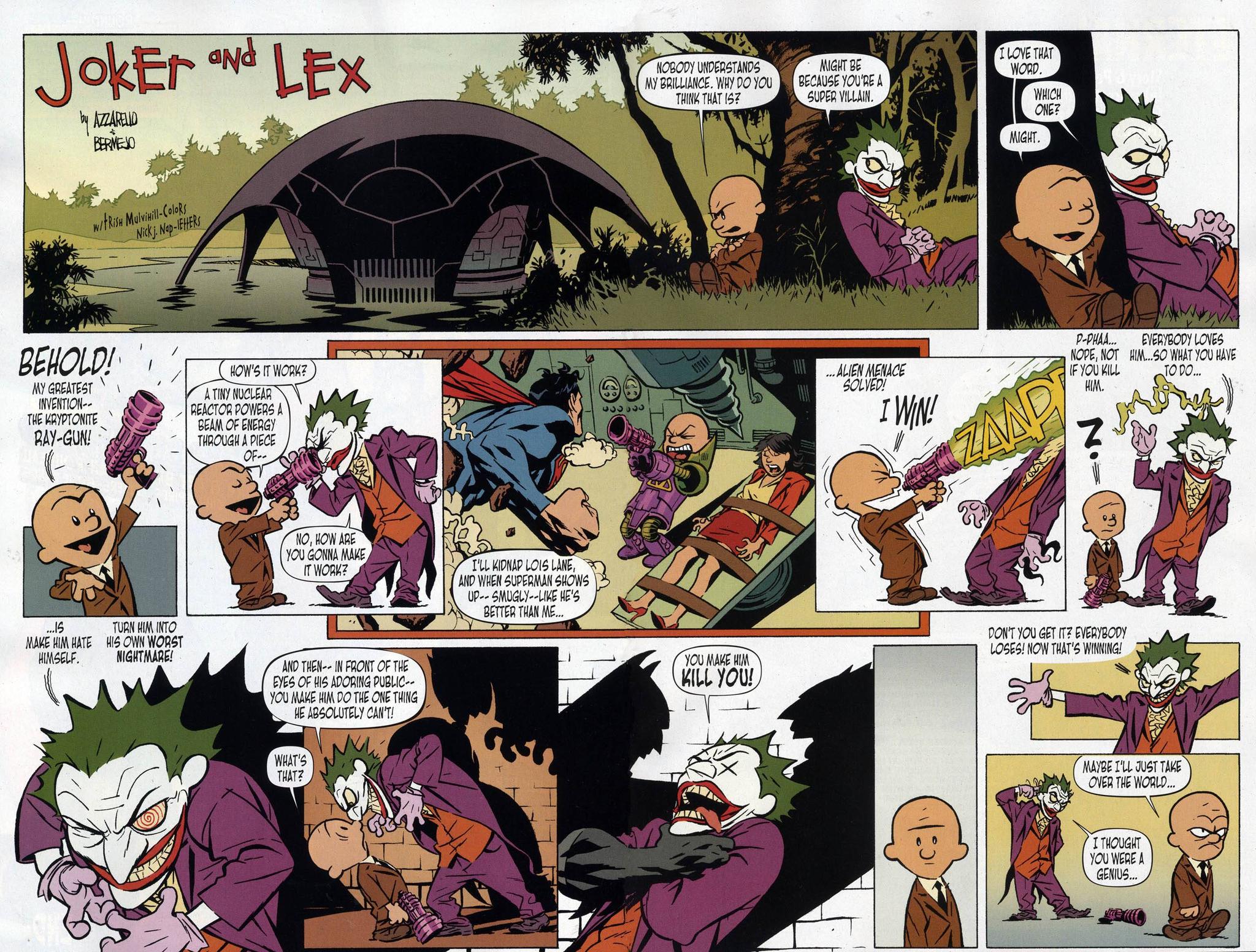
Joker and Lex

Friday, September 21st, 2012

Behold, Joker and Lex:

(Hat tip to Borepatch.)

Game of Thrones Season 2 FX Reel

Friday, September 21st, 2012

This FX reel reveals how many of the images from Game of Thrones Season 2 were created:

Toby Danger

Friday, September 21st, 2012

I still get a kick out of spot-on Jonny Quest-spoof Toby Danger: